
By Manisha Sahu | America News World
November 24, 2025
In an age where a swipe can spark a relationship and a hashtag can summarise an entire emotion, love has taken a distinctly digital detour. What was once an intimate journey between two people is increasingly a performance—optimised for engagement, filtered for aesthetic appeal, and quietly shaped by the invisible influence of algorithms.

If being single is now marketed as self-care, then love itself has become a kind of content plan.
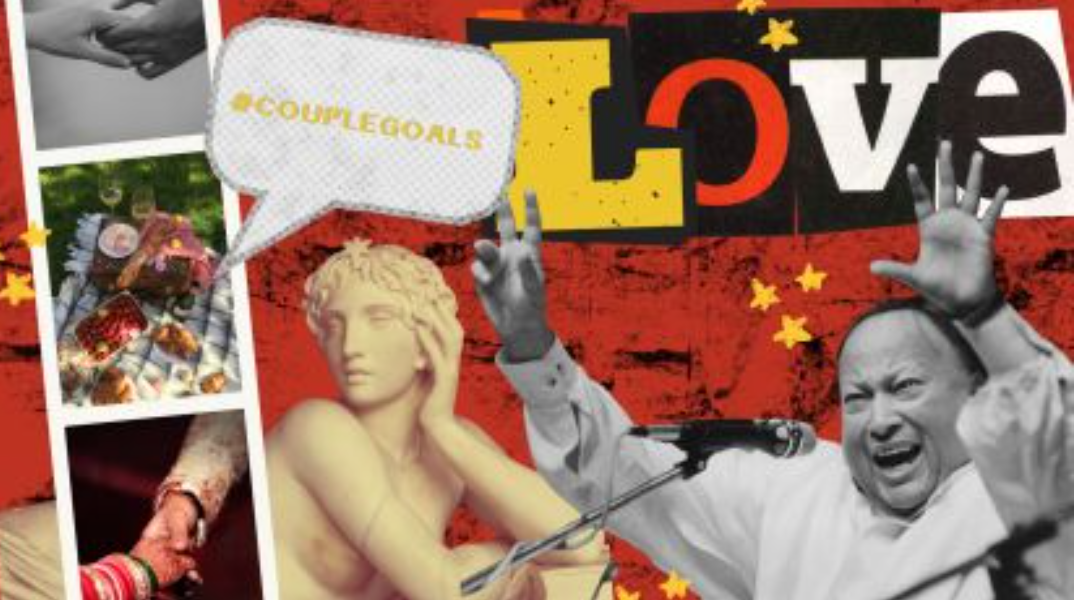
From #CoupleGoals to the aspirational philosophy of #HotGirlSummer, the very language we use to describe intimacy is no longer entirely our own. Instead, it is engineered by platforms that thrive on attention, pushing us to present picture-perfect lives that often mask the complexities of our emotional realities.
But beneath the glossy feeds and choreographed declarations of affection lies a deeper cultural shift—one where loneliness, self-worth, and the idea of partnership are being rewritten for the internet age.
The Rise of Algorithmic Romance
Romance has always evolved with time, but never before has an external force shaped it so intimately. Social media platforms, driven by engagement metrics, have turned love into a spectacle to be watched, rated, and commented on.
Couples find themselves performing their relationships: anniversaries become content opportunities, vacations turn into curated albums, and even private conflicts echo through cryptic stories and shared quotes.
The algorithms reward visibility. Posts that showcase affection, compatibility, or aspirational lifestyles are promoted, pushing people to create increasingly polished narratives. What matters is not how we feel, but how our relationships appear.
This new form of romance has turned attention into validation. The more likes a couple receives, the more “successful” their relationship seems—often overshadowing the quieter truths behind closed doors.
Singlehood as Self-Care, Love as a Strategy
As relationship content flourishes, another digital trend has simultaneously taken centre stage: singlehood as a wellness brand. Influencers, lifestyle coaches, and pop-culture icons now champion independence as a form of empowerment.
What was once seen as a temporary phase has been reframed as a choice rooted in self-love, ambition, and emotional maturity.
But this shift comes with its own pressures. The expectation that one must always be thriving—glowing skin, successful career, immaculate morning routine—can be just as overwhelming as the pressure to be in a relationship.
Being single is no longer simply a relationship status; it is a curated narrative that demands its own kind of performance.
For many, this creates a quiet tension. Do we pursue relationships because we want connection, or avoid them for fear of appearing vulnerable in a culture that equates solitude with strength? And are we living our truth, or merely adopting whichever hashtag is currently trending?
Loneliness Becomes a PR Crisis
Paradoxically, even as both romance and singlehood are being romanticised online, rates of loneliness are climbing globally. Studies across the United States, Europe, and Asia point to rising emotional isolation, particularly among young adults who spend significant portions of their lives online.
The pressure to appear unfazed, self-sufficient, and constantly “healed” has made loneliness feel like a personal failure. Instead of reaching out for support, many people retreat further into curated online versions of themselves.
This has turned loneliness itself into a kind of PR crisis—a problem to be disguised with cheerful selfies and motivational captions.
In such an environment, genuine vulnerability struggles to find room. Conversations about heartbreak, longing, or confusion often disappear under layers of aesthetic self-improvement.
Dating Apps: Connection or Commodification?
Dating apps promised to revolutionise modern love, offering an abundance of choice and the possibility of meaningful connection. Yet, for many, they have ushered in a new set of frustrations.
Profiles are crafted like advertisements: perfect photos, witty one-liners, curated interests. Swiping becomes a marketplace, where people are evaluated like products and rejected within seconds.
Paradoxically, having too many choices has made commitment harder. With the constant possibility of “someone better” just one swipe away, relationships feel more disposable than ever.
Moreover, apps increasingly deploy AI-driven match suggestions, behavioural predictions, and compatibility scores—nudging users toward certain types of partners. In subtle ways, algorithms shape not just who we meet, but whom we imagine ourselves with.
Love is still a choice, but it is a choice made within boundaries defined by platforms designed for profit.
Emotional Authenticity in the Digital Age
Despite the pressures of digital performance, many people yearn for sincerity—unfiltered moments, honest conversations, and relationships free from online scrutiny.
There is a growing counter-movement among young adults who are actively choosing to protect their personal lives from social media. They avoid posting their partners, refuse to define their emotions through trends, and prioritise experiences over content.
This signals an important cultural shift: a desire to reclaim emotional autonomy in a world increasingly shaped by algorithms.
Yet, for others, the internet remains a vital space for connection—especially for those who feel isolated or misunderstood offline. Communities built around shared experiences, mental health, or identity can provide immense comfort and validation.
The challenge lies in navigating this tension: using digital platforms for support and expression without letting them dictate our relationships.
Where Do We Go From Here?
Love has survived revolutions, wars, cultural shifts, and centuries of societal transformation. It will survive the algorithm too—but only if we learn to recognise when technology enhances connection and when it distorts it.
As individuals, this means asking difficult questions:
– Are we expressing our genuine emotions, or curating them?
– Are we pursuing relationships that feed our hearts, or our feeds?
– Are we hiding our loneliness behind filters, or confronting it honestly?
– In a world where emotions can be edited and relationships quantified, the most radical act might simply be authenticity.
As algorithms continue to guide our choices, perhaps the real question is not how we find love—but how we stay human in the process.
Discover more from AMERICA NEWS WORLD
Subscribe to get the latest posts sent to your email.












Leave a Reply