
By_shalini oraon

Rapido and Ola Booked for Operating Bike-Taxi Services Without Permits: A Deep Dive into India’s Mobility Regulatory Quagmire
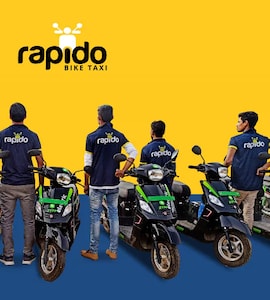
In a significant enforcement action that underscores the ongoing tussle between innovation and regulation, bike-taxi aggregators Rapido and Ola have been booked by transport authorities in multiple Indian states, most notably in Karnataka, Maharashtra, and Delhi, for allegedly operating their two-wheeler taxi services without valid permits. This legal and regulatory crackdown highlights a critical juncture in India’s urban mobility narrative, where the convenience and affordability of app-based bike-taxis clash with outdated transport laws and the vested interests of traditional unions.
The Core of the Controversy: What Does “Booked” Mean?
For the average user, the news of Rapido and Ola being “booked” might sound alarming. In legal and administrative terms, it means that transport departments have registered cases against these companies under specific sections of the Motor Vehicles Act (MVA), 1988. The primary allegations are:
1. Operating Without a Valid License: State governments argue that bike-taxis fall under the category of “contract carriages” or “commercial vehicles.” To operate such a service, aggregators need a specific “bike-taxi permit” or “aggregator license,” which, in many states, either doesn’t exist in the legal framework or has not been granted to these companies.
2. Violation of “Pool” vs. “Taxi” Nuances: Some companies attempted to operate under “ride-pooling” models to bypass taxi regulations. However, authorities have contested this, stating that if a passenger is paying for a solo ride on a two-wheeler, it constitutes a taxi service, not carpooling.
3. Using Private Vehicles for Commercial Use: A fundamental legal obstacle is that most bikes used in these fleets are registered with private (“white”) number plates. Using them for ferrying paying passengers commercially requires re-registration as a commercial vehicle (“yellow” plates), which entails higher insurance, fitness certificates, and permits.
The penalties can be severe, including hefty fines for the companies and their driver-partners, impounding of vehicles, and in extreme cases, injunctions to cease operations entirely.
Why This Conflict? Understanding the Stakes
The battle over bike-taxis is not merely about legal technicalities; it is a multi-layered conflict involving economics, safety, and urban planning.
For Commuters and the Economy:
Bike-taxis emerged as a revolutionary solution for India’s notoriouslast-mile connectivity problem and traffic congestion. They are:
· Affordable: Often 30-50% cheaper than auto-rickshaws or cabs.
· Fast: Able to navigate through choked city streets more efficiently.
· Employment Generators: Providing flexible earning opportunities for millions of riders.
A blanket ban disrupts daily commutes for lakhs of users and cuts off a vital income stream for partners, especially in a post-pandemic economy.
For the Government and Regulatory Bodies:
Authorities are tasked with a delicate balancing act.Their concerns are legitimate:
· Safety: The absence of a clear regulatory framework raises questions about rider training, passenger insurance, helmet quality (for both rider and pillion), and accountability in case of accidents.
· Legal Vacuum: The Central Motor Vehicles Act and its 2019 amendments recognize “aggregators” but leave the specifics of licensing and categorizing new-age vehicles (like bike-taxis) to state governments. Most states have not formulated clear policies, creating a grey area.
· Pressure from Incumbents: Powerful auto-rickshaw and taxi unions view bike-taxis as unfair competition that undermines their livelihoods. They argue that while they operate under strict fare meters, permits, and quotas, bike-taxis function in an unregulated manner. This political pressure often forces governments to take a hardline stance.
For Rapido, Ola, and the Gig-Economy Model:
These companies operate on the”move fast and break things” Silicon Valley ethos, scaling rapidly in regulatory grey areas. For them:
· First-Mover Advantage is Crucial: They aim to dominate the market before regulations crystallize.
· Scale Attracts Investment: A large user and partner base is their primary asset. A regulatory stop can stifle growth and valuation.
· Litigation as a Strategy: Fighting cases in High Courts has become a part of their operational playbook to buy time and hope for favorable policy changes.
The Legal Labyrinth: A State-by-State Patchwork
India lacks a uniform national policy on bike-taxis. The regulatory landscape is a confusing patchwork:
· Progressive States: Haryana and Uttar Pradesh have been pioneers, formulating clear policies that legalize bike-taxis with defined safety norms, fares, and licensing procedures.
· Hostile States: Karnataka and Maharashtra have seen prolonged legal battles. The Karnataka High Court, for instance, once upheld a ban, stating the state government had the right to disallow bike-taxis in the absence of rules, though it urged the government to frame them swiftly.
· The Delhi Conundrum: The Delhi government has flip-flopped, proposing a draft policy for bike-taxis but facing delays in implementation, leading to continued operations in a legal limbo.
This inconsistency creates operational nightmares for pan-India companies and confuses driver-partners, who risk fines and vehicle seizure when crossing state borders.
The Road Ahead: Finding a Sustainable Path
The solution lies not in ad-hoc bans or endless litigation, but in collaborative, forward-thinking policy-making.
1. Urgent Need for Model State Policy: The central government should issue a clear “model framework” for bike-taxis, guiding states on safety standards (GPS, helmets, insurance), driver eligibility, vehicle fitness, and fare ceilings. This would bring much-needed uniformity.
2. Integrate, Don’t Alienate: Regulations should focus on integrating bike-taxis into the formal public transport ecosystem as a feeder service to metro and bus stations, rather than treating them as adversaries to autos.
3. Safety-Centric Regulation: Mandatory commercial licenses for drivers, comprehensive insurance for passengers, provision of quality helmets, and panic buttons on apps should be non-negotiable conditions for granting permits.
4. Creating a Level Playing Field: Policies should address the genuine grievances of auto and taxi drivers, perhaps by also simplifying their permit processes or integrating them into aggregator apps under fair terms, instead of pitting one against the other.
Conclusion: A Test Case for India’s Innovation Ecosystem
The booking of Rapido and Ola is more than a transport dispute; it is a litmus test for India’s ability to govern its digital economy. It pits the dynamic, problem-solving potential of tech-enabled platforms against the deliberate, often slow-moving processes of democratic governance and social equity.
The ultimate goal must be to craft a regulatory environment that protects without stifling, and enables without endangering. The massive consumer demand for bike-taxis proves their utility. The onus is now on regulators to move with agility, learn from progressive states, and create a framework that unlocks economic potential while safeguarding public interest. Until then, India’s bike-taxi revolution will remain stuck in traffic, waiting for the regulatory green light.
Discover more from AMERICA NEWS WORLD
Subscribe to get the latest posts sent to your email.





Leave a Reply