
By Suraj Karowa /ANW MONTREAL Canada, January 29 2026

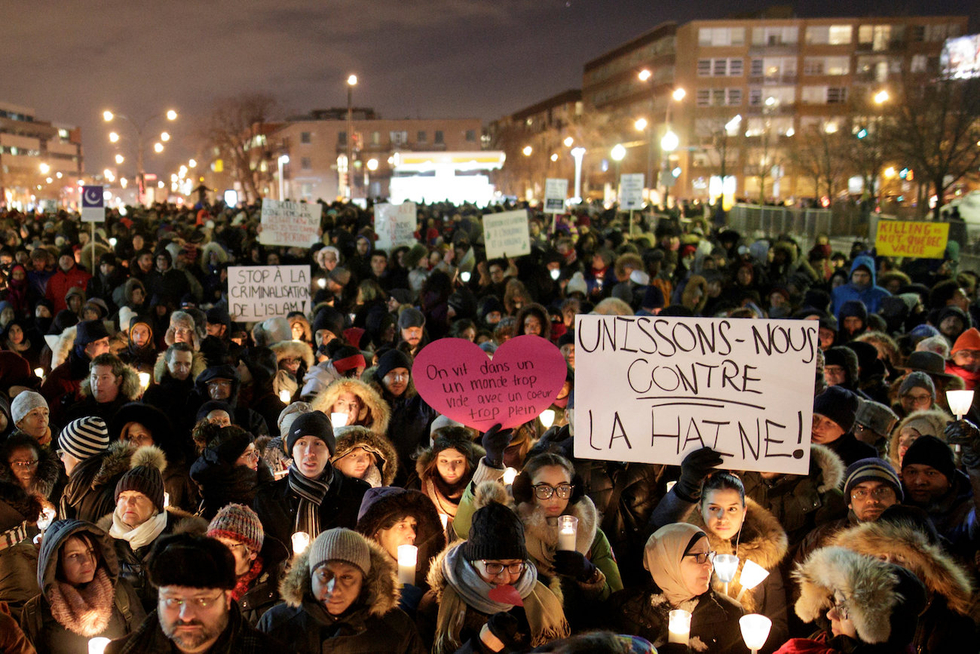
People take part in a vigil marking the fifth anniversary of the deadly shooting at the Quebec Islamic Cultural Centre, in Montreal on January 29, 2022
– As Canada marks nine years since the deadliest attack on a house of worship in its history, Muslim leaders are urging an end to anti-Muslim rhetoric and divisive policies.
On January 29, 2017, a gunman stormed the Quebec Islamic Cultural Centre in Quebec City, killing six Muslim men and wounding five others in under two minutes.
The tragedy shook the nation, exposed rising Islamophobia, and prompted national vows to combat hate.
Stephen Brown, CEO of the National Council of Canadian Muslims (NCCM), told Al Jazeera the anniversary underscores that “Islamophobia in Canada is not benign.
It’s something that unfortunately kills people.” He warned of “real consequences to hatred,” pointing to a perceived resurgence of fearmongering for political gain, especially in Quebec.
The victims – Ibrahima Barry, 39; Mamadou Tanou Barry, 42; Abdelkrim Hassane, 41; Khaled Belkacemi, 60; Aboubaker Thabti, 44; and Azzeddine Soufiane, 57 – were prayer leaders and worshippers gunned down during evening prayers.
Alexandre Bissonnette, motivated by far-right ideology, pleaded guilty to six counts of first-degree murder and was sentenced to life with no parole for 40 years.The attack galvanized Canada.

Six muslim men were fetally shot in an attack
Prime Minister Justin Trudeau labeled it a “terrorist attack against Muslims.” In 2021, the government designated January 29 as the National Day of Remembrance of the Quebec City Mosque Attack and Action against Islamophobia.
Vigils, like one in Montreal on the fifth anniversary, drew crowds honoring the victims with candles and calls for unity.Yet Brown questions if those lessons endure.
“Right after the massacre, there was a desire to mend wounds and build bridges,” he said. Today, he sees a “massive return to using Islamophobia” in Quebec politics.
At the center: Quebec’s right-wing Coalition Avenir Québec (CAQ) government, in power since 2018.
Its Bill 21, passed in 2019, bans public servants like teachers and police from wearing religious symbols – targeting hijabs, Sikh turbans, and Jewish kippahs – under the banner of state secularism.

The attack on Quebec City’s largest mosque lasted less than two minutes
Rooted in Quebec’s 1960s “Quiet Revolution” against Catholic influence, critics call it discriminatory, especially against Muslim women.
With CAQ popularity waning ahead of a provincial election, more bills have followed.
In November 2025, Bill 9 extended bans to daycares, private schools, and public spaces.
It prohibits religious dietary meals like halal or kosher in schools and bans “collective religious practices, notably prayer.”
Secularism Minister Jean-François Roberge insists “the same rules apply to everybody,” rejecting claims of targeting Muslims or Jews.Rights groups disagree.
The Canadian Civil Liberties Association (CCLA), challenging Bill 21 at the Supreme Court this year, called Bill 9 a mask for “discrimination as secularism.”
Director Harini Sivalingam said it “disproportionately targets religious and racialized minorities, especially Muslim women.”

Three black stone plinths stand in a memorial to the victims of the attack, outside the Quebec City mosque, in 2022
Brown argues these laws signal that “visible, practising Muslims” are “inherently dangerous,” emboldening hatemongers.
Federally, Amira Elghawaby, Canada’s special representative on combating Islamophobia – appointed after a 2021 London, Ontario, truck attack killed a Muslim family – sees progress but rising threats.
The 2024 Action Plan on Combatting Hate funds community groups and anti-extremism efforts.
Still, data alarms: Statistics Canada reported 211 anti-Muslim hate crimes in 2023 (up 102% from 2022) and 229 in 2024. Elghawaby noted spikes in workplace and school discrimination.
“Hate continues to threaten Canadians,” she told Al Jazeera. Despite Canada’s welcoming image, it grapples with “division, polarisation, and extremist narratives.”
She stressed remembrance: Victims’ families “don’t want the loss of their loved ones to be in vain.”
They seek Canadians standing against Islamophobia in daily life. “History can sadly repeat itself if we don’t learn from the past.”Quebec’s Muslim community, once tight-knit, feels the scars.
Survivors recount terror; families grieve enduringly. Amid vigils planned for January 29, 2026, calls grow for federal intervention and cultural bridge-building. As Brown put it, the anniversary “forces us to remember.”
Discover more from AMERICA NEWS WORLD
Subscribe to get the latest posts sent to your email.












Leave a Reply