
By Elena Vasquez, Suraj Karowa/ANW , Global Travel Correspondent
December 2, 2025 – Malé, Maldives

Once a destination for the ultra-rich, the Maldives is now embracing a more local, sustainable model of tourism that’s changing who gets to experience paradise.
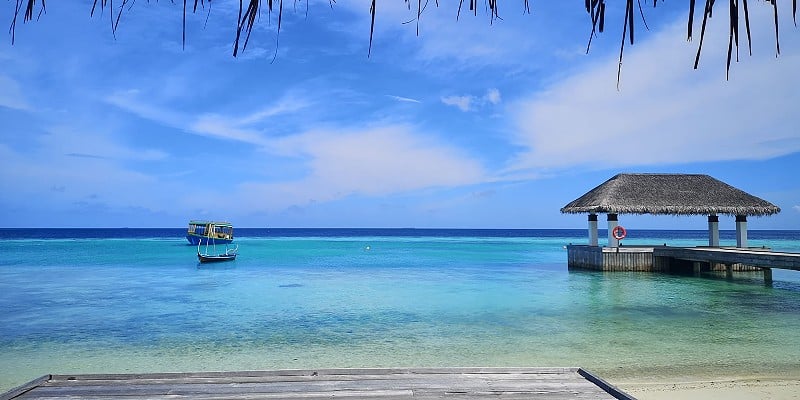
In the shimmering atolls of the Maldives, where turquoise lagoons meet powder-white sands, a seismic shift is underway.
Once the gilded playground of billionaires, honeymooners, and celebrities seeking seclusion, this Indian Ocean archipelago is democratizing its allure.
Government reforms, local entrepreneurship, and a fervent push for sustainability have slashed barriers to entry, transforming the Maldives from an ultra-luxe enclave into a vibrant, budget-friendly haven.

There are barely any cars on Thoddoo, just electric buggies, scooters and bicycles, which adds to the island’s peaceful, unhurried feel.
Families, backpackers, and eco-conscious adventurers are flocking to its shores, proving that paradise need not come with a seven-figure price tag.
The catalyst? A 2010s policy pivot that shattered the Maldives’ rigid tourism model.
For decades, visitors were herded into over 150 private resort islands, isolated from local life to preserve cultural norms in this 100% Muslim nation.
But reforms under successive administrations—bolstered by President Dr. Mohamed Muizzu’s green agenda—empowered inhabited islands to host tourists.

Now tourism is no longer confined to high-end resorts, travellers can explore local markets and try everyday Maldivian foods.
Guesthouses sprouted like coral polyps, numbering over 1,200 across 90 islands by late 2025, per Ministry of Tourism data.
This “local island tourism” boom channels 20% of the $5 billion industry directly into community pockets, up from near-zero a decade ago.
Take Thoddoo, a verdant speck in the North Ari Atoll, dubbed the “farm island” for its bountiful papaya groves and watermelon patches.
Reachable by a $30-70 public speedboat from Malé—versus $500 seaplane hops to resorts—Thoddoo hums with unpretentious charm.
No roaring SUVs here; just bicycles, scooters, and electric buggies weaving palm-fringed lanes.

Travellers can stay at family-friendly Maldivian-owned resorts that offer affordable, community-run experiences.
Families disembark with coolers, not concierges, ready to dive into authentic Maldivian rhythms.
Carmen Roberts, a BBC Travel contributor who revisited with her three kids after a 12-year hiatus, captured the metamorphosis.
“The air carried watermelon and salt, not jet fuel,” she wrote of her ferry arrival. Staying at Serene Sky, Thoddoo’s pioneering guesthouse run by Ahmed Karam—president of the Guesthouse Association—Roberts savored reef-fresh fish curries and farm-picked pumpkin, all for $50-60 nightly.
Karam, a soft-spoken advocate, credits the model with fostering stewardship: “Tourism dollars stay local, but so does the responsibility to guard our reefs and wildlife.”

Local islands set aside designated “bikini beaches” where visitors can swim and sunbathe freely.
For visitors, it’s immersion over isolation. Snorkel with locals amid sea turtles, pedal to “bikini beaches”—modest enclaves for Western swimwear amid conservative dress codes—or join farmers like Andy Anis for sun-ripened watermelon feasts.
Alcohol-free and village-centric, these stays honor Islamic customs while offering cultural peeks: bustling markets hawking spiced teas, evening prayers echoing under starlit skies. “It’s not postcard-perfect,” Roberts noted, “but it’s real—and that’s the draw.”
Yet, the revolution isn’t solely grassroots. Mid-tier resorts are evolving too, blending affordability with conscience.
Sun Siyam Olhuveli, a Maldivian-owned gem in South Malé Atoll, exemplifies this hybrid luxury.
For $499+ per night (all-inclusive), families claim beachfront villas with access to 10 eateries, a 210-meter infinity pool—the Maldives’ longest—and house reefs teeming with sharks and rays.
Roberts’ clan upgraded here mid-trip, trading guesthouse simplicity for drum-lined arrivals and WhatsApp-wielding staff who sourced kids’ meds on demand.
Sustainability threads it all. Sun Siyam’s “Cares” program lets guests plant corals or beach-clean, while its “Recycle-Reuse” initiative repurposes linens and bans single-use plastics.
Nationally, Muizzu’s administration eyes 33% renewable energy by 2028, slashing the carbon toll of diesel-dependent islands.
Tourism Minister Thoriq Ibrahim frames it bluntly: “Our environment is our lifeblood. Growth without green? Unthinkable.”
Challenges linger. Climate change gnaws at these low-lying atolls—80% sit mere meters above sea level—with rising tides threatening submersion by 2100.
Over-tourism risks reef strain, prompting caps on arrivals and mandatory eco-fees.
Critics, including some resort tycoons, decry diluted exclusivity, but data sings otherwise: Visitor numbers hit 2 million in 2024, up 15% year-over-year, with mid-budget stays surging 40%.
Guesthouses alone generated $150 million last year, empowering women-led ventures and youth jobs.
For families like Roberts’, the payoff is profound. Kids roamed shark-spotted shores, parents dove manta haunts at Shark Point—without breaking the bank. “What was a fantasy is now a family staple,” she reflected.
Honeymooners still flock to ultra-villas ($1,000+ nightly), but now share airspace with speedboat hordes chasing authenticity.
Globally, the Maldives’ pivot inspires. As overtourism plagues Bali and Venice, this model—local-led, sustainable, scalable—offers a blueprint.
Split stays (guesthouse-resort combos) are the savvy hack: Culture by day, comfort by dusk. Pack reef-safe sunscreen, book transfers early, respect bikini zones. Paradise, once gated, now beckons all.
In Thoddoo’s fading light, as coconut ice cream melts under equatorial stars, the message resonates: True luxury isn’t lavishness—it’s legacy. The Maldives, ever adapting, ensures its Eden endures for the many, not the few.
Discover more from AMERICA NEWS WORLD
Subscribe to get the latest posts sent to your email.
























Leave a Reply