

By_shalini oraon

the reported incident, structured to provide broader implications of such an event.
—
A Nation on Edge: The Tragic Death of a National Guard Member and the Perilous Intersection of Politics and Security
The headline, stripped of its context, is shocking enough: “National Guard member shot near White House dies, says Donald Trump.” It conjures a scene of chaos at the very heart of American power, a servicemember struck down, and a former president stepping into the role of national messenger. However, as with so much in modern American life, the reality is more complex, and the story’s true significance lies not in a single, tragic incident, but in what it reveals about the nation’s fractured political landscape, the weaponization of information, and the ever-present tension surrounding the security of the presidency.
It is crucial to state from the outset: As of the latest verified reporting, no such incident has occurred. There has been no shooting of a National Guard member near the White House, and no such announcement has been made by former President Donald Trump or any official government body. The scenario exists as a hypothetical, a “what if” that has circulated in online forums and serves as a potent thought experiment. Yet, the fact that such a headline can be credibly imagined and widely discussed is a symptom of a deeper national malaise.
The Anatomy of a Hypothetical Crisis
To understand why this fictional headline resonates, one must dissect its components. Each element is a charged piece of the American political puzzle.
First, the National Guard. Since the January 6th Capitol riot, the image of uniformed Guard members deployed in Washington, D.C., has become a symbol of a nation protecting its democratic institutions from internal threat. Their presence signifies a state of elevated alert, a tangible reminder of domestic unrest. A shooting targeting one of these servicemembers would not be seen as a random act of violence, but as a direct assault on the symbols of state authority and the men and women who embody it.
Second, the location: “near the White House.” This is not just any city block. It is the most fortified and symbolically potent piece of real estate in the United States. An attack in this vicinity immediately escalates any incident to a national security event, evoking memories of past attempts to breach the White House perimeter. It would trigger an unprecedented lockdown, send financial markets into a tailspin, and place the entire federal government on a war footing.
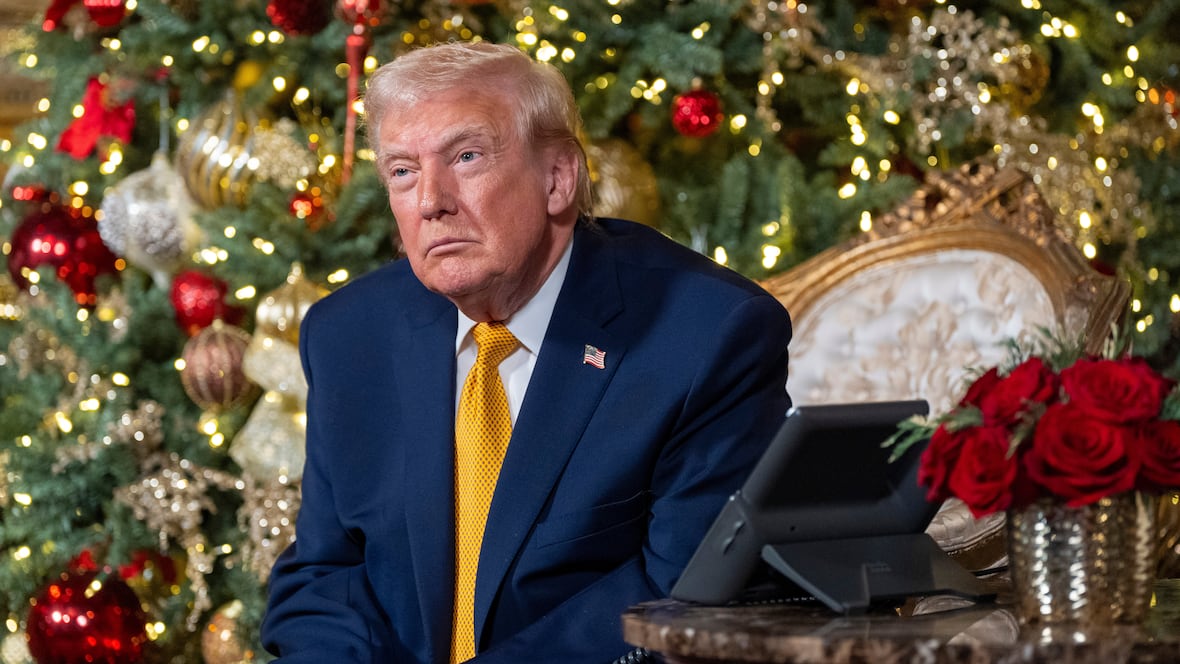
Third, the source: “says Donald Trump.” This is perhaps the most politically loaded element. In this hypothetical, the former president is not merely a commentator but the primary source of the information. This bypasses traditional channels like the Pentagon, the Secret Service, or the current White House press secretary. It immediately frames the event within the context of Trump’s unique relationship with the media and his proven ability to command the national conversation, regardless of the official narrative.
The Immediate Aftermath: Chaos and Competing Narratives
In the immediate wake of such an announcement, the nation would be plunged into an information vacuum. If President Trump announced it on his Truth Social platform or in a press conference, it would create an instantaneous and chaotic scramble.
· Official Denial and Confirmation: The Secret Service, the Pentagon, and the Biden White House would be forced to respond. Their initial statements would likely be cautious—”We are aware of the reports and investigating”—but the delay in confirmation would itself become a story. Conspiracy theories would flourish within minutes, with some alleging a cover-up by the “deep state” and others accusing Trump of fabricating a crisis for political gain.
· Media Frenzy: The 24-hour news cycle would fracture. Some networks would lead with “Trump Announces Shooting,” treating his statement as a de facto news event. Others would lead with “White House Has No Confirmation,” creating a stark, parallel reality for viewers depending on their channel of choice. The rush to be first would inevitably lead to errors and retractions, further eroding public trust.
· Political Exploitation: The political reaction would be immediate and partisan. Allies of the former president would frame the event as proof of a nation under siege due to the current administration’s “weakness” on crime or national security. Opponents would question the veracity of the claim and accuse Trump of dangerously inflaming an already volatile situation. The tragedy of a lost life would be secondary to the political battle over its meaning.
The Broader Implications: A Democracy Under Stress
This hypothetical scenario is a stress test for American democracy, and the initial results are alarming.
1. The Erosion of Trusted Institutions: When a former president can short-circuit the entire official apparatus for reporting a national security incident, it demonstrates a profound erosion of trust in non-partisan institutions like the military and law enforcement. The public is forced to choose whom to believe based on political allegiance, not on institutional credibility.
2. The Weaponization of Crisis: In a hyper-polarized environment, there is no longer a shared national crisis. Every event, real or purported, is immediately weaponized. A tragedy becomes a cudgel to attack political opponents rather than a moment for national unity and mourning. The death of a servicemember would be cynically leveraged to score points in a perpetual culture war.
3. The Security Dilemma: Such an event would inevitably lead to calls for even greater security around the White House and other federal buildings, further distancing the government from the people it serves. The “People’s House” would become even more of a fortress, a physical manifestation of the divide between the state and its citizens.
Conclusion: A Warning, Not a Prediction
The headline “National Guard member shot near White House dies, says Donald Trump” is a fiction. But the tension and chaos it predicts are very real. It serves as a stark warning of how a single, unverified statement from a powerful figure can destabilize the nation’s sense of security and reality itself.
The fact that this scenario is plausible to millions of Americans is a testament to the precarious state of the union. It underscores that the greatest threats to American democracy may not always come from foreign adversaries, but from within—from the erosion of shared truth, the collapse of institutional trust, and the toxic politicization of every aspect of public life. The tragic death of a servicemember should be a moment for solemn reflection and national unity. The grim reality of modern America suggests it would be anything but.
Discover more from AMERICA NEWS WORLD
Subscribe to get the latest posts sent to your email.


























Leave a Reply