
By Suraj Karowa and Jacqui Palumbo /ANW Chicago, December 17, 2025 –

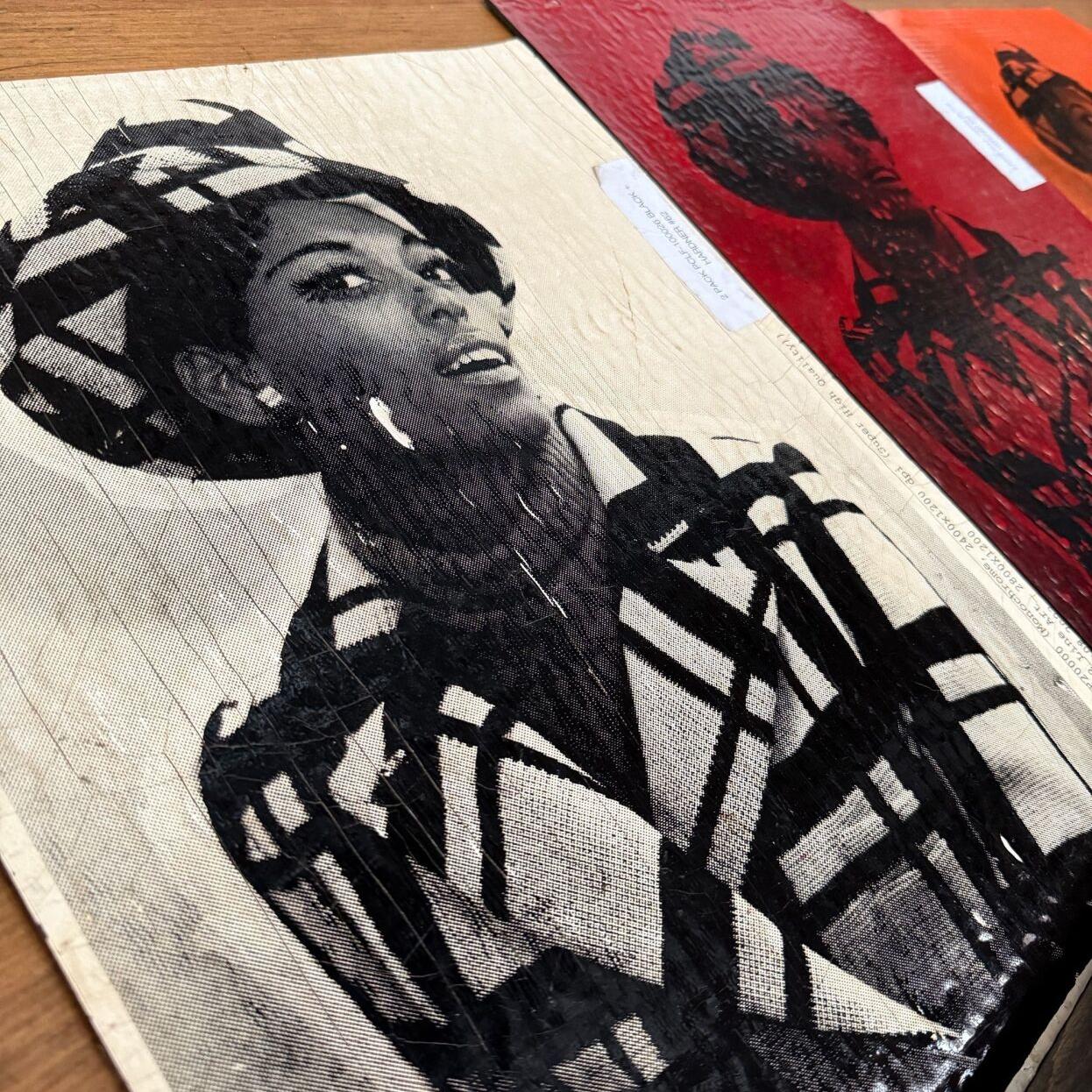
Studies for Theaster Gates’ installation, shown at his studio in Chicago. Gates will create a massive collage of images of Black life and beauty, printed on aluminum, for the Obama Presidential Center.
As Chicago’s South Side braces for the transformative arrival of the Obama Presidential Center next spring, one artwork stands poised to redefine the space’s soul: a sprawling, two-part frieze by acclaimed artist Theaster Gates.
This monumental collage, drawn from the storied archives of Ebony and Jet magazines, promises to be a vivid celebration of Black life, resilience, and especially the unyielding beauty of Black women.
Set to grace the Forum Building’s atrium – a venue named in honor of Hadiya Pendleton, the 15-year-old majorette gunned down in 2013 just days after marching in President Barack Obama’s second inaugural parade – Gates’ installation will span walls like a panoramic narrative.

Theaster Gates in his studio.
Printed on gleaming aluminum alloy panels, the frieze will feature roughly 20 carefully curated images from the Johnson Publishing Company’s vast photographic trove, alongside portraits by pioneering photographer Howard Simmons.
Visible to passersby on Stony Island Avenue, the work will bridge the center’s interior intimacy with the street’s vibrant pulse, echoing the cultural heartbeat of a neighborhood Gates has long championed.
For Gates, a Chicago native whose multidisciplinary practice weaves art, urbanism, and activism, this commission is both a homecoming and a reclamation.

Contact sheets from “The Black Image Corporation,” a project by Theaster Gates in 2018.
As steward of the Johnson Publishing archives since their 2016 dispersal – a collection born from the Black-owned media empire that chronicled post-World War II Black America – Gates views these images as more than relics.
“They amplified the dignity and the life of Black folk,” he said in a recent video interview, his voice carrying the weight of a decade’s devotion.
Ebony and Jet, launched in the 1940s and ’50s, were lifelines: portals to news, fashion, civil rights triumphs, and everyday joys amid segregation’s shadows.
Gates’ frieze reanimates them, scaling up intimate moments – a poised model in a pillbox hat, a family’s Sunday gathering – into a frieze that demands reckoning.

The Obama Presidential Center is a near 20-acre complex that will house a museum, library, programming spaces, gardens and playground when completed next spring.
The artist’s process blends reverence with reinvention. In his Chicago studio, tar paper studies and contact sheets litter surfaces, testaments to meticulous curation.
Simmons’ contributions, captured during his trailblazing tenure at Johnson Publishing and the Chicago Sun-Times, add layers of photojournalistic grit.
Gates met Simmons three years ago, forging a bond that infuses the work with personal urgency. “The ’60s and ’70s? That was an unmatched era,” Gates reflected.
“Black creatives weren’t chasing profit; they were preserving culture, telling our stories.”
He calls the piece “something old and something new,” experimenting with materiality to honor the originals while thrusting them into contemporary dialogue.

Tar paper-based studies for Gates’ installation, seen at his studio in Chicago.
These aren’t dusty artifacts, he insists – they’re the bedrock of Black modernity.
At the Obama Presidential Center, a 19.7-acre beacon of civic ambition rising on the city’s South Side, Gates’ frieze joins a constellation of commissions transforming the site into an artistic powerhouse.
Curator Virginia Shore, overseeing the art program, praises its resonance: “It underscores the power and possibility of Black modernity, particularly in Chicago.”
Former President Obama himself has been hands-on, guiding selections that now include Nick Cave’s sound-textile fusion with Marie Watt in the museum lobby; Jenny Holzer’s stark Freedom Riders tribute in the skyroom, drawn from FBI files; and Kiki Smith’s ethereal contributions.
Earlier announcements spotlighted Julie Mehretu’s 83-foot glass mural – her first foray into the medium – and Nekisha Durrett’s hand-painted tiles reimagining Harriet Tubman’s iconic shawl in the courtyard.
This ensemble, revealed piecemeal since 2023, arrives amid a fraught cultural landscape.
The second Trump administration’s cuts to arts funding have squeezed institutions supporting artists of color, yet the center persists as a defiant counterpoint. “Art is a great connector,” says Louise Bernard, the center’s museum director.
“It convenes people, sparks new ways of thinking. We’re building something unprecedented – the whole site activated by art.”
The complex will encompass a museum, library, forums, gardens, and playgrounds, all designed to foster changemaking.
A core museum takeaway? “Democracy is always a work in progress,” Bernard notes. “Progress isn’t linear; it’s a push and pull. We want every visitor to see themselves as part of that.”
Gates’ role extends beyond creation; it’s stewardship incarnate. His Rebuild Foundation, anchored by the Stony Island Arts Bank – a mere stone’s throw from the center – safeguards treasures like 60,000 University of Chicago lantern slides on art history, Frankie Knuckles’ vinyl trove, and a provocative “negrobilia” collection amassed to exorcise derogatory ephemera from circulation.
“I’m imagining artistic ways beyond market consumables,” Gates muses. “Archives let me be an informal historian, keeping truths alive against today’s falsehoods.”
In an era of revisionist narratives, his frieze serves as bulwark: a reminder that Black excellence predates hashtags, that American progress owes an immeasurable debt to Black and brown contributions.
As opening day nears – spring 2026, barring delays – the center embodies the Obamas’ ethos: hope through heritage.
Gates’ ode, visible from the avenue that birthed house music and hosted civil rights marches, will whisper to commuters and command audiences alike.
“Black people have been doing great things for a long time,” Gates affirms. In aluminum and archive, he etches that truth into the future.
Discover more from AMERICA NEWS WORLD
Subscribe to get the latest posts sent to your email.






Leave a Reply