
By_shalini oraon

Libya’s Military Chief Killed as Private Jet Crashes Near Ankara After Takeoff
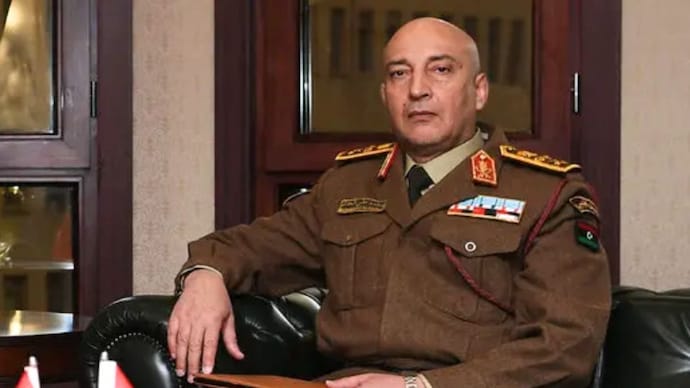
In a devastating blow to Libya’s fragile political and security landscape, the nation’s military chief, General Abdelbasset Ghebil, was killed on Wednesday when a private jet carrying him and a high-level delegation crashed shortly after takeoff from Ankara’s Esenboğa Airport. The incident, which occurred under heavy fog and poor visibility, also claimed the lives of at least eight other senior Libyan officials and the Turkish flight crew, marking one of the most significant single losses of leadership in Libya’s tumultuous recent history.
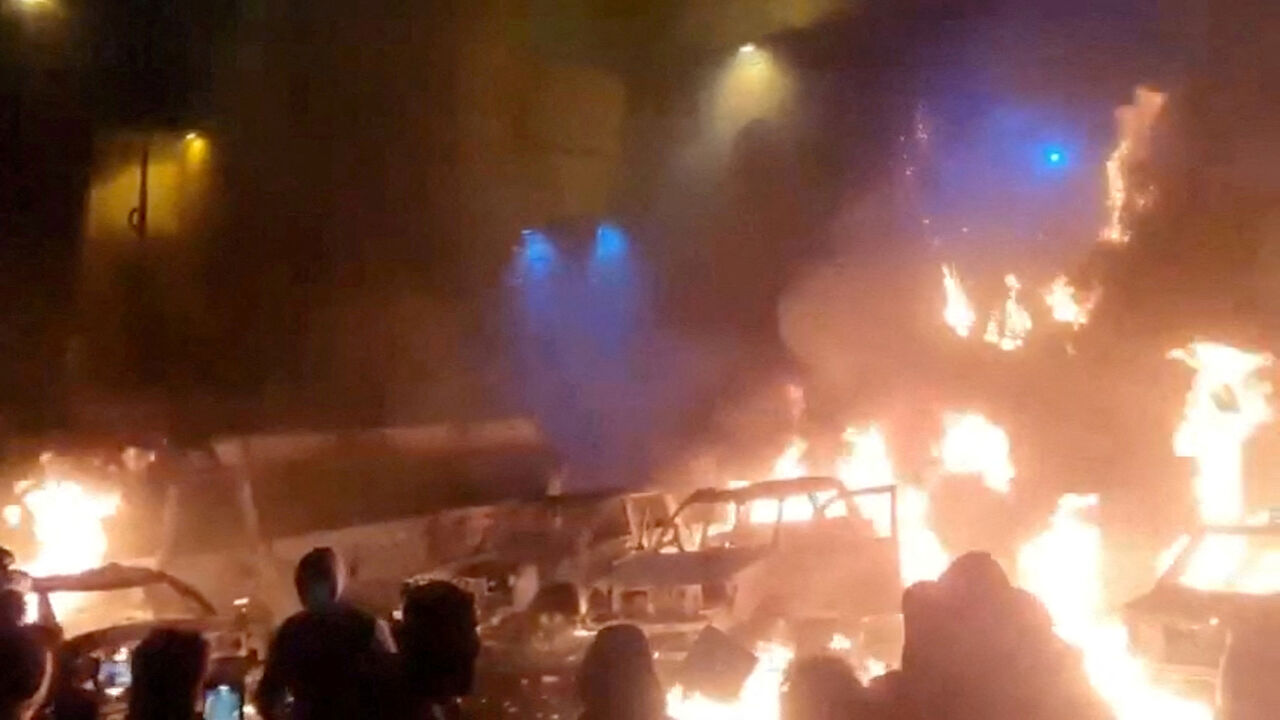
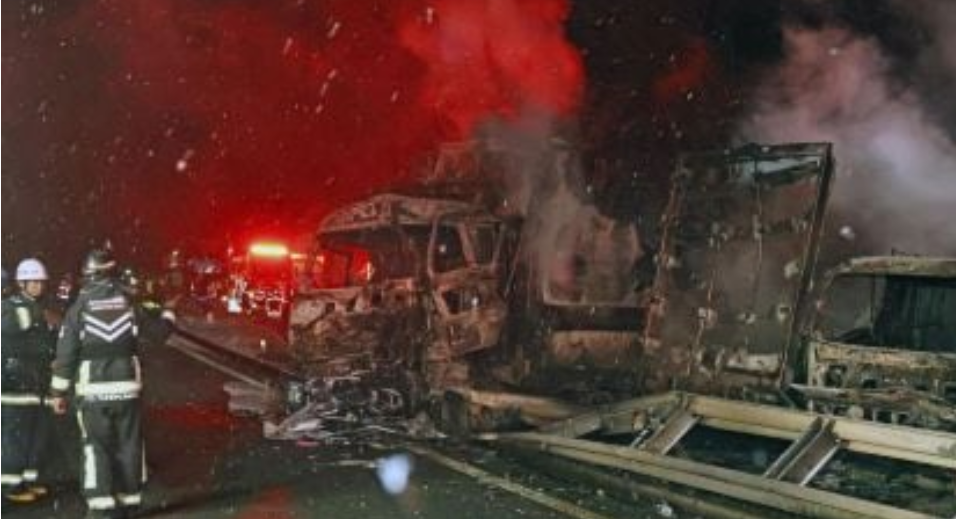
The flight, a Bombardier Challenger 604 registered under a Turkish private charter company, was en route to Misrata, Libya, following what Turkish officials described as a “high-level security and cooperation meeting” between General Ghebil’s Libyan National Army (LNA)-aligned command and Turkish defense officials. Eyewitnesses and preliminary radar data suggest the aircraft struggled to gain altitude after lifting off from the runway, veered sharply to the left, and plummeted into a wooded, sparsely populated area near the village of Çubuk, approximately 25 miles north of the airport. The impact and subsequent fireball left no survivors. Turkish emergency responders reached the site within minutes, but the severity of the crash made recovery efforts grim and protracted.
General Abdelbasset Ghebil was not merely a military figurehead; he was a central pillar in the complex and often contradictory architecture of Libyan power. As the chief of staff of the Libyan National Army—the force nominally commanded by the controversial eastern-based warlord Khalifa Haftar—Ghebil was a key operational mind. Unlike Haftar, whose political ambitions and hardline stance alienated international negotiators, Ghebil was often seen as a more pragmatic, technocratic officer. He played a crucial, if delicate, role in maintaining a semblance of command-and-control over the LNA’s disparate militia factions and was a frequent participant in UN-sponsored talks aimed at unifying Libya’s military institutions. His death creates an immediate and dangerous power vacuum within the LNA’s high command.
The geopolitical ramifications of this tragedy are profound and immediate. Turkey has been a deeply entrenched player in the Libyan conflict, providing critical military, political, and economic support to the Tripoli-based Government of National Unity (GNU), the LNA’s primary adversary in the civil war. However, recent months had seen a cautious, behind-the-scenes dialogue between Ankara and eastern Libyan factions, with General Ghebil reportedly a central channel in these talks. His mission in Ankara, though shrouded in typical secrecy, was widely interpreted as an effort to negotiate security arrangements, potentially including the withdrawal of foreign mercenaries and the management of oil revenues. His death in Turkey, regardless of its cause, threatens to sever this tentative link, inflame distrust, and empower hardliners on all sides who oppose negotiation.
The immediate question on every regional analyst’s mind is: What caused the crash? Turkish authorities, led by the Transport Ministry’s accident investigation board, have been quick to secure the wreckage and recover the flight data and cockpit voice recorders. While President Recep Tayyip Erdoğan expressed “deep sorrow” and pledged a full, transparent investigation, the political atmosphere is fraught. An official from Turkey’s DGCA (Directorate General of Civil Aviation) stated that “initial indications point to a severe loss of control under instrument meteorological conditions,” bureaucratically noting the low cloud ceiling and reduced visibility at the time of departure. However, in the conspiratorial ecosystem of Libyan politics, alternative narratives are already flourishing.
Pro-Haftar media outlets in Benghazi have insinuated foul play, questioning the airworthiness of the chartered aircraft and the choice of a Turkish carrier. Conversely, factions in Tripoli have circulated theories about internal LNA rivalries. Aviation experts caution that for a modern business jet to fail so catastrophically so soon after takeoff, a confluence of factors is likely at play—possible pilot disorientation in the fog (spatial disorientation), a sudden mechanical failure in a critical system like flight controls, or, less likely but possible, bird strike. The investigation will take months, but its findings will be dissected not just for technical truth, but for political ammunition.
Beyond the geopolitics, General Ghebil’s death is a human and institutional catastrophe for Libya. The other passengers included the LNA’s head of logistics, two senior communications directors, and a key liaison officer to the Libyan House of Representatives in Tobruk. This decapitation of operational expertise comes at a perilous time. Libya is poised in an uneasy ceasefire, with national elections perpetually postponed and two rival governments still claiming legitimacy. The LNA, a coalition of militias held together by patronage, anti-Islamist ideology, and Haftar’s authority, now faces internal turmoil. The struggle to succeed Ghebil could trigger violent infighting among subordinate commanders, each backed by different foreign patrons like Russia, the UAE, or Egypt.
For the international community, which has invested heavily in a fragile UN roadmap for Libyan reconciliation, this crash is a stark setback. General Ghebil was a known entity, a regular attendee at military committee meetings in Geneva and Cairo. Rebuilding a dialogue with a new, potentially more hawkish LNA chief will be difficult. The United Nations Support Mission in Libya (UNSMIL) issued a statement mourning the loss and calling for “calm and unity,” but the words seemed to echo into a deepening void.
In the final analysis, the burning wreckage in a Turkish forest is a metaphor for Libya itself: a project of statehood brought crashing down by a toxic mix of internal fragility and the overwhelming pressures of external interference. General Abdelbasset Ghebil’s fate underscores the precariousness of those who attempt to navigate Libya’s treacherous path toward stability. His death does not merely remove a commander; it removes a crucial node in an already fractured network, making the already dim prospect of a peaceful, unified Libya seem even more distant. As Ankara and Tripoli declare days of mourning, the true mourning is for a nation that, once again, finds itself thrust back into the shadow of uncertainty and impending conflict.
Discover more from AMERICA NEWS WORLD
Subscribe to get the latest posts sent to your email.













Leave a Reply