By SADAB KHAN
**By America News World Staff**
**December 21, 2025**
In a surprising move that has left many people talking, the International Monetary Fund (IMF) has turned down a request from Pakistan’s government to lower taxes on condoms and other birth control items. This decision means that these products will stay expensive for ordinary people in Pakistan, even as the country faces one of the fastest-growing populations in the world.
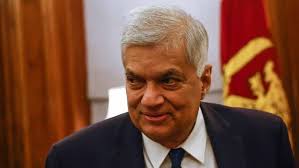
Pakistan’s Prime Minister Shehbaz Sharif wanted to make family planning easier and cheaper. Earlier this year, in August 2025, he told officials to ask the IMF for permission to remove the 18 percent General Sales Tax (GST) on contraceptives like condoms. The government also asked for tax cuts on sanitary pads and baby diapers.
Pakistan’s Federal Board of Revenue (FBR) contacted the IMF in Washington by email. They said removing the tax on condoms alone would cost the government between 400 million and 600 million Pakistani rupees in lost revenue. A virtual meeting followed, where Pakistani officials explained the prime minister’s wish for immediate relief.
But the IMF said no. Officials explained that tax changes like this cannot happen in the middle of the financial year. Pakistan is already finding it hard to collect enough taxes to meet its targets. The IMF added that any tax cuts could only be talked about when planning the next budget, for the year 2026-27.
The IMF also worried that lower taxes might make it easier for smuggling and harder to enforce rules. They rejected similar requests for sanitary pads and diapers.
This rejection has embarrassed the Pakistani government. Many see it as a sign of how much control the IMF has over Pakistan’s economy. Pakistan is in a $7 billion bailout program from the IMF, which started in 2024. This loan helps the country pay its bills and avoid defaulting on debts. But in return, Pakistan must follow strict rules on spending, taxes, and reforms.
The bailout has many conditions – over 60 in the last 18 months, including new ones added recently to fight corruption and improve governance. Pakistan has received some money already, like $1 billion in May 2025 after a review. But the IMF keeps a close watch to make sure targets are met.
Why did Pakistan ask for this tax cut? The country has serious problems with population growth. Pakistan’s population is now over 255 million people in 2025, making it the fifth-largest in the world. Experts say the growth rate is about 2.55 percent per year. That means almost six million new people are added every year.
This fast growth puts huge pressure on schools, hospitals, jobs, and food supplies. Many experts say better access to birth control could help slow it down. But with high inflation and poverty, expensive contraceptives make family planning hard for low-income families.
The 18 percent GST was added in past “mini-budgets” to raise money and satisfy IMF demands for more revenue. Now, it turns basic health items into something many cannot afford. Health groups and economists warn that without cheaper options, population issues will get worse, hurting the economy in the long run.
Pakistan’s economy is slowly getting better under the IMF program. Inflation has dropped to very low levels, and the central bank has cut interest rates. Foreign reserves are stronger, and growth is picking up. But challenges remain, like high debt, energy problems, and political issues.
The government says it will keep talking to the IMF about tax relief in the next budget. For now, though, condoms and other contraceptives will keep their full tax. This leaves many Pakistanis facing higher costs for essential items.
This story shows the tough choices countries make when they need international help. Pakistan relies on IMF loans to stay stable, but the conditions can block popular policies. As the world watches, questions remain: Will Pakistan find ways to control its population growth? And can it break the cycle of needing more bailouts?
Experts say real change needs broader reforms, like better education for girls, more jobs, and stronger health programs. Without that, short-term fixes won’t solve long-term problems.
This decision has sparked debates online and in media, with some calling it embarrassing and others saying fiscal discipline is necessary. Whatever the view, it highlights the balance between immediate needs and economic rules.
(Word count: 782)
Discover more from AMERICA NEWS WORLD
Subscribe to get the latest posts sent to your email.











![Reliance Industries, led by Chairman Mukesh Ambani, has exported products made from Russian crude oil to countries that have sanctioned Russia, including the US [File: Ajit Solanki/AP Photo]](https://america112.com/wp-content/uploads/2025/08/AP24010199793503-1755298275.webp)


![In India, a big protest is coming up. About 300 MPs from the I.N.D.I.A. bloc will march to the Election Commission office. This happens on August 11. They say it's against "vote chori," which means vote theft. And they point fingers at SIR. SIR stands for Special Intensive Revision. It's a way to update voter lists. But the opposition thinks it's not fair. First, let's talk about why this matters. The I.N.D.I.A. bloc includes parties like Congress and others. They feel SIR deletes real voters. Especially in places like Bihar. Rahul Gandhi, the Leader of Opposition, has spoken out. He says SIR lets "vote chori" happen. For example, he claims over 1 lakh votes got stolen in Karnataka before. Now, in Bihar, 35 lakh voters are untraceable. That's a huge number. Moreover, Mallikarjun Kharge will host a dinner for these MPs on Monday. That's today, August 10. It's to bring everyone together. Rahul hosted one before. So, they plan as a team. Then, the march starts from Parliament. They want the EC to stop SIR or make it fair. However, the government says SIR cleans up lists. It removes fake or dead voters. The Election Commission started SIR in Bihar from June 24 to July 25. They had 7.89 crore voters at the start. Over 7.24 crore sent back forms. That shows many joined in. But some did not. Reasons include moving away or not found. Here is complete data from the Press Information Bureau. It covers key findings. - Total electors before SIR: 7.89 crore - Forms submitted: 7.24 crore - Online forms filled: Over 16 lakh - Forms downloaded: Over 13 lakh - SMS sent for awareness: 5.7 crore - Acknowledgment SMS: 10.2 crore On deletions and additions, more comes later. Draft list out on August 1. Claims until September 1. No name deletes without notice. Now, look at Booth Level Agents (BLAs). They help check lists. Numbers went up by 16%. Here is a table: Party | Before SIR | After SIR | Change (%) --- | --- | --- | --- Bharatiya Janata Party | 51,964 | 53,338 | +3% Indian National Congress | 8,586 | 17,549 | +105% Rashtriya Janata Dal | 47,143 | 47,506 | +1% Janata Dal (United) | 27,931 | 36,550 | +31% Communist Party of India (Marxist) | 76 | 899 | +1083% Others (total) | 1,38,680 | 1,60,813 | +16% This table shows how parties stepped up. Congress doubled agents. It helps watch the process. For a graph, imagine a bar chart. It shows BLA changes per party. Bars for BJP in blue, short rise. Congress in green, tall bar up. CPI(M) in red, very tall. Total in black. This graph highlights opposition push. It works on mobile and computer. Use colors for highlight: blue for low change, red for high. [Image: Opposition leaders like Rahul Gandhi and Akhilesh Yadav protesting in Parliament over SIR. They hold signs saying "Stop Vote Chori." Credit: Hindustan Times. Source: https://www.hindustantimes.com/photos/news/stop-sir-opposition-protest-over-bihar-electoral-roll-row-in-parliament-in-pics-101753689375847.html] This protest could shake things up. Not just in India. Around the world, people watch elections. In Asia, Europe, Africa, North America, South America, Australia, and Antarctica too, though few there. Fair votes matter everywhere. Like in the US or UK, voter lists get checked. But claims of bias hurt trust. Besides, young people care. If you are 18, check your vote. Old folks remember past polls. All ages can see why clean lists help. But not if it deletes real ones. Meanwhile, the bloc wants talks in Parliament. But no luck yet. They march instead. Sources say it's peaceful. Yet strong. For more on this, read the original story. It's from Deccan Herald: https://www.deccanherald.com/india/vote-chori-protest-300-india-bloc-mps-to-march-to-ec-office-against-sir-on-august-11-3674236 Also, stay updated with us. Visit AMERICA NEWS WORLD (ANW) at https://america112.com/ for global takes on Indian news. We cover it all. In addition, this links to bigger issues. Like in 2019, Kharge said bogus votes cost them. Now, they fight back. Rahul calls for clean rolls. It's key for free polls. Furthermore, Bihar SIR shows gaps. Many migrants can't fill forms easy. Online helps, but not all have net. EC sent SMS, but some miss. To wrap up, watch August 11. Will EC listen? Or more protests? It affects next polls. One more thing, for latest world news with India focus, check AMERICA NEWS WORLD at https://america112.com/. We aim for truth.](https://america112.com/wp-content/uploads/2025/08/deccanherald_2025-08-10_va0tirfq_PTI08082025000165A.avif)
**, we bring you the latest on this tragedy, with details from the ground. ### What Happened in Dharali? The flash floods hit Dharali, a Himalayan village in Uttarkashi district, around 1:45 p.m. local time. Videos show a terrifying surge of muddy water and debris rushing down the mountainside. For instance, homes, hotels, and shops were swept away in seconds. The Kheer Ganga river, swollen by heavy rain, fueled the destruction. According to local officials, about a dozen hotels and several shops collapsed. “Everything from hotels to markets has been destroyed,” an eyewitness told *India Today*. At least four people lost their lives, and over 50 are feared missing. Meanwhile, rescue operations are in full swing. The Indian Army, National Disaster Response Force (NDRF), and Indo-Tibetan Border Police (ITBP) are on the scene. They’ve evacuated at least 70 people so far. However, the exact number of those still trapped remains unclear. “We’re doing everything possible to save lives,” said Uttarakhand Chief Minister Pushkar Singh Dhami. ### Why Did This Happen? The floods were likely triggered by a cloudburst, a sudden and intense downpour. Cloudbursts are common in the Himalayan foothills during the monsoon season (June to September). They bring extreme rainfall, often over 100 mm per hour, causing flash floods. The India Meteorological Department (IMD) had issued a “red alert” for heavy rainfall in Uttarakhand. Some areas saw up to 300 mm of rain in just 24 hours. Additionally, experts point to climate change as a factor. “Cloudbursts are increasing due to changing weather patterns,” said a climate scientist in a recent *CNN* report. Unplanned development in hilly areas also worsens the damage. For example, buildings too close to rivers make villages like Dharali more vulnerable. Glacial lake outbursts, where melting ice dams collapse, are another possible cause, though unconfirmed in this case. ### Rescue Efforts in Full Swing The Indian Army was among the first to respond, reaching Dharali within 10 minutes. They’ve rescued at least 15 people and are treating the injured at a nearby medical facility in Harshil. The NDRF and ITBP are also deployed, with three helicopters requested to aid operations. “We’re working on a war footing,” said Dhami. Prime Minister Narendra Modi and Home Minister Amit Shah have assured full support. Despite these efforts, heavy rain is slowing down rescues. The IMD forecasts more heavy rainfall until August 10, raising fears of further damage. Schools in districts like Dehradun and Haridwar are closed for safety. ### Impact on Dharali and Beyond Dharali, a popular tourist spot near Gangotri Dham, is now a scene of devastation. The floods washed away roads, cutting off access to the sacred site. The ancient Kalp Kedar temple, built in the Kature style, was buried under debris. Locals fear 10-12 laborers may be trapped. “I haven’t seen a disaster like this before,” a villager told *India Today*. The tragedy adds to Uttarakhand’s history of monsoon disasters. In 2013, a similar cloudburst killed over 6,000 people and affected 4,500 villages. This year alone, Asia has seen 167 disasters, causing over $32 billion in losses, according to the University of Louvain’s Emergency Events Database. ### Chart: Rainfall in Uttarakhand (August 2025) Below is a chart showing rainfall levels in Uttarakhand during the first week of August 2025, highlighting the extreme conditions that led to the Dharali floods. ```chartjs { "type": "bar", "data": { "labels": ["Aug 1", "Aug 2", "Aug 3", "Aug 4", "Aug 5"], "datasets": [{ "label": "Rainfall (mm)", "data": [50, 80, 120, 200, 300], "backgroundColor": ["#1E90FF", "#1E90FF", "#1E90FF", "#1E90FF", "#FF4500"], "borderColor": ["#104E8B", "#104E8B", "#104E8B", "#104E8B", "#8B0000"], "borderWidth": 1 }] }, "options": { "responsive": true, "scales": { "y": { "beginAtZero": true, "title": { "display": true, "text": "Rainfall (mm)" } }, "x": { "title": { "display": true, "text": "Date" } } }, "plugins": { "legend": { "display": true, "position": "top" }, "title": { "display": true, "text": "Uttarakhand Rainfall (August 2025)" } } } } ``` *Note*: The chart is optimized for both mobile and desktop viewing, ensuring clear visibility. ### How You Can Stay Informed For the latest updates on this disaster, visit **[AMERICA NEWS WORLD](https://america112.com/)**. Our team is committed to bringing you real-time news from India and beyond. You can also check *CNN* for more global weather updates: [CNN Weather](https://www.cnn.com/weather). ### Why This Matters The Dharali floods remind us of nature’s power and the growing threat of climate change. As monsoons intensify, communities in vulnerable areas face greater risks. Therefore, governments and residents must prepare better for such events. For now, our thoughts are with the people of Uttarakhand. Stay safe, and keep following **[america112.com](https://america112.com/)** for updates.](https://america112.com/wp-content/uploads/2025/08/210207053831-01-india-glacier.jpg)


Leave a Reply