
By Elena Vasquez ,Jacqui Palumbo/ANW
November 28, 2025

At the Academy Museum Gala in October, Zoë Kravitz wore a design straight off the Saint Laurent runway that brought back oversized sleeves in a big way.
In the high-stakes world of red-carpet glamour, where every fold and flourish screams intention, oversized sleeves are staging a triumphant return—not as mere embellishment, but as a bold echo of historical swagger.
At October’s Academy Museum Gala, Zoë Kravitz channeled Saint Laurent’s fall runway with an off-the-shoulder gown whose billowing sleeves cascaded like crimson waves, instantly reigniting chatter about fashion’s most dramatic arm candy.
It’s a look that’s less about whimsy and more about wielding presence, harking back to an era when sleeves weren’t just sewn on—they were statements of wealth, wit, and worldly clout.

An American dress from the 1830s sporting massive gigot sleeves, colloquially called leg-of-mutton sleeves for their reminiscent shape.
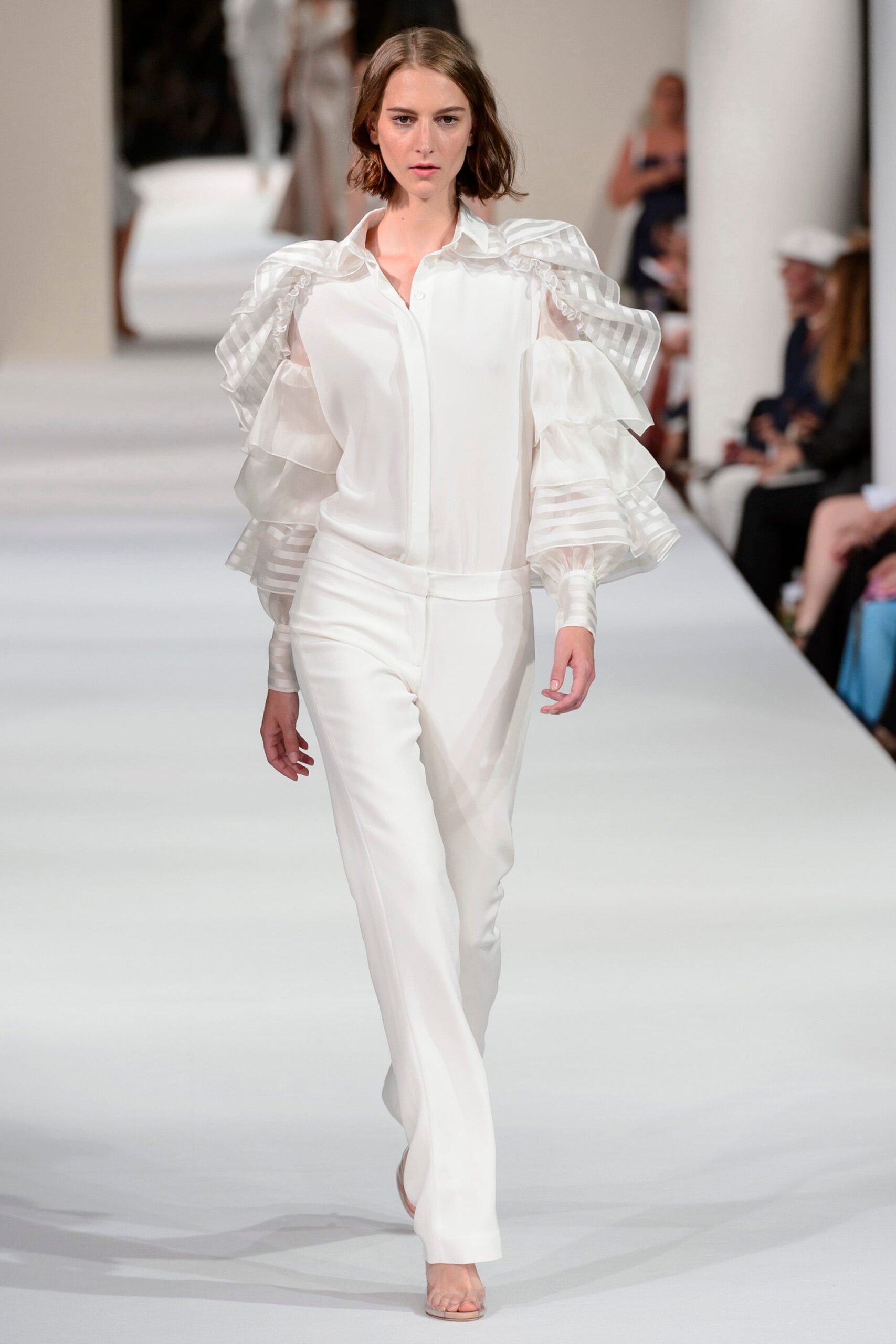
This resurgence isn’t random. As runways from Thom Browne to Valentino puff up sleeves in everything from bridal whites to tailored blacks, designers are dusting off a silhouette that’s powered wardrobes for centuries.
“Big sleeves were the original power shoulders,” says fashion historian Aisha Patel, echoing sentiments from recent exhibitions linking Renaissance opulence to modern Milan.
They evoke the 1980s’ armored pads—think Grace Jones in Giorgio Armani or Doja Cat’s 2025 Met Gala exaggeration by Marc Jacobs—but with deeper roots in Europe’s courts, where fabric was fortune and flair was firepower.

Socialite Dorothy Hart Hearst in a 1938 issue of Vogue, wearing a puff-sleeve crepe dress by Elsa Schiaparelli.
Flash back to the 16th century, when Italian Renaissance aristocrats turned sleeves into spectacles.
Amid sumptuary laws curbing extravagance, the elite flaunted excess through detachable, lavishly tailored arms that detached like modular armor.
These weren’t fixed fixtures; they were flexes—extra yards of silk or velvet signaling access to master seamstresses and the cash to burn.
In Tudor England, the leg-of-mutton sleeve ballooned at the shoulder, stuffed with down or wired into lantern-like orbs, as seen in 1830s American gowns preserved at the Met.
Florence’s Medici clan slashed theirs for peeks of jewel-toned undersleeves, a cheeky nod to forbidden hues.

Julia Fox in London wearing a dramatic Marc Jacobs gown that called back to when sleeves were padded for extra height.
“The whole game was possession,” explains Darnell-Jamal Lisby, curator at the Cleveland Museum of Art, whose “Renaissance to Runway” show pairs Bronzino portraits with Diesel’s faux-fur hulks.
“Sleeves broadcast your trend-savvy status—how much you could afford to waste on whimsy.”
Lisby’s exhibit spotlights Eleonora di Toledo, the duchess of Florence, immortalized in 1545 silk brocade where cupcake-shaped “baragoni” upper sleeves pin-prick with precision, outpacing her peers.

Princess Diana often wore puff sleeves, including on her wedding day, but in 1983, watched a polo match in a more casual take on the style.
Nearby, Raphael’s 1518 portrait of Naples’ vicereine drips crimson velvet from hanging sleeves, a Spanish-inflected power play under Habsburg rule.
This wasn’t just vanity; it was visual diplomacy. Sleeve shapes mapped alliances—Milan’s vibrant barrels for the north, Florence’s muted doughnuts for the south—while artists like Girolamo da Carpi captured “sprezzatura,” the artful nonchalance coined in Baldassare Castiglione’s 1528 Book of the Courtier.

Raphael’s 1518 portrait of the vicereine of Naples in luxurious crimson velvet with voluminous buttoned sleeves.
“Sprezzatura was the ultimate courtier hack: look effortlessly elite, like the pop star everyone craves,” Lisby quips, likening it to today’s curated Instagram feeds.
Men stretched arms in Lotto’s 1530s doublets, padded for patriarchal punch; women layered for allure.
Traveling portraits spread the style like viral memes, fueling Europe’s first fast-fashion frenzy.
The sleeve’s saga didn’t deflate with the Renaissance. By the 1830s, gigot sleeves swelled to epaulet extremes, propped by pillow stuffing for Regency romance.

A Girolamo da Carpi portrait, painted around 1530-1540, shows the sitter with oversized baragoni, or upper sleeves, shaped like cupcakes.
Elsa Schiaparelli revived puffs in 1930s crepe dinner suits, as Vogue’s 1938 shot of socialite Dorothy Hart Hearst attests—elegant rebellion against Depression-era thrift.
Princess Diana democratized them, from her 1981 wedding clouds to a 1983 polo-side casual billow, blending fairy tale with everyday edge.

In this Lorenzo Lotto portrait, likely of a wealthy Italian official, the wearer’s padded barrel sleeves take center stage.
The 1980s prom explosion paired mega-sleeves with mega-hair, a teen triumph before minimalism’s ’90s squeeze.
Now, in 2025’s silhouette skirmishes, sleeves reclaim space from sharp-suited shoulders.
Julia Fox’s Marc Jacobs puff at London’s amfAR Gala—white, wired, and wildly tall—nods to Victorian might, while Chloé’s detachable bridal options whisper heirloom heir.
Louis Vuitton’s fall show layered them for nomadic flair; Valentino’s slashed for surrealist spice.
“They’re romantic yet commanding,” says stylist Mia Chen, who styled Kravitz. “In a post-pandemic pinch, they expand your aura without apology.”
Yet this revival probes deeper: In an age of athleisure atrophy, big sleeves challenge the squeeze.

A runway look from Diesel’s fall-winter 2022 collection exhibited alongside the Lotto painting at the Cleveland Museum of Art.
They recall the Tarkhan Dress—5,000-year-old Egyptian linen with pleated arms, humanity’s woven dawn.
As climate-conscious fabrics rise, will detachable designs cut waste? Lisby predicts yes: “Renaissance sleeves were modular; today’s could be sustainable swaps.”
Critics, though, flag inclusivity. “Voluminous arms suit straight sizes best,” notes plus-size advocate Lena Torres.
“We need scalable drama.” Still, brands like Good American are adapting, proving power needn’t pinch.
As Trump-era tariffs loom on textiles, this sleeve swell feels timely—a fabric fortress against flux. From Medici mischief to Met Gala mayhem, oversized arms endure: not just dressing the body, but arming the spirit.
Discover more from AMERICA NEWS WORLD
Subscribe to get the latest posts sent to your email.







































Leave a Reply