
By_shalini oraon

Title: The Raipur Revelation: A ₹250-Crore Claim in the Chhattisgarh Liquor Scandal
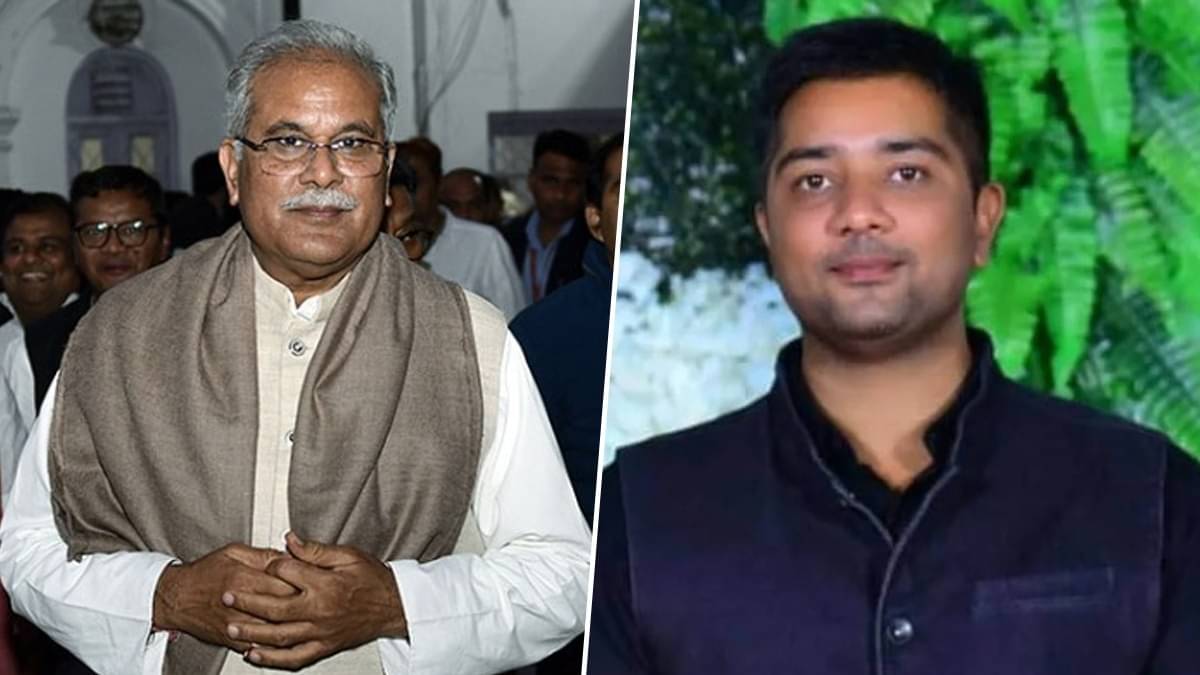
A new political earthquake has hit Chhattisgarh, with tremors felt all the way to Delhi. The Enforcement Directorate (ED), in a charge sheet filed before a special PMLA court in Raipur, has made a staggering allegation: that a company owned by the son of former Chief Minister Bhupesh Baghel received a “benefit” of approximately ₹250 crore from the proceeds of a massive liquor fraud in the state. This accusation, emerging from the complex “Mahadev Book” online betting and liquor scam, threatens to redefine the political narrative in Chhattisgarh, casting a long shadow over the Congress party and its recently ousted government. This article dissects the charge sheet’s claims, the political fallout, the legal context, and the labyrinthine scandal at its heart.
The Core Allegation: From Liquor Fraud to a Political Scion
The ED’s charge sheet is part of its ongoing probe into the Mahadev Book app case—an alleged pan-India online betting syndicate. Investigators claim the app’s promoters, Saurabh Chandrakar and Ravi Uppal, operated a vast network that laundered money through a web of shell companies and hawala channels. A significant portion of these alleged proceeds, the ED states, was generated through a liquor scam within Chhattisgarh.
The central, explosive claim is that a company reportedly linked to Baghel’s son was a beneficiary of this illicit money. According to the ED, the promoters of the Mahadev app, seeking political protection and smooth operations for their liquor business, funneled around ₹250 crore to this entity. The agency suggests this was not a legitimate business transaction but a quid pro quo for ensuring a non-interference regime for the liquor mafia operating under the umbrella of the larger betting syndicate.
The Political Firestorm: Accusations and Counter-Accusations
The charge sheet has ignited a fierce political war. The Bharatiya Janata Party (BJP), now back in power in Chhattisgarh, has seized upon it as vindication of their long-standing “corruption” campaign against the Baghel-led Congress government. BJP leaders are labeling it the “biggest scam” in the state’s history, directly implicating the former First Family and accusing the previous regime of institutionalizing corruption.
From the Congress camp, Bhupesh Baghel has launched a vehement counter-offensive. His defense rests on several pillars:
1. Political Vendetta: Baghel alleges the ED is acting as a “political weapon” of the BJP-led central government to target and defame opposition leaders, especially after the Congress’s loss in the state elections.
2. Questioning the Evidence: He and his legal team challenge the evidentiary basis of the ₹250-crore figure, demanding transparency in how the ED arrived at this valuation and what concrete financial trails link the amount to his son.
3. The “Mythical” Son: In a dramatic turn, Baghel has, in past statements regarding other allegations, even questioned the ED’s knowledge of his son’s actual identity, rhetorically asking, “Do they even know his name?” This strategy aims to portray the charges as baseless and politically motivated.
Legal Labyrinth: Understanding the PMLA and the Charge Sheet
The legal proceedings are under the Prevention of Money Laundering Act (PMLA), which gives the ED wide-ranging powers. A charge sheet (or prosecution complaint) is filed after the agency believes it has sufficient evidence to prosecute the accused. It is not a conviction, but a formal accusation that will be tested in court.
Key legal questions will include:
· The Money Trail: The prosecution’s success hinges on conclusively demonstrating the movement of funds from the liquor scam’s proceeds to the accounts of the company in question. This involves forensic audit trails, bank statements, and witness testimonies.
· Proof of Quid Pro Quo: Establishing that the money was paid specifically for political favors, rather than as a potential investment or loan (however dubious), is a higher legal bar to clear.
· Admissibility of Evidence: Much of the ED’s case may rely on statements recorded under the PMLA, which can be contested by the defense in court.
The Mahadev Book Scandal: The Larger Ecosystem
To understand the ₹250-crore allegation, one must grasp the scale of the alleged parent scam. The Mahadev Book app is accused of being a front for an enormous online betting operation, with proceeds estimated in thousands of crores. Its promoters allegedly ran a parallel “settlement” economy, using hawala to distribute profits and payoffs.
The Chhattisgarh liquor connection is purported to be one of its revenue streams. The scam allegedly involved monopolizing liquor distribution, evacing state excise duties, and manipulating licenses—all under the alleged protective cover. The ED claims that a “regular share” of these profits was siphoned off to politicians and bureaucrats, with the charge sheet pointing to the former CM’s son as a prime beneficiary.
Implications and What Lies Ahead
The ramifications of this charge sheet are multi-fold:
1. For Chhattisgarh Politics: It severely damages the Congress’s prospects of a swift comeback in the state, keeping the corruption narrative alive. It also puts the current BJP government under pressure to deliver a transparent investigation without appearing overtly partisan.
2. For Bhupesh Baghel: This is the most serious legal and reputational threat he has faced. His political future, both within the state Congress and at the national level, now depends on the outcome of this case.
3. For Indian Federalism: It adds another chapter to the fraught relationship between opposition-ruled states and central investigative agencies, deepening the “agency as political tool” debate.
4. For the 2024 Landscape: While a state-level issue, it provides ammunition to the BJP’s national campaign against what it calls the Congress’s “corruption culture.”
Conclusion
The ₹250-crore figure in the ED’s charge sheet is more than a number; it is a political bombshell. It reduces a complex tale of online betting, liquor mafias, and money laundering to a single, damning allegation against the family of a prominent opposition leader. As the case winds its way through the slow-moving wheels of the judicial process, it will be fought not just in the Raipur court, but in the court of public opinion. For now, it has successfully framed the post-mortem of the Baghel administration in the starkest terms of alleged graft, ensuring that Chhattisgarh’s liquor scandal will remain on the national front page, a potent symbol of the murky intersection of politics, crime, and big money in contemporary India. The truth of the allegation will be determined by law, but its political impact is already being felt.
Discover more from AMERICA NEWS WORLD
Subscribe to get the latest posts sent to your email.

















Leave a Reply