
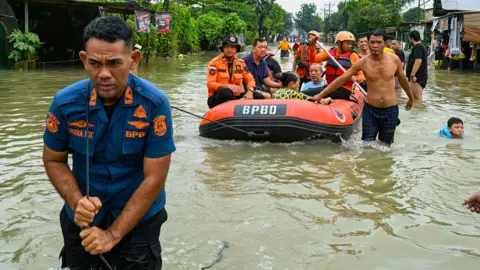
By Yohannes Lowe and Suraj Karowa/ANW South and Central Asia Correspondent , Monday 1 Dec 2025

Hundreds remain missing in Indonesia and Sri Lanka as rescue efforts continue after Cyclone Ditwah.
In a tragedy unfolding across Southeast Asia, the death toll from devastating floods and landslides triggered by Cyclone Ditwah has surpassed 1,000, with hundreds more missing and entire communities submerged under relentless monsoon rains.
The storm, which battered the region last week, has exposed the fragility of infrastructure and the escalating perils of climate change, leaving governments scrambling to respond amid public outcry over delayed aid.
How warm seas contribute to cyclone
frequency and strength

1. Sea surface temperatures rise above 26.5C
2. Water evaporates and warm, humid air rises
3. Rising air cools, causing moisture to condense into clouds. Droplets form, releasing even more heat to power the storm. Low pressure over the sea draws more air upwards
4. The system spins as air rushes to the centre to fill the low pressure void
5. Once sustained winds reach 74mph, it is classified as a hurricane
The cyclone, born in the Malacca Strait, intensified seasonal monsoons, unleashing torrential downpours that caused rivers to burst banks, hillsides to crumble, and urban centers to drown.
From Indonesia’s remote Sumatran villages to Sri Lanka’s tea plantations and Thailand’s southern cities, the disaster has claimed lives, homes, and livelihoods on an unprecedented scale.

Peoples move a car damaged by the flooding in Songkhla province, southern Thailand.
Rescue operations continue in perilous conditions, with militaries airlifting supplies to cut-off areas, but the scale of destruction—over 25,000 homes razed in Sri Lanka alone—demands a reckoning with both immediate relief and long-term resilience.
Indonesia bears the heaviest brunt, with the national disaster management agency reporting 502 confirmed deaths as of Monday, alongside 508 people unaccounted for and 2,500 injured.

A drone view shows debris in a flooded area in Hat Yai district, Songkhla province, on 28 November 2025.
In North Sumatra’s hard-hit cities of Central Tapanuli and Sibolga, collapsed bridges and mud-choked roads have isolated survivors, forcing reliance on airdrops for food and water.
In Aceh’s Meureudu district, residents sifted through debris piles of uprooted trees and shattered homes, their faces etched with exhaustion. “The water came like a monster, swallowing everything,” said one villager, echoing sentiments of betrayal toward authorities.

Residents clean up their houses in a flood-affected village in the Meureudu area, Pidie Jaya Aceh, Indonesia.
Public fury simmers in Jakarta, where President Prabowo Subianto faces sharp criticism for a response deemed sluggish and bureaucratic.
Looting has erupted in desperate pockets of Aceh and North Sumatra, as aid trickles in amid reports of clean water shortages and disease risks from stagnant floods.
Subianto inspected a makeshift kitchen in Pandan on Sunday, vowing swifter action, but opposition voices demand a national emergency declaration and international help—steps he has so far resisted.
Cyclone Senyar, as it’s known locally, made landfall last Wednesday, its fury amplified by warmer seas that scientists link to fossil fuel emissions.

Indonesia’s President Prabowo Subianto (C) inspects the operation of a public kitchen preparing food for flash flood survivors at an evacuation post in Pandan, Central Tapanuli, in the North Sumatra province.
Across the Bay of Bengal, Sri Lanka grapples with its deadliest weather event since 2017.
The disaster management center updated the toll to 355 dead and 366 missing, concentrated in the central highlands.

People look towards a house partially submersed by flooding in Peliyagoda, Sri Lanka.
Kandy, the cultural heartland, suffered 88 fatalities, while Nuwara Eliya and Badulla’s misty tea estates claimed 75 and 71 lives, respectively, from landslides that buried villages under tons of earth.
In Colombo, floodwaters peaked overnight, turning streets into rivers and stranding thousands.

ByA landslide survivor crosses a section of a damaged road in Sarasavigama village in Kandy.
President Anura Kumara Dissanayake declared a state of emergency on Saturday, labeling it Sri Lanka’s “most challenging natural disaster.”
Over 147,000 people huddle in temporary shelters, with 968,000 more needing urgent aid.
More than 24,000 troops, bolstered by police and air force units, comb flood zones, aided by international pledges from India and Japan.
Dissanayake’s appeal for global support underscores the crisis’s enormity: 25,000 homes destroyed, roads severed, and power grids crippled.

Residents walk among large piles of wood that were swept away by the flood waters in a village in the Meureudu area of Indonesia.
In Peliyagoda, families gazed at half-submerged houses, salvaging what little remained.
“We’ve lost everything, but we’re alive—that’s something,” one survivor told reporters, her voice trembling.
Yet, as rains ease, the focus shifts to rebuilding in a nation still reeling from economic woes.
Southern Thailand, no stranger to monsoons, confronts one of its worst flood episodes in a decade, with 176 deaths across eight provinces.

People commute through a water-logged street in Chennai, India.
Songkhla, the epicenter, reports the highest casualties, its streets a graveyard of submerged vehicles and low-rise buildings.
In Hat Yai, 80% of evacuees have trickled home to assess the wreckage, urged by Deputy Prime Minister Thamanat Prompow to register for 9,000 baht (£215) in compensation.
Interest-free loans of up to 100,000 baht target businesses and repairs, while solar lamps combat blackouts.
Prompow’s visit brought promises of restored utilities, but criticism mounts: two officials suspended for response failures, and public frustration over evacuation delays.
A drone’s eye view from Songkhla reveals the chaos—debris-strewn waters lapping at rooftops, highways turned into lakes.
The floods, starting just over a week ago, stranded thousands and halted transport, but relief includes debt suspensions for affected households.
As in Indonesia, the rare tropical storm’s fusion with monsoons supercharged the deluge, a pattern experts tie to ocean warming.
Malaysia has escaped the worst, logging just two deaths in northern Perlis, but vigilance persists as border regions monitor spillover risks.
Meanwhile, Cyclone Ditwah, now a weakening “deep depression” 30 miles off India’s Chennai coast, douses Tamil Nadu in fresh rains, waterlogging streets and complicating commutes.
At the heart of this calamity lies human-caused climate breakdown, which scientists say is turbocharging storms.
Warmer air, holding 7% more moisture per degree Celsius of heating, fuels extreme downpours; drier soils, paradoxically, accelerate runoff.
The Guardian’s Ajit Niranjan explains: fossil fuels have heightened flood risks in Asia, Europe, and beyond.
Tropical cyclones like Ditwah pack more punch—stronger winds, heavier rains—though their annual count holds steady.
Adaptation lags: early warnings save lives, dykes and green spaces absorb floods, but “managed retreat” looms for vulnerable zones.
As waters recede, questions multiply. Can underprepared governments mount effective recoveries? Will international aid bridge gaps?
For now, desperate searches persist—soldiers in Sri Lanka hauling survivors from mudslides, Indonesian teams probing isolated hamlets.
The cyclone’s roar fades, but Asia’s wake-up call echoes: without curbing emissions, such tempests will only intensify, turning seasonal rains into existential threats.
Discover more from AMERICA NEWS WORLD
Subscribe to get the latest posts sent to your email.



































Leave a Reply