

By Manisha Sahu | America News World
Published: November 25, 2025
In a fresh diplomatic flashpoint between India and China, Beijing on Tuesday firmly rejected allegations of harassment made by an Arunachal-born Indian woman who claimed she was stopped and questioned at Shanghai Pudong International Airport because her passport listed Arunachal Pradesh as her birthplace. The Chinese Foreign Ministry said the airport authorities followed “laws and regulations” and denied subjecting her to any coercive or discriminatory treatment.

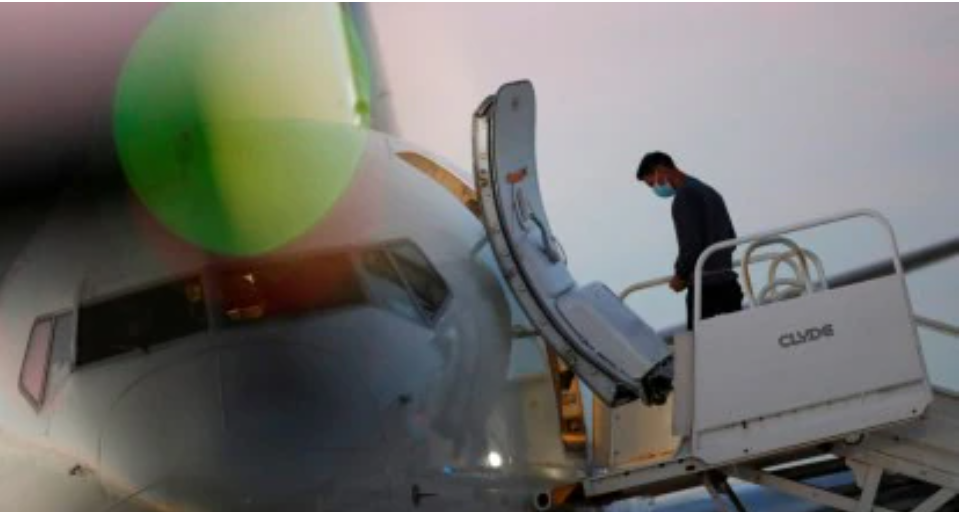
Pema Wangjom Thongdok, an Indian citizen living in the UK, said her planned three-hour layover during her trip from London to Japan on November 21 turned into a distressing experience. (File Photo)
The incident involves Pema Wangjom Thongdok, a UK-based Indian citizen travelling from London to Japan on November 21. Thongdok alleged her three-hour scheduled layover in Shanghai turned into a “traumatic and humiliating ordeal” when immigration officials deemed her passport “invalid” due to her birthplace being in Arunachal Pradesh—a region China claims as part of “South Tibet”. Her experience, shared on social media and later reported by Indian media, triggered sharp reactions online and added to the longstanding geopolitical sensitivities surrounding the border state.
China’s Firm Denial
Responding to media queries in Beijing, Chinese Foreign Ministry spokesperson Mao Ning dismissed the accusations as “factually incorrect”. She insisted that Thongdok was not subjected to any “compulsory measures” and that airport authorities acted strictly according to immigration protocols.
“According to the information we have received, the individual was not detained or mistreated. She was provided with a place to rest, water, and food by the airline. The procedures implemented at the airport were routine and in compliance with Chinese laws,” Mao stated.
The spokesperson emphasised that China routinely handles transit passengers in accordance with international aviation norms. “There was no politically motivated intention behind the process,” she added. However, she did not directly address the central claim—whether the birthplace ‘Arunachal Pradesh’ on an Indian passport triggered the objection from immigration officials.
Thongdok’s Account of a ‘Traumatising’ Experience
Thongdok, who works and resides in the United Kingdom, said she had boarded a London–Shanghai–Tokyo flight operated by an international carrier. Her layover at the Shanghai airport was supposed to last only a few hours. However, she alleged that immigration personnel abruptly stopped her and questioned her Indian passport.
According to her account, the officials told her that Arunachal Pradesh does not fall under Indian jurisdiction and therefore her travel document was “not valid” in its present form. She described the encounter as intimidating and culturally insensitive.
Thongdok claimed she was escorted to a separate room, questioned about her ethnic origins, and denied clarity about the reason for her detention. She also asserted she was not allowed free communication during this period. The episode left her “scared, isolated, and unsure” about whether she would be allowed to continue her journey.
She eventually boarded her connecting flight to Japan, but the experience, she said, left a lasting psychological impact. “I was treated like a suspect just because of where I was born,” she wrote.
Arunachal Pradesh: A Sensitive Fault Line
Thongdok’s birthplace—Arunachal Pradesh—has long been at the heart of India-China tensions. Beijing claims nearly the entire Indian state as part of its territory and issues “stapled visas” to residents of Arunachal Pradesh instead of regular visas, signalling refusal to acknowledge India’s sovereignty over the region.
India, meanwhile, has consistently rejected China’s claims, firmly stating that Arunachal Pradesh is an “integral and inalienable part” of the country. The region has also been the site of occasional military standoffs and heightened friction along the Line of Actual Control (LAC).
Although Thongdok is an Indian citizen living abroad, the birthplace column in her passport—identifying Arunachal Pradesh as part of India—appears to have been at the core of the dispute, according to her version of events.
Growing Public Reaction and Diplomatic Undercurrents
News of the incident has ignited widespread discussion on social platforms. Many expressed solidarity with Thongdok, calling the alleged treatment an example of China weaponising immigration processes to advance its territorial claims. Others criticised the airline and authorities for failing to protect the rights of a transit passenger who was not even entering China formally.
The Indian government has not yet issued an official statement, but sources within New Delhi’s strategic community believe the matter could escalate if verified. A former diplomat familiar with India-China relations said the allegation, if accurate, would represent a “concerning politicisation of civilian travel documents”.
“Even if China does not recognise Arunachal Pradesh as Indian territory, using airport immigration to challenge a passenger’s birthplace is unacceptable. It sets a precedent that affects thousands of travellers,” the former official said.
However, analysts also caution that without corroboration from aviation authorities, the full context remains unclear. “Transit protocols can involve additional scrutiny depending on travel histories, visa types, or security flags. Both sides are offering very different stories at the moment,” noted an international relations expert.
Airline’s Position Under Scrutiny
Thongdok claims that she was largely assisted by airline staff who arranged rest, drinking water, and food during the episode. The Chinese Foreign Ministry also cited the airline’s support as part of its defence. However, neither the airline nor airport authorities have issued detailed statements clarifying their actions or the reasons behind the scrutiny.
Aviation policy specialists say airlines often act as intermediaries when transit passengers face immigration issues. But they also emphasise that immigration officials must justify any dispute relating to passport validity, especially in cases where the traveller is not seeking entry into the country.
A Broader Pattern or an Isolated Incident?
Incidents involving Arunachal-origin travellers facing complications in China are not new, but they typically revolve around visa issuance rather than treatment at airports. If Thongdok’s allegations hold true, it could mark a departure from China’s previous practices and raise questions about whether geopolitical tensions are influencing immigration procedures.
Observers note that China has in recent years hardened its stance on Arunachal Pradesh, issuing new maps claiming the region and escalating diplomatic protests when Indian leaders visit the state. Against this backdrop, even isolated incidents gain symbolic significance.
Looking Ahead
For now, the controversy rests on sharply conflicting narratives—Thongdok’s detailed account of distress versus China’s dismissal of the claims as misinformation. With rising India-China tensions, the issue is likely to attract further scrutiny from diplomats, civil aviation bodies, and human rights groups.
Whether this episode becomes another point of contention in the already strained bilateral relationship may depend on forthcoming clarifications from both governments and the airline involved. For Thongdok, however, the experience has already left a mark—transforming what should have been an ordinary layover into an unsettling confrontation with the geopolitics of her birthplace.
Discover more from AMERICA NEWS WORLD
Subscribe to get the latest posts sent to your email.














Leave a Reply