
By Mal Bradman and Suraj Karowa/ANW , November 26, 2025 , Perth, Western Australia –

It was the start of a new relationship with nature, and a reminder of my childhood joie de vivre
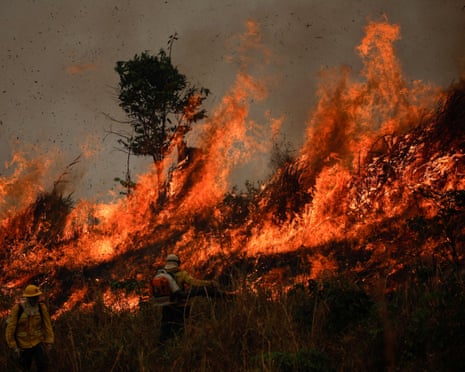
In the scorched aftermath of Australia’s 2019-2020 bushfires, which claimed an estimated 61,000 koalas among 143 million native animals, Mel Bradman found herself scrolling not through dating apps, but adoption profiles for the marsupials she adored as a child.
From her home in the UK, the 2020 news footage of singed eucalyptus forests and orphaned joeys ignited a compulsion to act.
“I felt helpless across the ocean,” Bradman, 52, recalls in an exclusive interview with The Guardian.
“But adopting Jarrah – that’s when the helplessness turned into something real, something that cracked open a part of me I’d long forgotten.”

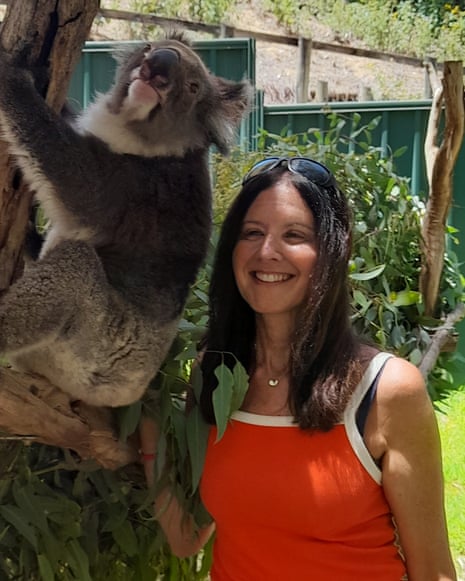
Very affectionate’ but also ‘a bit of a troublemaker’: Jarrah. Photograph: Courtesy of Mel Bradman
Bradman’s story, emblematic of a global surge in symbolic adoptions during climate crises, underscores the koala’s plight as a bellwether for environmental collapse.
Now, five years on, as Western Australia grapples with renewed drought and habitat loss, her encounter with the “troublemaker” koala named Jarrah has evolved into a broader advocacy push.
It’s a tale of reconnection – not just with wildlife, but with the unbridled joy of youth – amid headlines dominated by record heatwaves and deforestation debates.
The fires, fueled by a climate emergency scientists link to human-induced warming, razed over 18 million hectares across New South Wales, Victoria, and beyond.

Kai (left) tries to shove Jarrah off his perch. Photograph: Courtesy of Mel Bradman
Koalas, already vulnerable due to chlamydia outbreaks and shrinking eucalyptus corridors, suffered disproportionately.
A 2022 University of Sydney study pegged the toll at up to 3 billion animals affected nationwide, with koalas facing extinction in some regions by 2050 without intervention.
Bradman’s response was twofold: crafting paw mittens from online patterns and joining the Australian Koala Foundation (AKF), a Brisbane-based nonprofit tracking wild populations via GPS collars.
For £50 annually, Bradman “adopted” Jarrah, a resident of the AKF’s Perth sanctuary.
His profile – “very affectionate but a bit of a troublemaker, always exploring rocks” – mirrored her own restless spirit.
Monthly updates arrived like postcards: Jarrah munching leaves, napping 21 hours daily, occasionally sparring with enclosure-mate Kai.
“It was like having a pen pal who embodied everything wild and unapologetic,” she says.
The real meeting came in January 2023, during a solo trip to Western Australia.
Rangers at the sanctuary, a 100-hectare haven amid urban sprawl, buzzed with rare excitement: Bradman was among the few “koala mums” to cross hemispheres.
Jarrah, however, was less enthused. The 7-kilogram adult, perched high in a gum tree, slumbered through introductions.
When coaxed down, he delivered a sharp nip to her thumb – a stark reminder that these “teddy bears” are apex eucalyptus specialists, not plush toys.
Regulations are ironclad: no head pats, only shoulder rubs; sessions capped at 15 minutes to minimize stress.
Yet, as Jarrah clambered nimbly on all fours, his velvet fur brushing her arm, Bradman felt a temporal shift.
“There I was, wedged between him and Kai, who was jealousy-shoving him off the branch like playground bullies.
And suddenly, I’m five again, clutching my birthday koala stuffie, dreaming of treehouse adventures.”
That childhood “happy place” – pure, cynicism-free wonder – had eroded under adult burdens: career grind, pandemic isolation, eco-anxiety.
Koalas, derived from the Dharug word “gula” (meaning “no water”), embody evolutionary ingenuity and peril.
Evolved 25 million years ago, their two opposable thumbs grip branches; their livers detoxify toxic eucalyptus, yielding hydration from leaves alone.
But specialization is their Achilles’ heel. Of 700 eucalyptus species, they tolerate just 30-40, confining habitats to coastal bands now fragmented by logging, mining, and urbanization.
Protected since 1937 after a fur-trade massacre, koalas lack federal habitat safeguards.
Queensland lists them endangered; New South Wales, vulnerable. A 2024 AKF report warns of a 30% population crash since 2020, blaming land clearing – 400,000 hectares annually in key zones.
Bradman’s epiphany rippled outward. Post-Jarrah, she volunteered with the RSPCA, logging 80 miles in charity runs and fostering strays.
Her “menagerie” expanded: a Congolese gorilla via the Dian Fossey Fund, a pangolin through Save the Pangolin, even UK guide dogs.
“One koala cracked the dam,” she laughs. “Now, if a friend needs vet runs or cat-sits, I’m the first call.”Her story resonates as Australia eyes policy shifts.
Prime Minister Anthony Albanese’s 2025 budget allocates $500 million for biodiversity, including koala corridors, but critics like AKF CEO Deborah Tabart decry it as “band-aid” against fossil fuel expansions.
“Symbolic adoptions fund boots-on-ground work – collars, vets, replanting – but we need laws, not likes,” Tabart told The Guardian. Adoptions spiked 40% post-fires, per AKF data, fueling $2 million in annual aid.
For Bradman, Jarrah – who remains “enigmatic, never calling back” – symbolizes more than survival stats. He’s a portal to joie de vivre, a nudge against despair.
“In a world bulldozing trees for subdivisions, he reminded me: joy isn’t frivolous; it’s fuel.”
As she eyes another sanctuary visit, her message is clear: In the fight for koalas, personal sparks ignite collective fires.
Discover more from AMERICA NEWS WORLD
Subscribe to get the latest posts sent to your email.


























Leave a Reply