
By_shalini oraon

The Looming Wave: Decoding Japan’s Chilling ‘Megaquake’ and Tsunami Advisory
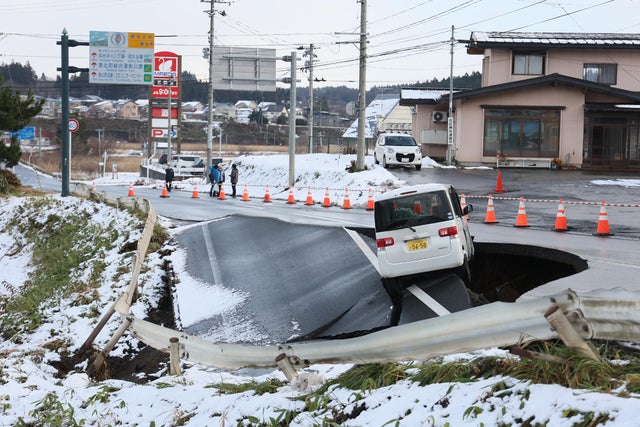
A recent, sobering advisory from Japan’s government has sent ripples of anxiety across the nation and the globe. Scientists have warned of the possibility of a catastrophic “megaquake” triggering a tsunami as tall as a 10-story building—a 98-foot (30-meter) wall of water—that could devastate coastal areas and result in a staggering 199,000 fatalities. This is not the plot of a dystopian film but a scenario laid out in Japan’s latest disaster preparedness report. The advisory revolves around the long-feared Nankai Trough earthquake, a seismic event of almost mythical dread in Japanese seismology. Understanding the science behind this warning reveals why Japan, one of the world’s most prepared nations, views this particular threat with unparalleled gravity.
1. The Geological Monster: The Nankai Trough
The root of the nightmare lies about 30 miles off the southern coast of Japan, in the Nankai Trough. This is a massive subduction zone, a deep ocean trench where the Philippine Sea Plate is diving beneath the Eurasian Plate upon which Japan sits. The plates do not slide smoothly; they are locked together, building titanic stress over decades and centuries. When that lock finally breaks, the overriding Eurasian Plate lurches upward and seaward, unleashing a megathrust earthquake. The Nankai Trough is not a single fault but a linked system spanning over 700 kilometers from the Tokai region near Shizuoka to the coast of Kyushu. A rupture across its entire length could be a magnitude 9.0 or greater event, lasting several minutes.
What makes this zone particularly dangerous is its history and proximity. Major earthquakes have rocked the Nankai Trough in a roughly 100-150 year cycle, with the last great quakes occurring in 1944 (Tonankai, M8.1) and 1946 (Nankai, M8.3). These were not the full-trough ruptures scientists fear today. The region is now deep into its seismic gap, and the accumulated strain is critical. The government’s advisory is based on the most severe plausible scenario: a simultaneous, cascading rupture of all segments.
2. The 98-Foot Tsunami: Why So Colossal?
The earthquake itself would be catastrophically destructive across central and western Japan. However, the deadliest aftermath would come from the sea. A megathrust quake at a shallow subduction zone displaces a colossal volume of the seabed over a vast area. This sudden vertical shift—potentially several meters upward over hundreds of kilometers—instantly displaces the ocean above it, generating a tsunami.
The local geography amplifies the danger. The steep slope of the Nankai Trough and the shape of the coastline, particularly in indentations like the Suruga Bay and Osaka Bay, can focus and amplify the wave energy. In some narrow bays and inlets, the wave height could be funneled to the predicted 30 meters (98 feet), reaching areas up to 2-3 kilometers inland. The sheer speed of arrival—waves could hit some coasts within 2-10 minutes—leaves almost no time for evacuation after the shaking stops, making pre-emptive evacuation based on earthquake intensity the only survival strategy.
3. The Human Toll: The 199,000 Fatality Projection
The casualty estimate is not arbitrary but a result of sophisticated computer modeling that factors in earthquake intensity, tsunami inundation, building collapse, fires, and secondary hazards. The worst-case scenario predicts:
· Immediate Collapse: Tens of thousands of buildings, including older structures not built to the latest rigorous codes, could collapse from the intense and prolonged shaking.
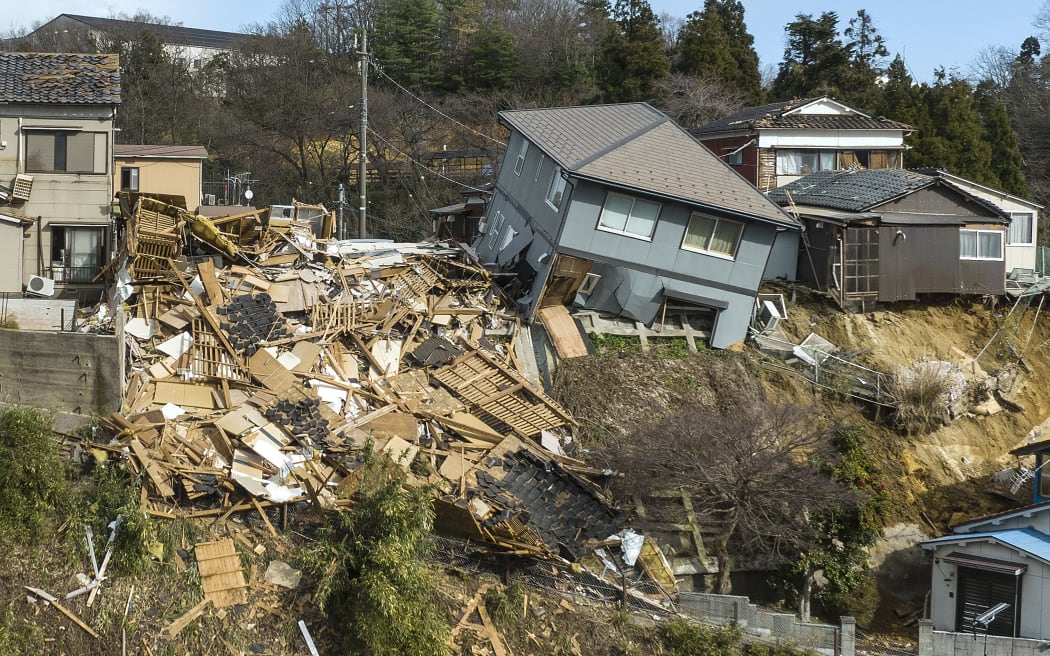
· The Tsunami’s Sweep: The 98-foot wave would obliterate coastal defenses in many areas, inundating up to 1,000 square kilometers of land. Entire seaside communities, including major cities like Shizuoka, Kochi, and parts of Osaka and Nagoya, could be submerged. The force of the water would sweep away everything in its path.
· Fires and Infrastructure Collapse: Ruptured gas lines and spilled chemicals would ignite uncontrollable fires, fanned by the wind and impeded by broken water mains. Roads, bridges, ports, and airports would be destroyed, crippling rescue and supply efforts for days.
· Mass Evacuation Challenges: Successfully moving millions of people in a compressed timeframe to high ground is the central challenge. The models assume significant success in evacuation; the 199,000 figure is a grim reminder of the likely failure to reach everyone in time, especially the elderly and disabled in densely populated areas.
4. Japan’s Relentless Preparation: Living with the Inevitable
Japan’s response to this existential threat is a testament to its resilience. The advisory is not meant to incite panic but to spur action. The nation is engaged in a multi-pronged defense:
· Engineering Marvels: Japan has built the world’s most extensive tsunami defense network: massive sea walls (some over 15 meters high), floodgates, and sculpted coastal embankments. Cities are designating vertical evacuation towers—ultra-strong buildings where people can race to the upper floors.
· Precision Forecasting and Drills: The Japan Meteorological Agency operates a dense network of seabed and terrestrial sensors to detect quakes and issue warnings within seconds. Annual nationwide drills, “Tsunami Tenko” (Tsunami Evacuation), train citizens to immediately head for high ground after strong, prolonged shaking, without waiting for an official warning.
· Societal Reinforcement: Continuous public education campaigns, clear, multi-lingual evacuation route signage, and community-based disaster planning are ingrained in the culture. Building codes are regularly updated to be among the strictest on Earth, focusing on base isolation and seismic damping technologies.
5. The Unanswerable Question: When?
This is the heart of the anxiety. Seismology can identify where and how badly, but not when. The government’s latest estimate gives a 70-80% probability of a magnitude 8-9 Nankai Trough earthquake occurring within the next 30 years. It could happen tomorrow, or in decades. The advisory’s purpose is to operate on the assumption that it is imminent, thereby maximizing preparedness.
Conclusion: A Nation Bracing on the Brink
Japan’s megaquake advisory is a chilling but necessary act of confronting a geological destiny.It underscores the brutal reality that even the most technologically advanced society remains at the mercy of planetary forces. The 98-foot tsunami and the projected fatalities are not a prediction of fate, but a scenario to be militantly avoided through human ingenuity, collective action, and unwavering preparedness. For Japan, it is a continuous race against time—fortifying infrastructure, refining evacuation plans, and hardening the societal resolve to ensure that when the earth finally does roar and the sea rises, the wave of human tragedy is held at bay, one evacuated life at a time. The world watches and learns, for Japan’s battle with the tectonic abyss is a masterclass in resilience for an increasingly unstable planet.
Discover more from AMERICA NEWS WORLD
Subscribe to get the latest posts sent to your email.
































Leave a Reply