
By_shalini oraon

Beyond Bail: The Supreme Court Verdict and the Shifting Contours of India’s UAPA
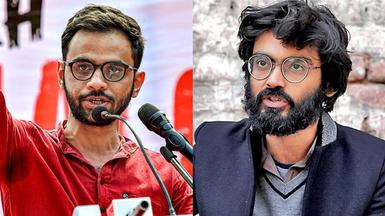
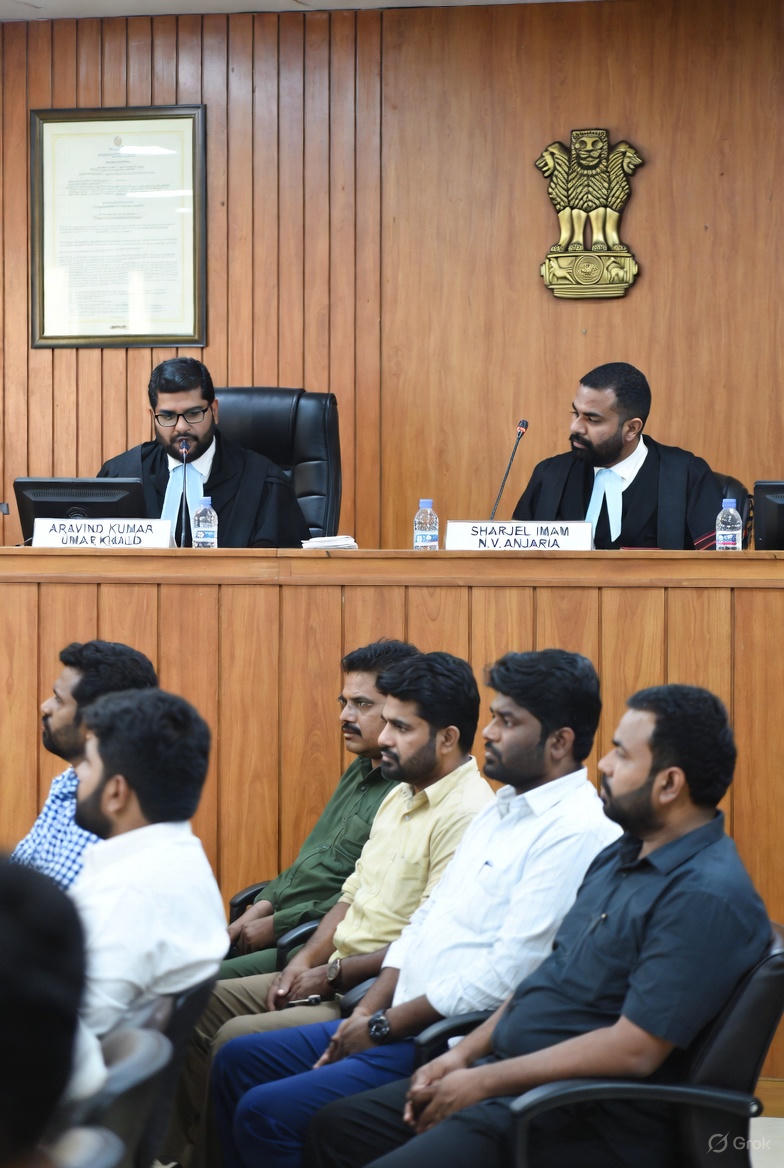
Today, the Supreme Court of India is set to pronounce a verdict that transcends the immediate fate of two individuals—Umar Khalid and Sharjeel Imam. Their bail pleas, entangled in the stringent provisions of the Unlawful Activities (Prevention) Act (UAPA) in a case related to the 2020 Delhi riots, have become a crucible for testing the boundaries of dissent, state power, and constitutional rights in modern India. Whether they walk out of jail or not, the judgment will etch a defining precedent, clarifying—or further clouding—the line between protest and terrorism.
The Weight of the UAPA
At the heart of this legal battle is the UAPA, India’s primary anti-terror law. Its Section 43D(5) presents a formidable barrier to bail, stipulating that a court must not release an accused if, on a perusal of the case diary or the chargesheet, it finds “reasonable grounds to believe” the accusations are prima facie true. This provision effectively inverts the presumption of innocence for bail purposes, placing a herculean burden on the accused. For Khalid, Imam, and many others, this has meant years of incarceration without trial, where the process itself becomes a form of punishment.
The prosecution’s case hinges on a “larger conspiracy” theory, alleging that the protests against the Citizenship Amendment Act (CAA) were orchestrated to culminate in the violent Delhi riots. Speeches made by the accused, their presence at protests, and their alleged ideological leanings form the bedrock of the charges under UAPA’s Sections 13 (unlawful activities), 16 (terrorist act), 17 (raising funds for terror), and 18 (conspiracy).
The defense, however, has vehemently contested this narrative. They argue that the charges are built on manufactured inferences, guilt by association, and a deliberate conflation of protected speech under Article 19(1)(a) of the Constitution with terrorist intent. They contend that dissenting political speech, even if sharp or critical of the government, cannot be branded as a “terrorist act” without concrete evidence of violence or incitement to imminent violence. The prolonged detention, they assert, violates the fundamental right to liberty and a speedy trial.
A Judicial Crossroads
The Supreme Court’s verdict today arrives at a critical judicial crossroads. Recent judgments have shown a court grappling with the UAPA’s draconian scope.
· On one hand, there is a growing line of caution. In Union of India v. K.A. Najeeb (2021), the Court granted bail to a UAPA accused, emphasizing that constitutional rights cannot be suspended indefinitely, even under grave charges. More recently, in Vernon Gonsalves and Arun Ferreira v. State of Maharashtra (2023), the bench orally questioned the National Investigation Agency (NIA), asking, “Where is the conspiracy for violence?” stressing the need for specificity in charges. Most pivotally, in Asif Iqbal Tanha v. National Investigation Agency (2022), Justice DY Chandrachud (as he then was) observed that the UAPA cannot be used to “crush dissent” and that the “mere use of intense or passionate language” in speeches does not equate to terrorism.
· On the other hand, the court has also upheld the state’s wide latitude in security matters. The “prima facie” standard under Section 43D(5) remains a high wall, and judges are often reluctant to delve deep into evidence at the bail stage, deferring to the prosecution’s narrative.
Today’s judgment will signal which trajectory prevails. A grant of bail would not signify an acquittal but would be a potent affirmation of several principles: that the UAPA must be applied with exacting scrutiny, that dissent is not terrorism, and that indefinite pre-trial detention is constitutionally suspect. It would reinforce the judiciary’s role as a guardian of liberty against potential executive overreach.
A denial of bail, however, would fortify the prosecution’s “conspiracy” framework. It would signal judicial endorsement of a broad-brush approach where participation in a protest movement can be linked, through speech and association, to subsequent violence by unrelated actors. Such a verdict would further chill the already frosty climate for political dissent and could embolden the more expansive use of the UAPA against activists and critics.
The Larger Canvas: Democracy in the Balance
Beyond the legal intricacies, this verdict is about the soul of Indian democracy.
1. The Criminalization of Dissent: The case is seen by many civil society members, legal experts, and international observers as emblematic of a trend where harsh laws are used to silence opposition. When students, intellectuals, and activists are jailed for years based on speeches and WhatsApp chats, it creates a paralyzing atmosphere of fear. The verdict will either arrest or accelerate this trend.
2. The Erosion of Legal Process: The UAPA, with its low rate of convictions but high success rate in securing long detentions, highlights a crisis of process. The “process as punishment” model undermines faith in the legal system. A bail grant would be a step towards restoring balance; a denial would further entrench a tool critics call a “jail without trial” statute.
3. The Supreme Court’s Legacy: This bench is conscious of its place in history. It has delivered landmark judgments on privacy and same-sex marriage, but its record on protecting liberties in national security cases has been mixed. This verdict will be a defining moment in its legacy—will it be remembered as a court that stood as a bulwark for fundamental rights, even in politically charged cases, or one that deferred to the executive’s security narrative?
Conclusion: The Walk to Freedom is a Walk for Democracy
Whether Umar Khalid and Sharjeel Imam physically walk out of Tihar Jail today is, in a profound sense, secondary. The true import of the Supreme Court’s verdict lies in the path it charts for the nation. It is a verdict on the meaning of “terrorism” in a noisy democracy, on the permissible limits of state power, and on the resilience of India’s constitutional checks and balances.
Their walk to freedom, if it happens, would be a walk for countless others languishing under similarly framed charges. It would be a walk towards a more confident democracy, unafraid of dissent. If they are ordered to remain behind bars, that walk will become longer and harder, not just for them, but for the very idea of India as a plural, argumentative, and free republic. The gavel will fall today, but its echo will resonate for years to come.
Discover more from AMERICA NEWS WORLD
Subscribe to get the latest posts sent to your email.













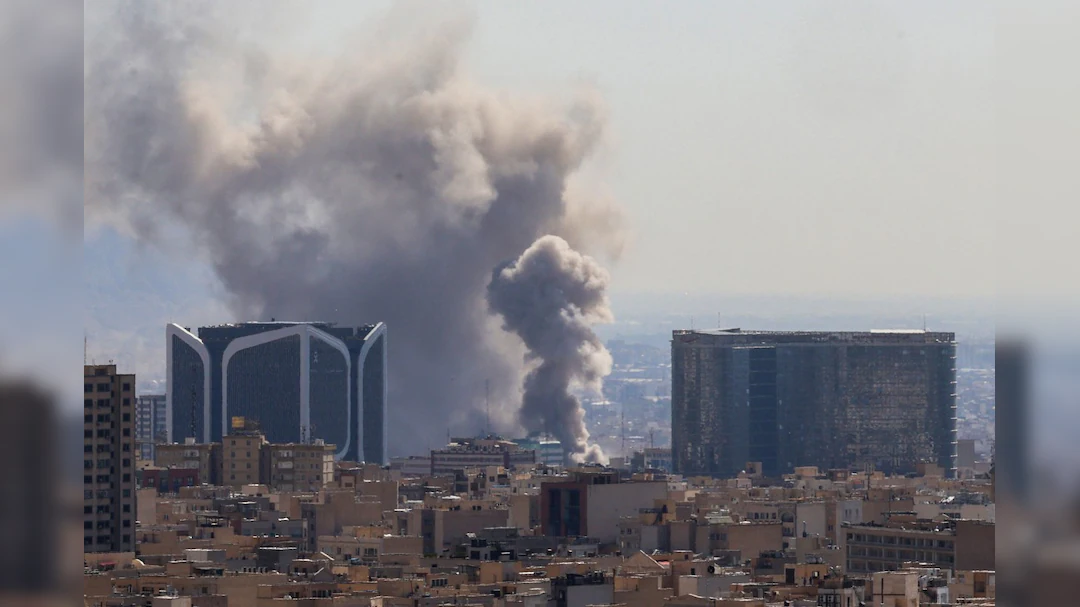
![Smoke rises after Israeli strikes in Beirut's southern suburbs, on March 2 [Mohamad Azakir/Reuters]](https://america112.com/wp-content/uploads/2026/03/hgh.webp)
drover sointeru
Whats Going down i am new to this, I stumbled upon this I’ve found It absolutely useful and it has helped me out loads. I hope to give a contribution & aid different customers like its aided me. Good job.