By Deepika Lama | America News World | March 18, 2026
There are moments in the courtroom that remind us the law is not a cold, mechanical system — it is a living, breathing pursuit of justice. India’s Supreme Court delivered one such moment recently, when it ruled that a law graduate sitting for a competitive exam cannot be penalized for giving an answer that even sitting judges could not agree upon.
The case, simple on the surface, unraveled into a fascinating constitutional debate — one that stretches back decades and touches the very heart of India’s judiciary
A Single Question. Two Answers. Two Careers on the Line.
It began with a recruitment examination held in 2021 by the Chandigarh Municipal Corporation, seeking to fill just one position: a Law Officer. Among the candidates were Charan Preet Singh and Amit Kumar Sharma, two law graduates whose professional futures would come to hinge on a single multiple-choice question.
The question read:
> *”Which of the following Schedule of the Constitution is immune from judicial review on the grounds of violation of fundamental rights?”*
The four options were:
-(A) Seventh Schedule
– (B)Ninth Schedule
– (C)Tenth Schedule
– (D) None of the above
The recruiting authority marked **(B) — the Ninth Schedule** — as the correct answer. Charan Preet Singh chose that option and was selected for the post.
But Amit Kumar Sharma chose **(D) — None of the above.** His reasoning was grounded in legal scholarship: in modern constitutional jurisprudence, no Schedule of the Indian Constitution enjoys absolute immunity from judicial review. For this, he was not merely marked wrong — he was given a *negative mark*, effectively pushing him out of contention.
Sharma refused to accept that verdict, and took his case to court.
—
## A Journey Through the Courts — and Through Constitutional History
The legal journey that followed was anything but straightforward. When Sharma challenged his negative marking before the Punjab and Haryana High Court, the Single Judge sided with the exam authority. Drawing on a rich line of precedent — including the landmark cases of *Shankari Prasad*, *Sajjan Singh*, and the post-*Kesavananda Bharati* era — the judge held that the Ninth Schedule, protected by Article 31B of the Constitution, does indeed provide immunity to laws placed within it from challenges based on fundamental rights violations. Option B, the judge concluded, was correct.
Sharma appealed. And in a striking turn, the Division Bench of the same High Court came to the *opposite conclusion*.
Referring to the Supreme Court’s watershed ruling in *I.R. Coelho v. State of Tamil Nadu*, the Division Bench held that the Ninth Schedule’s immunity is not absolute. Laws placed within it remain open to judicial scrutiny if they violate the basic structure of the Constitution. On that reasoning, the judges found Sharma’s answer — “None of the above” — to be legally sound. They revised his marks upward, and in doing so, displaced the very candidate who had already been appointed.
Singh, now facing the loss of his job, appealed to the Supreme Court.
—
## The Supreme Court’s Verdict: Fairness Above Technicality
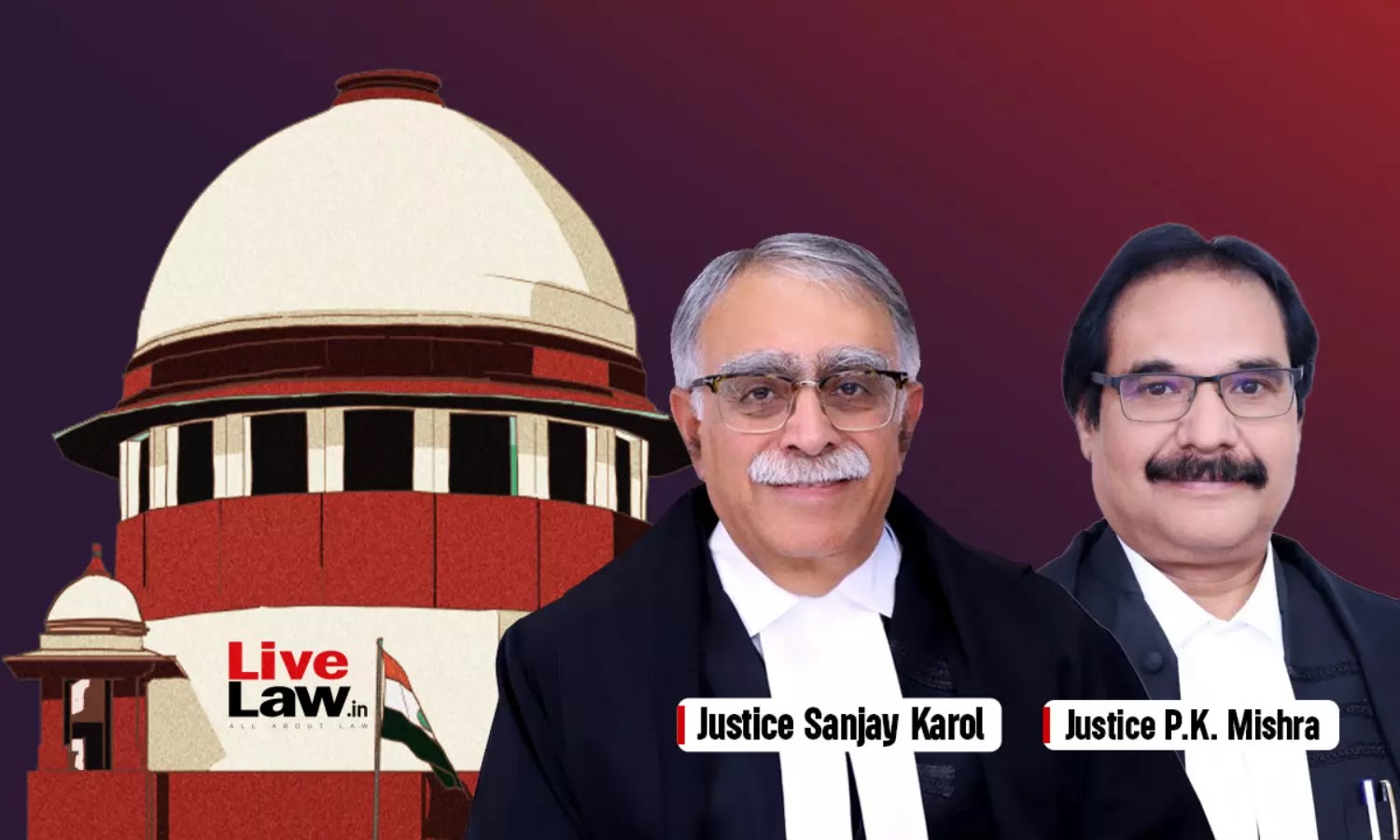
A bench comprising **Justice Sanjay Karol** and **Justice Prashant Kumar Mishra** took a step back and looked at the larger picture — and what they saw was not a simple right-or-wrong situation, but a profound example of how even the finest legal minds can reach different answers to the same constitutional question.
The Court observed that both the Single Judge and the Division Bench had waded through decades of constitutional rulings — *Shankari Prasad, Sajjan Singh, Golak Nath, Kesavananda Bharati,* and *I.R. Coelho* — and still arrived at conflicting conclusions.
In that light, the bench asked a question that was as logical as it was compassionate: if trained and experienced High Court judges could not agree on the correct answer, how could the system reasonably penalize a law graduate for choosing one reasonable interpretation over another?
The Court put it plainly:
> *”When the Judges of the High Court are at variance in their opinion as to the correct answer… it is least expected from mere law graduates, who are competing for a post of Law Officer in the Municipal Corporation, to reach a correct conclusion… From a law graduate’s point of view, both the answers may be correct.”*
The bench acknowledged that Option B — the Ninth Schedule — was arguably more appropriate based on the plain language of the question. But it equally recognized that Option D, when viewed through the deeper lens of constitutional interpretation, was also entirely defensible.
—
## A Solution That Chose Humanity Over Bureaucracy
Rather than declare one candidate right and the other wrong, the Supreme Court chose the more humane path. It directed the Municipal Corporation of Chandigarh to create a **supernumerary post** — an additional position beyond the sanctioned strength — and accommodate *both* candidates.
Sharma would be appointed without displacing Singh. Singh, who had already joined service, would retain his seniority.
Justice was served — not by finding a winner, but by refusing to create a loser where none truly existed.
—
## Why This Ruling Matters
This case is more than a story about one exam question. It speaks to the challenge of testing complex legal knowledge through rigid multiple-choice formats, where nuance and interpretation have no room to breathe. Constitutional law, by its very nature, evolves. The answer that was correct in 1951 may carry different weight in 2026.
The Supreme Court’s decision is a reminder that fairness in public recruitment must account for the inherent complexity of the law itself — and that when the system creates ambiguity, it is the system’s responsibility
Discover more from AMERICA NEWS WORLD
Subscribe to get the latest posts sent to your email.