By Manisha Sahu | America News World
Hong Kong is reeling from one of the worst disasters in its modern history after a massive fire tore through the Wang Fuk Court residential complex in the Tai Po district, leaving at least 94 people dead and more than 70 injured. The blaze, which began on the evening of November 26, 2025, raged for nearly two full days before firefighters managed to bring it under control. Search and rescue operations are expected to conclude by Friday, November 28, but officials warn that the death toll could rise further as emergency teams comb through the charred remains of the building.

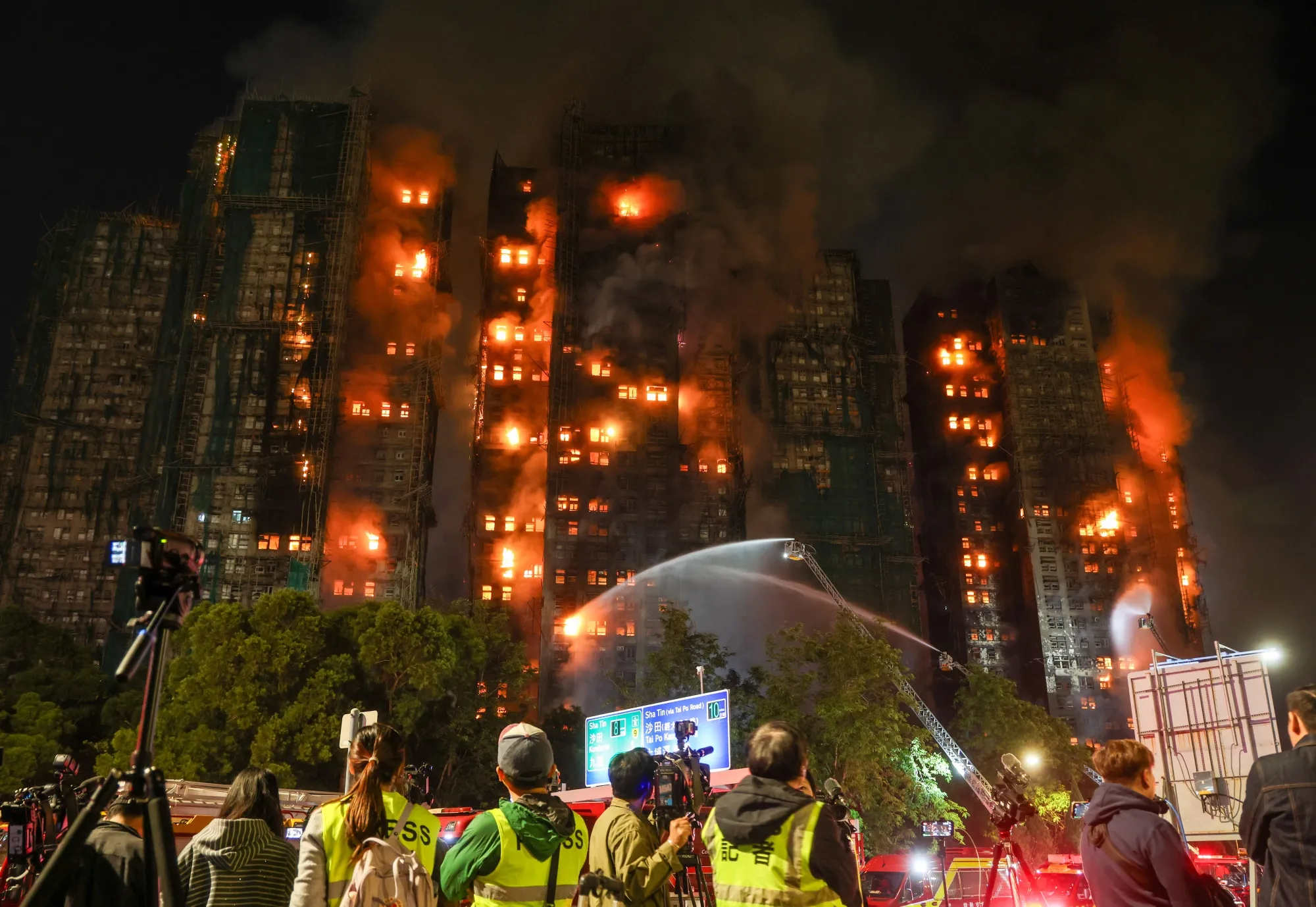
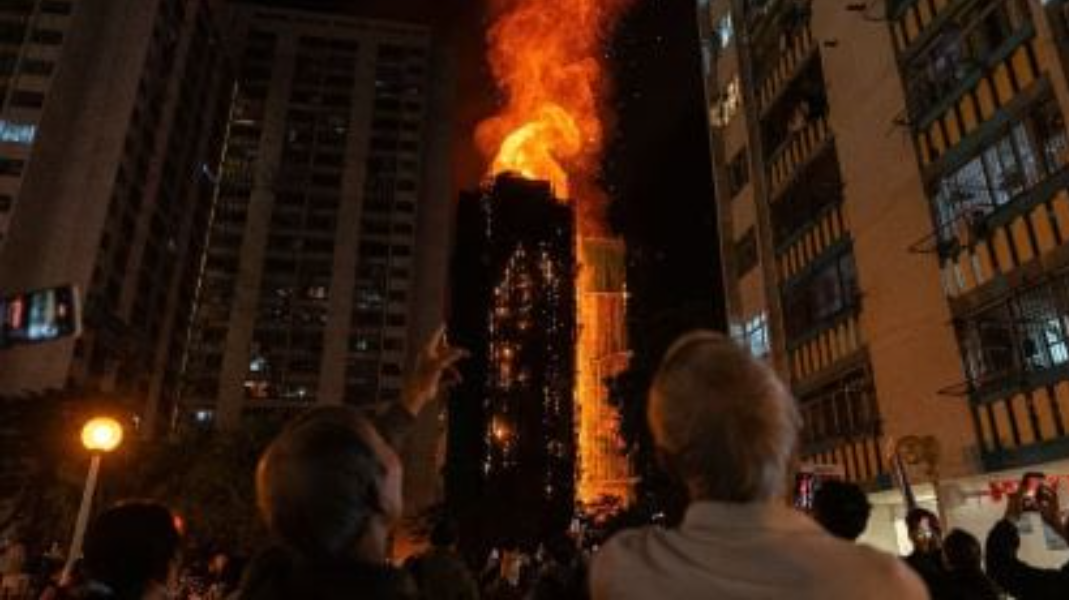
People watch as flames engulf the Wang Fuk Court residential building in Hong Kong’s Tai Po district after a fire erupted there on Wednesday, November 26, 2025. (AP)
The inferno is now considered Hong Kong’s most catastrophic fire since the 1996 blaze at a Kowloon commercial building, which claimed 41 lives. This week’s tragedy has surpassed that figure, making it one of the deadliest residential fires the city has experienced in more than 80 years.
A Blaze That Engulfed an Entire Community
Wang Fuk Court, a mid-rise, densely populated residential estate located in the New Territories’ Tai Po district, became an inferno within minutes after the fire broke out. Residents described scenes of chaos as flames spread rapidly across multiple floors. Many were trapped behind locked gates, smoke-filled corridors, or jammed stairwells.
According to initial accounts, the fire is believed to have started on one of the lower residential floors, but the exact cause remains under investigation. Some survivors reported hearing what sounded like a small explosion shortly before the fire alarms went off, although authorities caution that these details are still being verified.
Hong Kong Fire Services Department (FSD) officials said the structure’s age and internal layout contributed to the rapid spread of smoke and flames. The building’s design, common among residential estates built several decades ago, included single exit stairwells, narrow hallways, and older ventilation systems—factors that may have intensified the disaster.
Heroic Firefighting Efforts Amid Unprecedented Conditions
Over 200 firefighters and emergency service personnel were deployed to combat the blaze. The FSD described the situation as “extremely complex,” with firefighters forced to break through metal barriers and outdated security gates to reach trapped occupants.
Rescue teams faced rising temperatures, poor visibility due to thick black smoke, and floors that had begun to collapse. Many residents were found huddled inside bathrooms or near windows where they attempted to escape the heat. Some survivors managed to reach the rooftop, where firefighters conducted a series of airlift rescues that continued well into the night.
Despite the dangers, firefighters spent nearly 48 hours navigating the wreckage, floor by floor, to reach survivors. Several were injured during the operation, highlighting the severity of the fire and the structural instability of the building.
Dozens Injured and Hospitals Overwhelmed
Hospitals across Hong Kong, particularly those in the New Territories, have been placed on emergency footing. More than 70 people were injured, and several remain in critical condition with severe burns and smoke inhalation.
Medical staff reported treating victims ranging from infants to elderly residents, many of whom suffered from respiratory distress after prolonged exposure to smoke. Emergency rooms quickly filled as paramedics transported victims from the scene, with hospitals calling in additional personnel to handle the surge.
Authorities have set up support centers for affected families, offering counseling, emergency housing, and legal assistance. Volunteers and NGOs have also mobilized across Hong Kong to provide medical supplies, food, and blankets to evacuees.
Government Response and Public Outcry
Chief Executive John Lee expressed “deep sorrow” over the tragedy and promised a thorough investigation into the cause of the fire as well as the conditions that contributed to the high death toll. He also pledged government support for victims and survivors, noting that compensation funds would be established.
Lawmakers and safety experts, however, have raised concerns regarding outdated fire safety codes in older buildings—many of which house thousands of residents across Hong Kong’s dense urban districts. While newer developments are required to meet strict fire safety standards, older structures have long been vulnerable to fire hazards due to outdated wiring, limited ventilation, and single-point exits.
The Wang Fuk Court fire has reignited long-standing debates over building safety regulations, emergency evacuation protocols, and the need for retroactive safety upgrades. Critics argue that years of warnings have gone unaddressed, putting residents at risk.
Survivors Recount Scenes of Panic and Desperation
For many residents, the harrowing memories of the blaze are likely to remain etched for life.
One survivor, a 32-year-old mother, described the moment she realized the fire was out of control: “The hallway was already full of smoke when we opened the door. I grabbed my daughter and crawled on the floor, but we couldn’t see anything. We tried to reach the stairs, but people were screaming that the fire was coming up.”
Another resident said he survived by climbing out onto a narrow ledge until firefighters reached him with a ladder: “I thought I was going to fall. The heat was unbearable, and the building felt like it was shaking.”
Dozens of similar stories have emerged—some of survival, others of heartbreaking loss as families search for missing loved ones.
A City in Mourning
Hong Kong has declared a period of mourning, with flags lowered and candlelight vigils planned across the city. The tragedy has touched nearly every district, as many victims were migrant workers, families with young children, and long-time residents of the Tai Po community.
Religious groups, community organizations, and civil society leaders have called for unity and support for survivors and families of the deceased. Local temples and churches have opened their doors to provide counseling and shelter.
The Road Ahead
As rescue teams prepare to conclude their search efforts, Hong Kong faces a period of reckoning. The Wang Fuk Court fire has not only exposed the vulnerabilities in the city’s aging infrastructure but also challenged its emergency preparedness in the face of large-scale residential disasters.
Investigators are expected to review structural blueprints, fire alarm records, and witness accounts to determine what went wrong—and how such a tragedy can be prevented in the future.
For now, the focus remains on honoring the victims, supporting the survivors, and rebuilding a shaken community as Hong Kong confronts one of the darkest weeks in its recent history.
Discover more from AMERICA NEWS WORLD
Subscribe to get the latest posts sent to your email.