By Suraj Karowa / ANW
Washington, D.C. – December 30, 2025

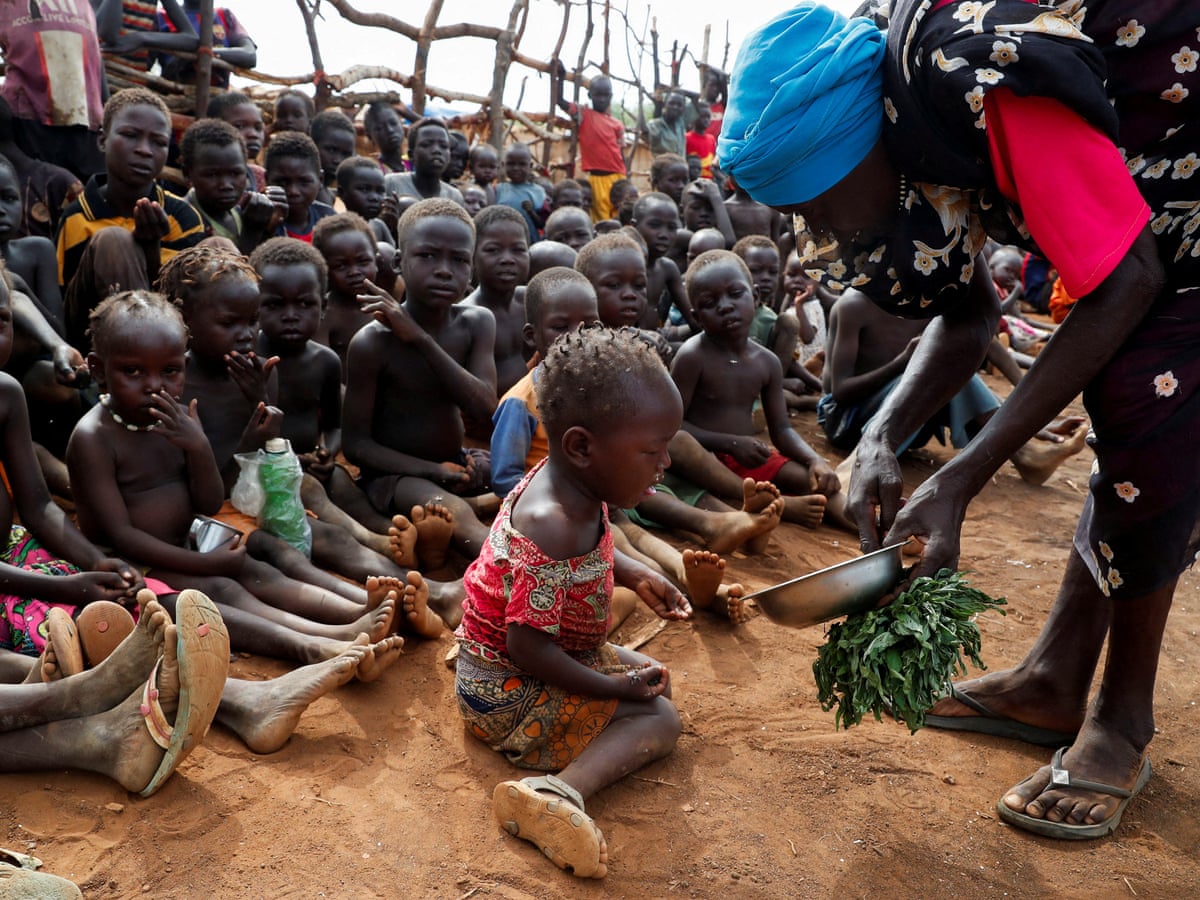
Rahma Kaki Jubarra and her sons, who are emergency level malnourished, Farah, 9 months and Jabr, three and a half, receive aid at Almanar feeding center in Mayo Mandala on the outskirts of Omdurman, Sudan on May 25, 2025.
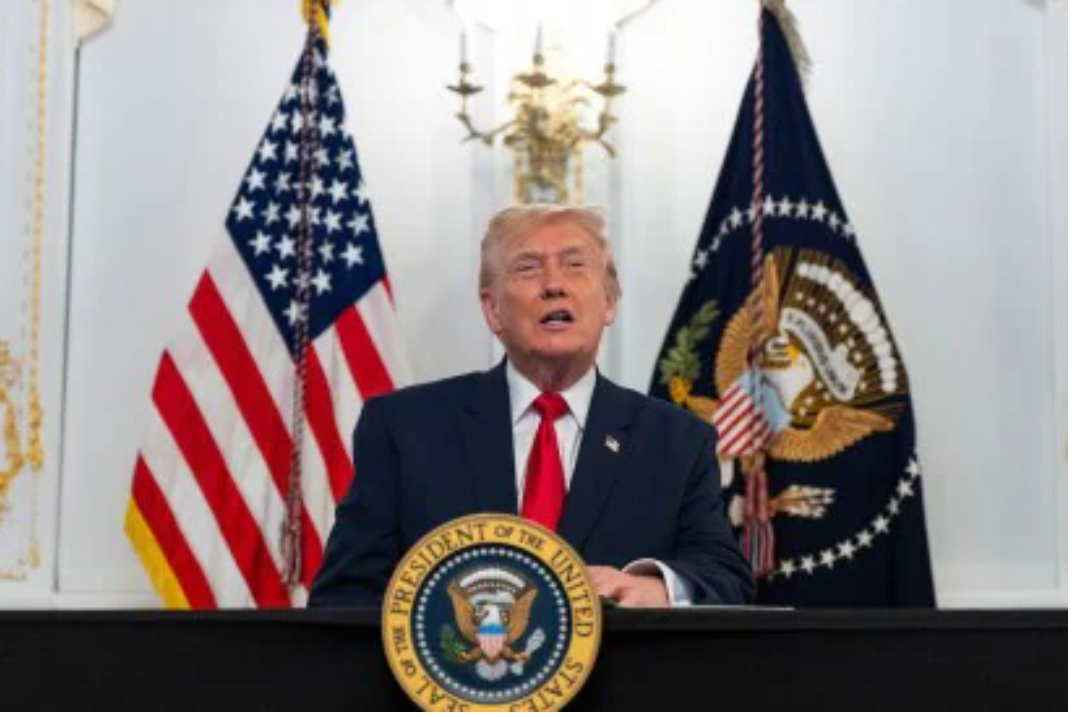
In a stark pivot that underscores the Trump administration’s aggressive push for UN reform, the United States pledged $2 billion on Monday to bolster United Nations humanitarian efforts worldwide.
The announcement, delivered from the U.S. mission in Geneva, arrives as President Donald Trump’s team slashes traditional foreign aid budgets and issues a blunt ultimatum to UN agencies: “adapt, shrink, or die.”
Critics decry the move as a shortsighted gamble that could exacerbate global hunger and displacement, while supporters hail it as a streamlined path to more efficient aid delivery.
The pledge, a fraction of the $17 billion in annual U.S. contributions to UN-backed programs in recent years, is framed by administration officials as a “generous” lifeline preserving America’s mantle as the globe’s top humanitarian donor. Yet, it signals deeper upheaval.
Under the new framework, funds will flow through an umbrella account managed by the UN’s Office for the Coordination of Humanitarian Affairs (OCHA), led by British diplomat Tom Fletcher.

A young boy and his mother struggle to lift a heavy bag into their wheelbarrow at a distribution center in the Bentiu internally displaced persons camp, Unity State, South Sudan, on November 6, 2025.
This centralization aims to curb what the U.S. calls “bureaucratic overhead, unnecessary duplication, and ideological creep” in aid distribution.
“This humanitarian reset at the United Nations should deliver more aid with fewer tax dollars—providing more focused, results-driven assistance aligned with U.S. foreign policy,” declared U.S. Ambassador to the UN Michael Waltz in a statement.
A senior State Department official, speaking anonymously ahead of the reveal, elaborated: “Fletcher and his office are going to control the spigot on how money is distributed to agencies.” The goal? Consolidate leadership, prioritize crises, and tie aid more tightly to American strategic interests.
For beleaguered UN affiliates like the World Food Programme (WFP), the UN High Commissioner for Refugees (UNHCR), and the International Organization for Migration (IOM), the implications are seismic.
These groups have already absorbed billions in cuts this year compared to Biden-era highs—or even Trump’s first term. WFP, which feeds 150 million people annually, faces program rollbacks in famine-struck Sudan and Gaza.

UN Under-Secretary-General for Humanitarian Affairs and Emergency Relief Coordinator Tom Fletcher (L) visits the Just for Afghan Capacity and Knowledge (JACK) Mobile Healthcare Centre in Nawabad village in Chahardara district of Kunduz Province on April 30, 2025.
UNHCR warns of shuttered refugee camps in Ukraine and Syria. IOM reports stalled migrant support in Haiti and Bangladesh.
The timing could hardly be more precarious. 2025 has been a annus horribilis for global aid. Famine declarations in Sudan’s Darfur region and Gaza’s besieged enclaves have left millions teetering on starvation’s edge.
In South Sudan, floods displaced 200,000 in Unity State alone, as captured in haunting images of a young boy and his mother heaving aid sacks into a wheelbarrow at Bentiu’s displacement camp on November 6.
Climate-fueled disasters—from Congo’s droughts to Afghanistan’s quakes—have swelled needs by 20%, per UN estimates. Yet Western donors, including Britain, France, Germany, and Japan, have trimmed allocations amid domestic fiscal squeezes, amplifying the void.
Enter Trump’s “America First” redux. Since January, his administration has axed $15 billion from USAID’s coffers, triggering ripple effects: incomplete water pipelines in Congo’s Goma leave women and children queuing endlessly at standpipes, as seen on June 16; pediatric grants slashed by $12 million spark lawsuits from U.S. doctors; and disaster relief withheld from blue states prompts federal court battles.

Women and children queue at the standpipe, where incomplete water connections caused by USAID funding cuts have led to ongoing water shortages, in Goma, North Kivu province, Democratic Republic of Congo, June 16, 2025.
“These cutbacks are shortsighted,” argues Human Rights Watch’s Kenneth Roth. “They’ve driven millions toward hunger, disease, and radicalization—eroding U.S. soft power when we need it most.”
Administration defenders counter that the old model was bloated and unaccountable.
“The UN has drifted from its mandate to save lives, veering into ideological crusades that undermine American interests,” a White House aide told reporters.
The $2 billion infusion—earmarked initially for OCHA’s pared-down annual appeal—targets 17 high-need nations: Bangladesh, Congo, Haiti, Syria, Ukraine, and others.
Notably absent: Afghanistan, the world’s largest humanitarian crisis with 24 million in peril, and Palestinian territories, which Trump officials say will draw from his forthcoming Gaza peace blueprint.
Fletcher, a pragmatic ex-U.K. envoy, struck an optimistic chord. Visiting a mobile clinic in Afghanistan’s Kunduz Province on April 30, he witnessed firsthand the strains of underfunding.
In a post-announcement statement, he lauded the U.S. as a “humanitarian superpower,” offering “hope to people who have lost everything.”
Under his “humanitarian reset” launched last year, OCHA has already streamlined appeals, slashing its 2025 request by 15% to $50 billion amid donor fatigue.
But whispers in Geneva corridors paint a grimmer picture. UN insiders fear the U.S. model—pooling funds for “results-driven” payouts—could politicize aid, favoring allies over the neediest.
“It’s not just shrinking; it’s reshaping in Washington’s image,” one OCHA staffer confided. Job losses could top 10,000 across agencies, with ripple effects on local hires in crisis zones.
In Sudan, where malnourished siblings like 9-month-old Farah and 3-year-old Jabr Jubarra receive meager rations at Omdurman’s Almanar center, delays could prove fatal.
This pledge caps a frenetic year of Trumpian foreign policy blitzes: from Venezuela strikes claiming a “big facility” takedown to a “terrific” Zelensky summit that oddly buoyed Putin.
Domestically, echoes of Biden linger in Trump’s sudden economic dovishness. Globally, 2026 looms as a “hinge year,” per think tanks, with AI arms races and Venezuelan tinderboxes testing U.S. resolve.
As New Year’s Eve nears, the $2 billion question lingers: Will this reset amplify aid’s impact, or hasten a humanitarian unraveling? Fletcher’s spigot may flow, but in a world of ballooning crises, even superpowers must wonder if less truly equals more.
Discover more from AMERICA NEWS WORLD
Subscribe to get the latest posts sent to your email.




















![Smoke rises after Israeli strikes in Beirut's southern suburbs, on March 2 [Mohamad Azakir/Reuters]](https://america112.com/wp-content/uploads/2026/03/hgh.webp)