By Suraj Karowa and Ella Nelson
Washington, D.C. – December 25, 2025

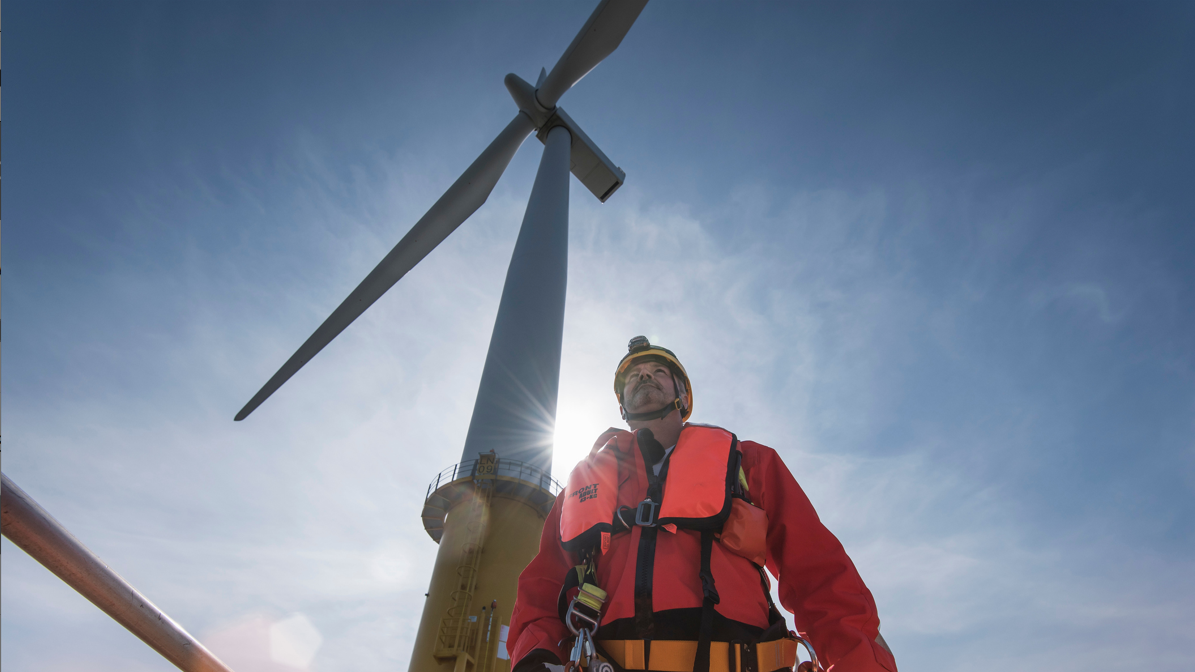
Employees of Dominion Energy gaze at one of two wind turbines located 27 miles off of Virginia Beach in the Atlantic Ocean in 2023. The two turbines are part of a massive Virginia wind farm under construction and recently suspended by the Trump administration.
In a dramatic reversal for America’s burgeoning clean energy sector, the Trump administration has slammed the brakes on the nation’s largest offshore wind projects, suspending federal leases for all major developments under construction.
The move, announced on Monday, cites vague national security concerns tied to radar interference, threatening billions in investments, thousands of jobs, and a key pillar of the U.S. push toward renewable energy.
The sweeping order affects five high-profile Atlantic Ocean projects poised to generate nearly six gigawatts of electricity—enough to power over a million homes—by the end of the decade. At the epicenter is Dominion Energy’s ambitious Virginia offshore wind farm, a $20 billion behemoth that’s already 60% complete.
Slated for full operation by late 2026, it would anchor the East Coast’s wind revolution, delivering more than two gigawatts to a state grappling with surging electricity demands from its exploding data center industry.
Other stalled sites stretch from New England’s blustery shores to the mid-Atlantic, including Revolution Wind off Rhode Island and Connecticut.

Wind turbine parts for Revolution Wind, one of the now-stalled offshore wind projects in New England, are staged on a pier in New London, Connecticut, in September.
President Donald Trump’s long-standing disdain for wind power—once famously calling turbines “bird killers” and “eyesores”—has fueled speculation that politics, not peril, drives the decision.
In a fiery Fox Business interview, Interior Secretary Doug Burgum defended the pause, insisting the Department of Defense had “conclusively” flagged risks from turbine blades scattering radar signals like confetti.
“These massive spinning blades can create real issues for determining friend from foe in our airspace,” Burgum warned, nodding to East Coast population centers and bustling airports.
He also dismissed offshore wind as the priciest energy source, urging New England to pivot to Pennsylvania’s abundant natural gas instead.
Yet the administration’s rationale remains shrouded in secrecy.
The Interior Department’s press release invoked “classified reports” from the newly rebranded Department of War—Trump’s nod to historical nomenclature—but offered no specifics beyond turbine “movement and light reflectivity” jamming radar.
A Pentagon spokesperson confirmed ongoing interagency talks to “assess mitigation possibilities,” but demurred on details.
Critics, including Virginia Democratic Sens. Mark Warner and Tim Kaine, blasted the opacity.

Wind turbine foundation components for an offshore wind project in New England are manufactured at the Port of Providence in Providence, Rhode Island, in June 2024.
“The administration has failed to share any new information justifying this sudden pause,” they said in a joint statement with Rep. Bobby Scott.
“That silence speaks volumes, especially given the president’s well-documented opposition to offshore wind.”
The fallout is already rippling through coastal communities and boardrooms. Offshore wind has been a rare bipartisan bright spot in U.S. energy policy, promising 30,000 jobs by 2030 and slashing reliance on volatile fossil fuels.
The Virginia project alone employs thousands in manufacturing hubs like Providence, Rhode Island, where turbine foundations stack like industrial Jenga blocks, and New London, Connecticut, where blade components await deployment.
Suspension could idle these sites overnight, inflating energy bills in regions already pinched by supply crunches.
New England, the end of the line for natural gas pipelines, has bet big on wind to avert blackouts and tame winter heating costs.
Last winter’s tanker-dependent gas imports cost the region $1.5 billion extra, per grid operator ISO New England.
Mid-Atlantic states like Virginia, New Jersey, and Maryland face their own woes: A recent auction saw wholesale electricity prices spike to record highs, driven by data centers gobbling power for AI and cloud computing. Republican Gov.
Glenn Youngkin of Virginia, no green zealot, championed the Dominion farm as a pragmatic fix. Now, it’s in limbo.
Industry heavyweights are sounding alarms across the aisle.
Liz Burdock, CEO of Oceantic Network, the offshore wind trade group, called the halt a “veiled attempt to hide the president’s personal grudge.”
Her members, including oil giants like Shell and BP who’ve pivoted to renewables, have collaborated with the Pentagon for years.
“The DoD signed off on every lease before groundbreaking,” she noted. “This isn’t about security—it’s an all-out assault on American innovation.”
Even fossil fuel allies are grumbling. Erik Milito, head of the National Ocean Industries Association—which reps drillers, pipeliners, and wind developers—urged an end to the “pause” to safeguard “substantial capital” from energy majors.
“We need an all-of-the-above strategy, not whims,” he said. Burgum’s gas pitch ignores the irony: Offshore wind’s levelized costs have plummeted 70% since 2010, per the U.S. Energy Information Administration, undercutting new gas plants in auctions from Massachusetts to Maryland.
Echoes of global precedents add intrigue. Sweden nixed new farms last year over Russian tensions, fearing radar blind spots near Baltic borders.
But U.S. experts like those at the National Renewable Energy Laboratory insist fixes are routine: Blade coatings, site tweaks, or auxiliary radars have resolved issues in Europe and Asia for decades.
“This isn’t a revelation—it’s a red herring,” said one anonymous DoD engineer, speaking off-record.
As Christmas lights flicker under turbine shadows off Virginia Beach—where Dominion workers once marveled at prototypes 27 miles out—the suspension casts a long shadow over 2026’s energy outlook.
With Biden-era leases now frozen, developers eye legal challenges, while states scramble for alternatives.
Warner and Kaine vow Senate probes; Oceantic threatens lawsuits. Trump, meanwhile, touts it as “America First” stewardship, shielding skies from “windmill madness.”
For families facing holiday bills amid grid strains, the gift is delayed. Cheaper, cleaner power was within reach—until national security, or something like it, intervened.
As one Providence welder put it, surveying rusting turbine parts: “We’re building the future, one blade at a time. Who’s gonna tell the birds?”
Discover more from AMERICA NEWS WORLD
Subscribe to get the latest posts sent to your email.