By Alex Rodway and Suraj Karowa/ANW
November 30, 2025

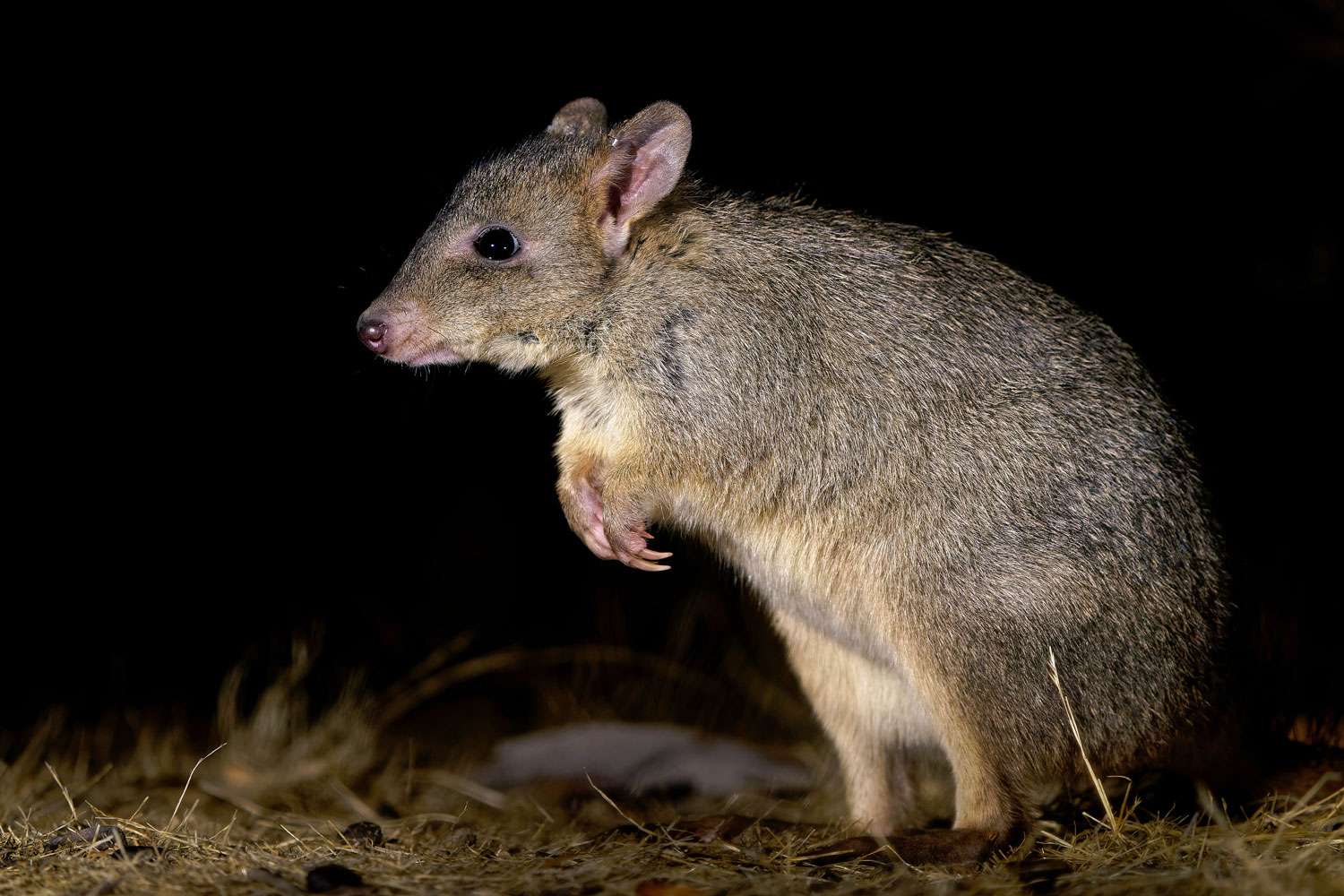
The adorable mammal pictured is a brush-tailed bettong – a marsupial resembling a tiny kangaroo. Sadly, the introduction of feral cats and foxes, which came with the European colonization of Australia in the 18th century, decimated populations across the country.
In the sun-baked scrublands of South Australia’s Yorke Peninsula, a small marsupial is staging a remarkable comeback.
The brush-tailed bettong—affectionately dubbed a “woylie” by locals and resembling a pint-sized kangaroo—has been absent from this rugged coastline for over a century.
But thanks to a pioneering conservation initiative, these bouncy ecosystem engineers are digging their way back into the wild, one fungus-rooted burrow at a time.
The Marna Banggara project, launched in 2019 by the Northern and Yorke Landscape Board, represents a beacon of hope amid Australia’s biodiversity crisis.
Named after Narungga words for “good” and “country,” the program honors the Indigenous custodians of the land, who are at its heart.
Marna Banggara

Brush-tailed bettongs had been locally extinct on SA’s Yorke Peninsula for more than 100 years.
“We’re not just reintroducing animals; we’re healing the country,” says Garry Goldsmith, a Narungga community member and project collaborator.
Between 2021 and 2023, the team airlifted 193 bettongs from surviving pockets in Western Australia, releasing them into a 150,000-hectare predator-proof sanctuary fenced off by a 25-kilometer barrier.
This “safe haven” slashes incursions by feral cats and foxes—European imports that have ravaged native wildlife since the 18th century.
Once widespread across 60% of mainland Australia, brush-tailed bettongs saw their numbers plummet by 90% between 1999 and 2010.
Ecosystem engineers

A bettong bouncing away as it is released into in the Yorke Peninsula.
Blame falls on habitat loss from agriculture and urbanization, plus the relentless predation by introduced species.
Today, they cling to just 1% of their former range, confined to islands and isolated southwestern enclaves.
On Yorke Peninsula, extinction hit hard over 100 years ago, leaving grasslands eerily silent without their signature digging.
But silence is breaking. Recent monitoring surveys paint a picture of resilience.
Researchers lure the elusive creatures into traps baited with peanut butter balls—a treat these nocturnal foragers can’t resist.
Once captured, teams gently inspect pouches for joeys, measure body weights, assess fat stores and coat health, and clip tiny ear samples for genetic analysis.

The Marna Banggara team transporting bettongs by plane for reintroduction.
The latest check, conducted earlier this year, revealed a thriving colony: 83 individuals trapped, with 31 born on the peninsula.
Astonishingly, 85% of females carried pouch young, signaling ample food, shelter, and mates.
“They’re not just surviving—they’re breeding like champions,” says Derek Sandow, Marna Banggara’s project manager.
Genetic tests confirm intermixing among the imported groups, bolstering the population’s diversity and future-proofing it against disease.
What makes bettongs indispensable?
They’re “ecosystem engineers,” Sandow explains. Unlike the dramatic leaps of their kangaroo cousins, bettongs specialize in subterranean foraging.
Each adult churns up 2 to 6 tons of soil annually, unearthing bulbs, seeds, insects, and underground fungi—their dietary staple.
This frenzy of digging aerates compacted earth, enhances water infiltration, and scatters nutrients, priming the land for seed germination.
In turn, it fosters habitats for birds, reptiles, and other mammals.
Without bettongs, Yorke’s soils have grown stale, starved of the microbial magic these diggers disperse.
“They’re nature’s gardeners,” Sandow quips. “One bettong can renovate a hectare like a tiny excavator.”
This reintroduction isn’t just about one species; it’s a blueprint for ecological revival.
By kickstarting soil health, bettongs pave the way for broader restorations.
Next on the horizon: the southern brown bandicoot, red-tailed phascogale, and western quoll—fellow marsupials long vanished from the peninsula.
“Learning from the bettongs will guide us,” Goldsmith notes. The project’s Indigenous-led ethos ensures cultural knowledge informs every step, from site selection to monitoring protocols.
Narungga elders recall yalgiri (the local name for bettongs) as harbingers of healthy country; their return symbolizes renewal.
Challenges persist, of course. Feral predators remain a threat beyond the fence, and climate change exacerbates droughts that stress foraging.
Parasites, once a silent killer, lurk in the background. Yet, the data is unequivocal: survival rates exceed projections, with nearly 40% of captured bettongs being second-generation peninsula natives.
Released individuals scatter like confetti, some bounding away post-capture in a blur of brushy tail and powerful hind legs—a survival hack where mothers eject joeys as decoys during chases.
The ripple effects extend beyond wildlife. Sandow envisions eco-tourism booming, drawing visitors to glimpse these “tiny kangaroos” in dusk patrols.
Local agriculture could benefit too, as healthier soils curb erosion and boost native plant resilience against weeds.
“Conservation and economy aren’t at odds—they’re intertwined,” he argues.
WWF-Australia, a key partner, echoes this: their photographers have captured heartwarming releases, bettongs tumbling from transport crates into freedom.
Globally, Marna Banggara aligns with CNN’s Call to Earth campaign, spotlighting solutions to planetary woes.
As Rolex’s Perpetual Planet initiative underscores, such efforts combat the “sixth extinction” wave, where one million species teeter on the brink.
Australia’s losses are stark—30 native mammals extinct since European arrival, more than anywhere else. But successes like this fuel optimism.
In New Zealand, feral cat eradication vows signal similar resolve; closer to home, urban raccoon studies hint at human-wildlife adaptations.
For the brush-tailed bettong, the bounce-back is literal and figurative. No longer a ghost of grasslands past, it’s reclaiming its role as soil whisperer and biodiversity spark.
As Goldsmith puts it, “Marna Banggara means prosperous country. With yalgiri digging deep, we’re getting there—one pouch at a time.”
Discover more from AMERICA NEWS WORLD
Subscribe to get the latest posts sent to your email.