By_shalini oraon

Silent Shadows: The Persistent Threat of Drones Along India’s Restive Borders
In the pre-dawn silence of Jammu and Kashmir’s border regions, a familiar, unsettling buzz has once again pierced the calm. Recent reports from security agencies indicate that suspected Pakistani drones were observed hovering over sensitive areas along the International Border (IB) and the Line of Control (LoC). This incident is not an isolated one but part of a persistent pattern that has escalated over recent years, triggering immediate and extensive search operations by the Indian Army, Border Security Force (BSF), and local police. These events represent more than just border violations; they signify a new dimension in the enduring security challenges facing the region, blending asymmetric warfare with technological advancement.
The Immediate Incident and Response
According to intelligence inputs and ground reports, the drones were sighted in sectors along the IB in Jammu, notably in areas like Kathua, Samba, and Hiranagar. These are regions that have witnessed repeated infiltration attempts and ceasefire violations. Upon detection, standard operating procedures were swiftly activated. Security forces launched cordon-and-search operations (CASO) across suspected drop zones, scouring fields, orchards, and village peripheries for any consignments that might have been airdropped.
The primary objectives of such search ops are twofold: first, to recover any payload—which typically includes weapons, ammunition, high-grade narcotics (like heroin), counterfeit currency, or advanced communication equipment meant for terrorist networks; second, to gather forensic evidence (like drone serial numbers or component markings) that can be used for technical intelligence and diplomatic censure. These operations involve painstaking grid-by-grid searches, often with the assistance of dog squads and metal detectors, and are complicated by the difficult terrain and the possibility of delayed detection.
The Evolving Nature of the Drone Threat
The use of drones from across the border has evolved from a novelty to a systematic tactic. Initially, small commercial quadcopters were used for aerial reconnaissance to map border patrol patterns. Today, the threat has matured into a sophisticated supply chain mechanism.
1. Increased Payload Capacity: Actors are now employing larger, more robust drones, such as hexacopters or octocopters, capable of carrying payloads of 5-10 kilograms over distances of 10-15 kilometers, easily crossing the IB and LoC from launch points in Pakistan.
2. Stealth and Evasion: These drones often fly at low altitudes to avoid radar detection, use pre-programmed GPS routes, and are painted in dark colors for night operations. Their noise signature is also becoming harder to distinguish from ambient sounds.
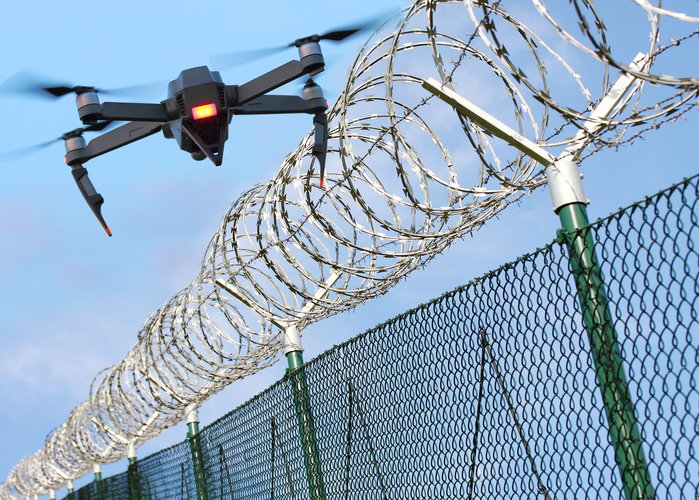
3. Dual-Use Technology: Many of these drones are adaptations of commercially available models, modified with extended batteries and release mechanisms, making them cheap, expendable, and difficult to trace.
4. The Narcotics-Terror Nexus: A sinister development is the consistent pairing of weapon drops with narcotics. The proceeds from drug sales in the valley are used to fund terrorism, arm local recruits, and create a cycle of addiction and violence, destabilizing the social fabric from within.
The Strategic and Tactical Implications
For security forces, the drone threat presents a multi-layered challenge that traditional border fencing and patrols are ill-equipped to handle alone.
· Bypassing Physical Barriers: Drones effectively render the elaborate, multi-layered fencing along the IB and LoC obsolete for contraband smuggling. They can fly over these barriers with impunity.
· Cost Asymmetry: A drone costing a few lakh rupees can deliver consignments worth crores and potentially cause security damage worth much more. This creates a highly cost-effective strategy for adversarial elements.
· Continuous Psychological Pressure: The constant possibility of unseen drones creates a sense of vulnerability among border communities and keeps security forces in a perpetual state of high alert, draining resources and attention.
· Operational Security Risk: Drones used for surveillance can gather critical real-time data on troop movements, post locations, and defensive installations.
India’s Counter-Drone Ecosystem: A Work in Progress
Recognizing the severity of the threat, Indian security and defense establishments have been racing to develop a comprehensive counter-unmanned aircraft system (C-UAS) ecosystem.
· Layered Defense: The strategy involves a mix of detection (using radar, electro-optical/infrared sensors, and radio frequency scanners), identification (through IFF systems), and neutralization.
· Neutralization Tactics: These range from “soft-kill” methods like GPS jamming, spoofing (taking control of the drone), and directed energy lasers to “hard-kill” options like drone-catching nets and anti-drone guns that fire projectiles or use high-powered microwaves.
· Deployment and Challenges: Systems like the Israeli Smash 2000 fire control, indigenous D4 anti-drone systems, and others are being deployed. However, the vast and varied border terrain, the clutter of civilian drone activity, and the need for seamless integration of technology with human response remain significant hurdles. There is also a push for indigenization under the “Make in India” initiative to create cost-effective, scalable solutions.
The Diplomatic and Legal Dimension
Every incident of a drone intrusion is documented and often forms part of the diplomatic dialogue between India and Pakistan. At forums like the United Nations, India has consistently highlighted cross-border terrorism and the use of new technologies to fuel it. However, Pakistan routinely denies any official involvement, often attributing such actions to “non-state actors,” a claim India dismisses as disingenuous. The lack of a bilateral framework to address this specific threat and Pakistan’s continued denial make a diplomatic resolution elusive.
The Human Element: Life on the Edge
For villagers living within a few kilometers of the border, the drone buzz has become a new normal, adding to the historical anxieties of shelling and infiltration. They are often the first witnesses and are crucial in alerting security forces. Their cooperation is vital, yet they live with the fear that their fields could become drop zones or battlegrounds. Security forces, meanwhile, operate under tremendous pressure, knowing that a single successful drop can fuel violence and mayhem in the hinterland.
Conclusion: A Persistent Shadow War
The sighting of suspected Pakistani drones over J&K is a stark reminder that the security paradigm along India’s western border is rapidly transforming. It is a shadow war fought not with tanks and artillery alone, but with silicon, GPS waypoints, and silent electric motors. While search operations remain a critical reactive measure, the long-term solution lies in a proactive, technology-driven, multi-agency defensive grid that can detect, intercept, and eliminate threats in real-time.
The drone game is a cat-and-mouse dynamic of constant innovation. As adversaries upgrade their technology and tactics, India’s defensive shield must evolve even faster. The goal is clear: to dominate the airspace along the border, making it a no-fly zone for hostile elements and severing this new aerial supply line of terror and instability. Until then, the buzz in the night sky will continue to be a sound that sets off alarms, both literal and metaphorical, in the strategic landscape of Jammu and Kashmir.
Discover more from AMERICA NEWS WORLD
Subscribe to get the latest posts sent to your email.







































![Smoke rises after Israeli strikes in Beirut's southern suburbs, on March 2 [Mohamad Azakir/Reuters]](https://america112.com/wp-content/uploads/2026/03/hgh.webp)