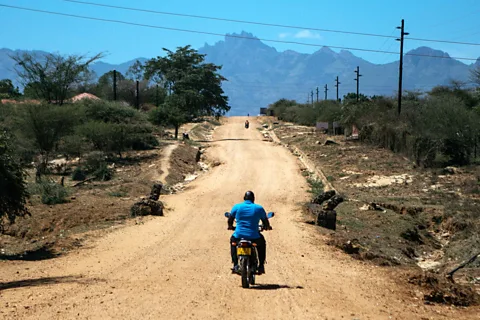
By Suraj Karowa and Keng Chun Cheng/ANW December 19, 2025 – Amudat, Uganda

The motorcyclist fighting a deadly disease in the African bush.
In the sun-scorched drylands straddling the Kenya-Uganda border, where acacia trees claw at the sky and nomadic herders roam vast distances on foot, Andrew Ochieng revs his motorbike to life.
Helmet strapped tight, testing kits strapped to the frame, he cuts through dust-choked tracks like a lone sentinel.
For over a decade, this unassuming father of three has been the frontline warrior against visceral leishmaniasis—a parasitic scourge known locally as Kala-azar that claims more lives than any other parasite save malaria.

Andrew Ochieng examines villagers beside his makeshift visceral leishmaniasis clinic in the shade of a tree in Akorikeya .
Ochieng knows its bite intimately: as a 12-year-old boy, he survived it, emerging scarred in body and spirit.
“I felt like an 18-wheeler had run me over,” Ochieng recalls, his voice steady despite the memories.
Fever gripped him for weeks, a relentless blaze that left him wasting away. His Pokot family, steeped in ancestral ways, turned first to a traditional healer.
With a razor blade, the healer sliced open his belly, packing the wound with charred camel and cow dung before forcing down bitter herbs.

During his visits, Ochieng palpates the spleens of villagers during examinations as this can give an early indication of visceral leishmaniasis .
Only after agony mounted did they seek hospital care, where 60 injections over two months saved his life—but not without leaving jagged torso scars as eternal reminders.
Today, at 38, Ochieng channels that trauma into purpose. As a community mobilizer for the Drugs for Neglected Diseases Initiative (DNDi), a global non-profit, he patrols up to 16 remote villages a month, a one-man diagnostic squad on wheels.
His mission: sniff out the invisible enemy before it fells another child or elder.
Visceral leishmaniasis, spread by the bite of tiny sandflies, lurks in this impoverished frontier, afflicting the “poorest of the poor,” as DNDi access manager Joy Malongo puts it.

Pricilla Chebiira delivers daily injections of drugs to patients suffering from visceral leishmaniasis at Amudat Hospital.
It swells livers and spleens, triggers fevers and nosebleeds, and spirals untreated into psychosis or death—with a 95% fatality rate.
Globally, over 600 million souls teeter on the edge of infection, but East Africa shoulders 73% of cases, per 2022 World Health Organization data.
An estimated 50,000 to 90,000 strike yearly, yet reporting lags at 25-45%, shrouded by stigma and isolation. Children under 15 claim half the victims, their frail bodies no match for a foe that mimics flu but devours from within.
“It’s the second deadliest parasite after malaria,” Ochieng says, revving past anthills—prime sandfly nurseries the Pokot revere for their white ants, a rare rainy-season delicacy.

The daily SSG/PM injections Priscilla Chebjira administers to visceral leishmaniasis patients can be painful and have the risk of serious side-effects.
Ochieng’s rounds blend detective work and bedside manner. In Akorikeya village, a cluster of mud huts 20 minutes north of Amudat, he parks under an acacia where elders sip milky tea.
No clinic, just a tree-shaded table. He scans faces for pallor, gauges energy in children’s play. Palpating lower left torsos, he probes for spleen swelling—a hallmark red flag.
Suspects get the RK39 rapid test: a finger prick, 10-minute wait, and a line reveals antibodies. He packs HIV kits too; the virus amps vulnerability 100-fold.
Seasonal rhythms dictate his pace. “September to February—higher cases,” he notes. Short rains hatch sandfly swarms in humid crevices.

Patients will often undergo traditional healing practices before they come to the hospital, according to doctors.
The Pokot’s migratory life complicates tracking: families trek 50 kilometers daily for grazing, vanishing like ghosts.
“I return for a follow-up, and they’re gone,” Ochieng sighs. Then it’s sleuthing—neighbors’ whispers yield leads. He mounts up, chasing trails across parched plains, a modern cowboy hunting human quarry.
Socioeconomic thorns fuel the fire. Malnutrition gnaws at immunity; homes lack concrete floors, inviting sandflies indoors.
Deforestation and irrigation schemes, wedded to climate change, boost humidity and breeding grounds. Displacement from conflict scatters the vulnerable further.

Ochieng uses a rapid antigen test to help him diagnose people with visceral leishmanaisis.
Ochieng’s interventions bridge the gap: positives hitch rides to Amudat Hospital, 20 kilometers of bone-jarring dirt.
Dawn at the hospital reveals the human toll. At 5 a.m., head nurse Priscilla Chebjira, in bubble-gum pink scrubs, wheels a trolley of syringes into dim wards.
Thirty-four patients—infants to ancients—huddle under mosquito nets. The regimen: 17 days of twice-daily jabs, sodium stibogluconate (SSG) fused with paromomycin (PM).
It’s progress from the old 30-day SSG slog, slashing resistance risks and costs. Yet pain is the price: exposed buttocks meet needles, eliciting wails from the young. Side effects lurk—heart strain, liver toxicity, pancreatic peril—like diluted chemotherapy.
Dr. Patrick Sagaki, medical superintendent since 2007, has dosed thousands. Once the region’s lone specialist, he laments the unreached: “Without DNDi, we’d miss most Pokot.”
Men sleep outdoors, prime bite bait; anthills stand untouched. Liposomal amphotericin B (L-AmB), India’s gold standard, tempts but falters here—refrigeration demands and IV lines defy logistics. Gilead donates it via WHO as a backup, but SSG/PM reigns.
Hope glimmers in trials. DNDi’s 2018 study pitted SSG/PM against miltefosine (MF)/PM across 408 patients in Kenya, Uganda, Sudan, and Ethiopia—median age 11, defying the field’s child-exclusion norm (just 17% of neglected-disease trials include under-18s).
Both topped 91% efficacy at six months, but MF/PM shone: one fewer daily jab, three days shorter, sans SSG’s cardiac threats.
“Patient-friendly,” trial leads hailed.
Yet reinfection haunts. “Back to the same hut? It’s inevitable,” Malongo warns. Lifestyle lifts—screens, nutrition—lag in poverty’s grip.
Sagaki spots progress: survivors like Ochieng spot symptoms in kin, urging hospital runs. Outbreaks ravaged Kenya in 2020 and 2022, imperiling four million.
But elimination beckons. “Bangladesh proves it,” Sagaki says. Swift detection, easy access, community savvy—Ugandans and Kenyans lag, but awareness stirs.
Ochieng’s impact echoes in lives like Chemket Selina’s. In her twenties—age fuzzy, tallied by rains—she once burned with fever for a month, misdiagnosed as malaria or typhoid. Ochieng’s test confirmed Kala-azar; his bike bore her to salvation.
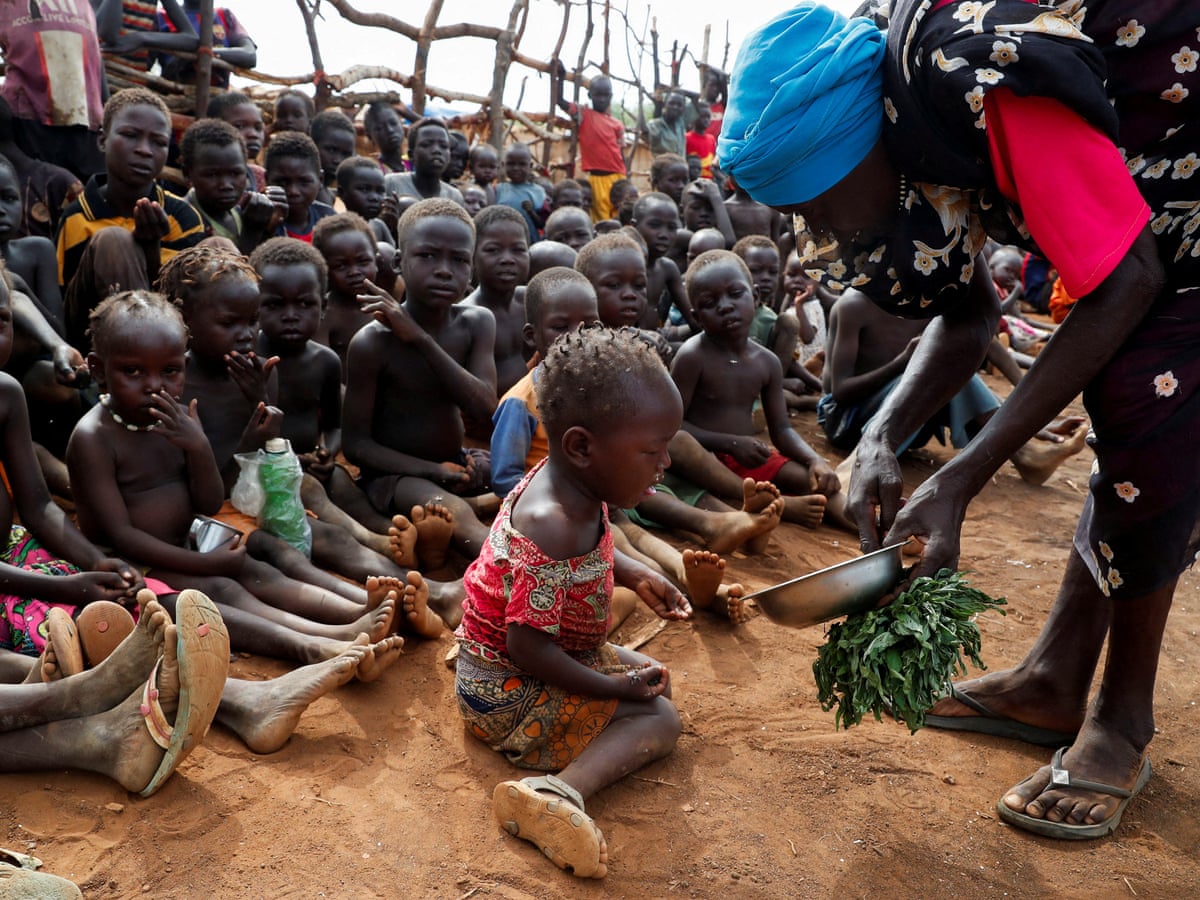
Now mother to four, she frets eternally. Breakfast: tea, ugali, tree-leaf mash. “What we find, we eat,” she says, toddler latched. Her brood clears Ochieng’s check—small mercies.
In Pokot lore, pain proves medicine’s might; Selina swears by those old injections. Ochieng demurs, pushing education over scars. As sun dips, he packs up, engine growling farewell. In this unforgiving bush, one man’s wheels turn the tide against a forgotten plague—one village, one prick, one life at a time.
Discover more from AMERICA NEWS WORLD
Subscribe to get the latest posts sent to your email.