By Manisha Sahu
America News World
December 25,2025
In a decision that has sparked fresh debate over environmental protection and judicial consistency, the Supreme Court of India on November 20, 2025, accepted the Union government’s recommendation to define the Aravalli hills using a 100-metre height benchmark from ground level. The ruling effectively overturns nearly 15 years of judicial oversight and technical assessment that had rejected this very definition in 2010, raising concerns among environmentalists, experts, and civil society groups.

Despite objections raised by the Central Empowered Committee and a detailed submission by the court-appointed amicus curiae, the Supreme Court on November 20 approved the ministry’s proposal to define the Aravalli hills using a 100-metre benchmark, effectively undoing more than fifteen years of judicial supervision.
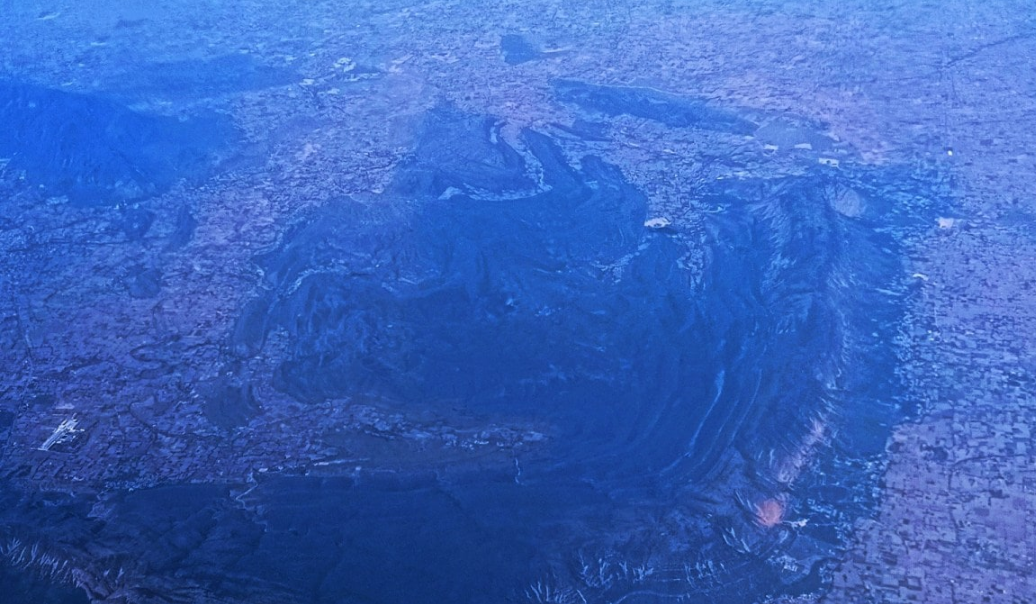
The Aravalli range, one of the oldest mountain systems in the world, stretches across Gujarat, Rajasthan, Haryana, and Delhi. It plays a critical ecological role by preventing desertification, supporting biodiversity, and acting as a natural barrier against the spread of the Thar Desert. Over the years, unchecked mining and urban expansion have severely damaged large portions of this fragile ecosystem, prompting repeated interventions by the apex court.
A Look Back: Why the 100-Metre Rule Was Rejected
The controversy surrounding the definition of the Aravallis is not new. In February 2010, while hearing multiple cases related to mining in Rajasthan, the Supreme Court examined the state government’s claim that only hill peaks or portions rising 100 metres above ground level should be treated as part of the Aravalli range. The court found this approach deeply flawed.
Rejecting Rajasthan’s definition, the Supreme Court ordered the Forest Survey of India (FSI) to conduct a comprehensive assessment of the Aravalli hills. Importantly, the court directed that the survey “shall not be confined to peaks/parts of hills above 100 metres from the ground level,” recognising that hills are defined by terrain and slope, not merely height.
The FSI, working with satellite imagery and in coordination with the court-appointed Central Empowered Committee (CEC), carried out a detailed study of the terrain. Its findings were clear: areas with slopes of three degrees or more are associated with hilly terrain and do not occur in flat landscapes. Based on this scientific approach, the FSI and CEC identified approximately 40,481 square kilometres across 15 districts of Rajasthan as part of the Aravalli hills.
This slope-based definition became the cornerstone of judicial protection for the Aravallis over the next decade.
Evidence of Environmental Damage
The Supreme Court’s earlier interventions were driven by alarming evidence of environmental destruction. In its 2010 order, the court noted that the Aravalli range spans more than 50,000 square kilometres and that “wanton mining activities at a very large scale for many years have led to ecological imbalance,” with several parts of the hills already destroyed.
The situation worsened over time. In October 2018, the court took note of a CEC report based on ground verification by the FSI, which revealed that 31 out of 128 sampled hills in Rajasthan had disappeared entirely due to mining. Reacting sharply, Justice Madan Lokur famously remarked, “If hills disappear in the country, what will happen? Have people become ‘Hanuman’ that they are running away with hills?”
These findings reinforced the need for a robust, scientifically grounded definition of the Aravallis to curb illegal mining and protect remaining hill systems.
The Push for a Common Definition
The issue resurfaced in May 2024 when the Supreme Court sought a common definition of the Aravalli range applicable across Rajasthan, Gujarat, Haryana, and Delhi. A committee was formed for this purpose, comprising representatives from the CEC, FSI, Geological Survey of India (GSI), and Survey of India (SOI). Notably, the FSI led the technical sub-committee established in June 2024.
However, records indicate that the Union Ministry of Environment, Forest and Climate Change relied heavily on inputs from the four state governments rather than on earlier scientific benchmarks. In October 2025, the ministry informed the Supreme Court that all four Aravalli states had agreed to a uniform criterion: hills rising 100 metres or more above local ground level, along with supporting slopes, as the basis for regulating mining.
This recommendation marked a significant departure from the slope-based definition developed through years of court-monitored research.
Ignored Dissent and Renewed Concerns
What has intensified criticism of the November 20 ruling is the fact that it came despite a formal dissent note from the CEC and a detailed presentation by the court-appointed amicus curiae. Both raised concerns that reverting to the 100-metre benchmark would exclude vast stretches of ecologically sensitive terrain from protection, effectively opening the door to renewed mining and construction.
Environmental groups argue that hills cannot be defined solely by height, especially in regions like the Aravallis, where gradual slopes and low elevations are characteristic features. By narrowing the definition, they warn, the ruling risks undoing over a decade of conservation efforts backed by scientific evidence and judicial scrutiny.
What the New Definition Means
By accepting the 100-metre rule, the Supreme Court has effectively set aside the FSI’s 3-degree slope methodology that once delineated the Aravallis with precision. Critics fear this could legitimise mining in areas previously classified as hills, accelerate habitat loss, and worsen groundwater depletion in already water-stressed regions.
Supporters of the decision, including some state governments, argue that a uniform and simpler definition will ease regulatory confusion and promote development. However, the long-term environmental costs remain a major point of contention.
A Turning Point for the Aravallis
The Supreme Court’s latest ruling marks a turning point in the legal and environmental history of the Aravalli hills. For many observers, it represents a rollback of hard-won safeguards established after years of litigation, scientific study, and environmental advocacy.
As protests mount in parts of Rajasthan and environmentalists raise alarms nationwide, the question now is whether future legal or policy interventions can strike a balance between development and ecological preservation. What is clear is that the fate of one of India’s most ancient mountain ranges once again hangs in the balance, with consequences that could extend far beyond mining to climate resilience, biodiversity, and the livelihoods of millions.
Discover more from AMERICA NEWS WORLD
Subscribe to get the latest posts sent to your email.