
By Manisha Sahu | America News World
December 3, 2025
South Korea on Wednesday commemorated one of the most turbulent chapters in its recent political history—the first anniversary of the failed martial law attempt by former President Yoon Suk Yeol. Speaking at a solemn state event in Seoul, President Lee Jae Myung declared that the country’s “democratic reckoning” remains unfinished and vowed to continue pursuing accountability for those involved in what he described as a near-catastrophic threat to the nation’s constitutional order.

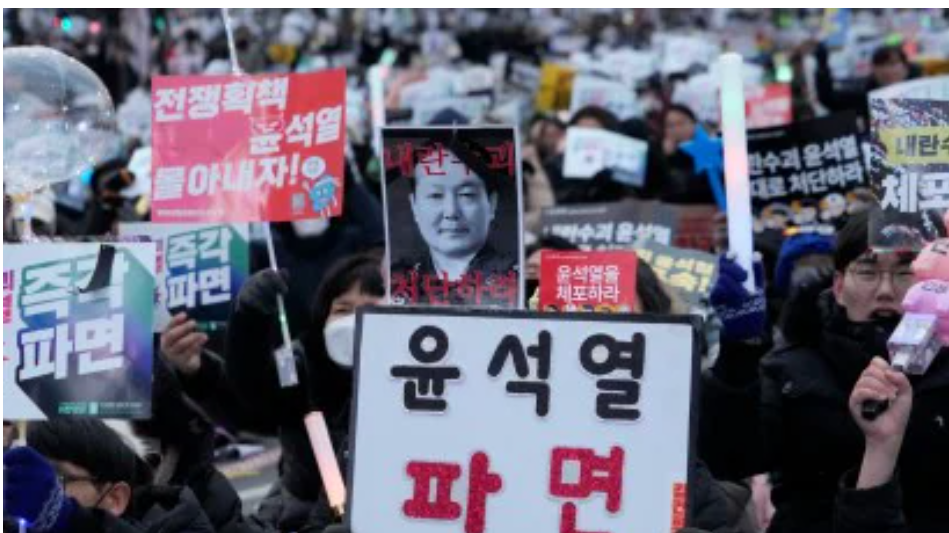
“In Seoul, protesters gathered to call for the arrest of impeached South Korean President Yoon Suk Yeol, holding signs that read ‘Dismiss Yoon Suk Yeol.’ (AP Photo/ File)”
The attempted declaration of martial law on December 3 last year sent shockwaves across the country and the international community. Temporarily destabilizing one of Asia’s strongest democracies, the move ignited massive protests, triggered political paralysis, and placed South Korea’s civil-military relations under unprecedented strain. Though the attempt ultimately failed—blocked, President Lee noted, by ordinary citizens who took to the streets—its implications still reverberate deeply across South Korea’s political landscape.
Lee: “The Cleanup Is Not Yet Complete”
In his nationally televised address, Lee emphasized that the work of restoring public trust, repairing democratic safeguards, and holding wrongdoers accountable remains ongoing.
“The recklessness of those who tried to destroy the constitutional order and even plan a war all for their personal ambition must be brought to justice,” Lee declared firmly.
He acknowledged that major steps had been taken since he assumed office after winning the June snap election, but insisted that the nation must confront the full extent of the conspiracy to prevent such a crisis from ever arising again.
Lee, who narrowly lost to Yoon in the 2022 presidential race, stepped into power earlier this year after Yoon was impeached, removed from office, and subsequently detained during a sweeping investigation. Multiple military and political figures—accused of participating in or supporting the martial law plan—are currently facing trial on subversion, abuse of power, and conspiracy charges.
According to Lee, the goal is not retribution but restoration. “This is about strengthening the democratic foundations of the Republic of Korea,” he said.
The Attempt That Shook a Nation
One year ago, South Korea woke to an extraordinary declaration from then-President Yoon Suk Yeol, who announced emergency wartime provisions and attempted to impose martial law across the country. The move came unexpectedly, throwing the government into immediate chaos as military units received conflicting orders and legislators scrambled to challenge the president’s authority.
Yoon claimed that the nation faced “imminent threats” requiring decisive action—claims later deemed fabricated or grossly exaggerated by investigators.
Citizens responded with unprecedented speed. Within hours, hundreds of thousands of South Koreans flooded central Seoul and other major cities. With military divisions reportedly split between pro- and anti-martial law commands, civilian pressure became a decisive force.
Images of unarmed protesters forming barricades, confronting vehicles, and demanding Yoon’s ouster quickly spread worldwide. Lee reflected on this moment in his speech: “The people of South Korea stood in defense of democracy with their bare hands. Their courage stopped the collapse of our constitutional system.”
By the end of the week, the military high command publicly refused Yoon’s directive, lawmakers moved to suspend him, and the international community urged calm. Yoon was later impeached and removed from office in a rare emergency parliamentary vote.
Economic Fallout and International Strains
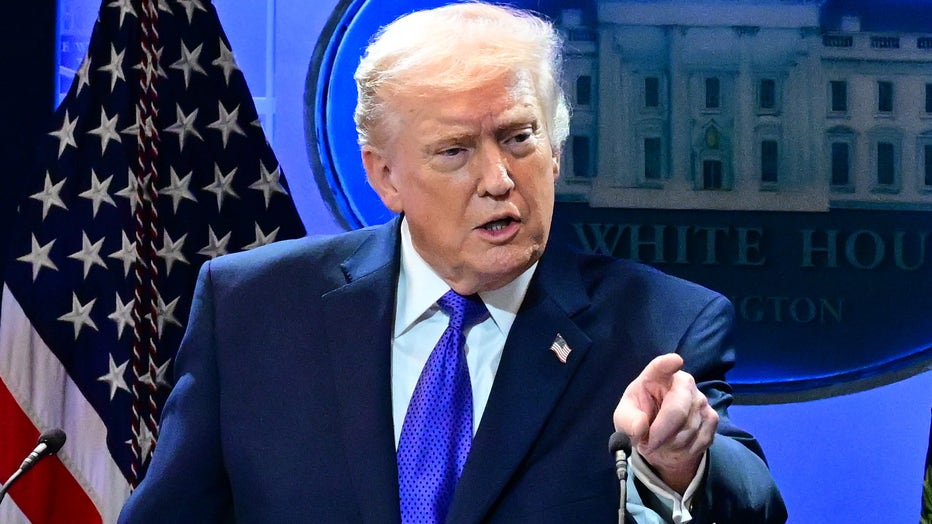
The crisis hit South Korea at a delicate time. The export-dependent economy was already grappling with global uncertainty, including fresh tariff threats from U.S. President Donald Trump that had rattled Asian markets. Investor confidence plunged in the days following Yoon’s martial law bid, temporarily destabilizing the won and prompting emergency interventions by the Bank of Korea.
South Korea’s allies, particularly the United States, Japan, and European partners, were deeply concerned about the potential implications for regional stability. Although the situation ultimately stabilized, analysts say the event has reshaped international perceptions of South Korean political resilience.
A recent report by the East Asia Institute concluded that the attempted martial law was “the most severe democratic stress test in the country’s modern history.”
Proposing a New National Holiday
In one of the most symbolic moments of his address, President Lee announced his intention to propose December 3 as a new national holiday honoring the citizens who resisted the imposition of martial law.
“On that day, the people saved the nation,” Lee said. “Their collective courage deserves to be remembered forever.”
He also said that the bravery demonstrated during the crisis could merit global recognition. “Our people’s unity in the face of authoritarian overreach should be considered for the Nobel Peace Prize,” he remarked—a statement that drew widespread applause from attendees.
While the proposal is likely to win support among the ruling coalition, the conservative opposition has already voiced concerns about what it sees as “politicizing a national trauma.” Nonetheless, public sentiment appears broadly supportive, with many South Koreans viewing the events of last year as a pivotal moment in safeguarding their democratic freedoms.
Challenges Ahead
Despite widespread arrests and an ongoing judicial process, key questions remain. Investigators are still probing potential involvement of senior intelligence officials, military officers, and political strategists aligned with Yoon. Some analysts warn that the full network behind the attempted martial law may be larger and more complex than currently understood.
Public trust in institutions—including the military, intelligence services, and the executive branch—remains below pre-crisis levels. Lee’s administration has vowed to strengthen safeguards, including clearer chains of command and reforms aimed at preventing misuse of emergency powers.
International observers say South Korea’s handling of the aftermath will shape global conversations about democratic resilience in an era of rising populism and institutional stress.
A Nation Reflects
As South Korea marks one year since the crisis, the mood is a mixture of relief, pride, and introspection. Citizens remember the fear and uncertainty of that week, but also the extraordinary solidarity that emerged across the nation.
President Lee ended his speech with a message of unity: “Let December 3 remind us that democracy does not protect itself—we protect it.”
For South Korea, the anniversary is not just a marker of past turmoil but a reminder of the ongoing work to strengthen democratic institutions and ensure that such a crisis never repeats.
Discover more from AMERICA NEWS WORLD
Subscribe to get the latest posts sent to your email.





![Smoke rises after Israeli strikes in Beirut's southern suburbs, on March 2 [Mohamad Azakir/Reuters]](https://america112.com/wp-content/uploads/2026/03/hgh.webp)

Once again in the same car: Putin and PM Modi – That special bonding - AMERICA NEWS WORLD
[…] Also know-South Korea Vows Justice a Year After Failed Martial Law […]