By_shalini oraon

|The sharp drop in Russia oil exports to India following recent US sanctions.
—
Signs of a Pullback: Decoding the Sharp Drop in Russia Oil Exports to India
For two years, it was the defining trade relationship of the post-Ukraine invasion era: a flood of cheap Russian crude oil, eagerly lapped up by Indian refiners. This partnership reshaped global oil flows, filled Moscow’s war coffers, and saved New Delhi billions in import bills. However, recent data reveals a startling shift—a dramatic plunge in Russian oil deliveries to India. This isn’t a market fluctuation; it is the first clear sign that stringent US sanctions are successfully severing the arteries of this lucrative trade, forcing a strategic recalculations in both New Delhi and Moscow.
The Golden Era: A Symbiotic Relationship Forged in Crisis
Following the West’s imposition of a price cap and embargo on Russian oil in late 2022, India emerged as Moscow’s most crucial energy partner. Russian Urals crude, sold at a steep discount to international benchmarks, became irresistibly cheap for Indian refiners. The numbers were staggering. India’s imports of Russian crude skyrocketed from near zero in early 2022 to a peak of 2.2 million barrels per day (bpd) in mid-2023, accounting for over 40% of India’s total oil imports.
This relationship was a classic symbiosis of necessity:
· For Russia: India provided a massive, willing market, replacing lost European customers and ensuring a steady stream of revenue to fund its military operations.
· For India: The deep discounts translated into massive savings on its energy import bill, suppressed domestic inflation, and boosted profit margins for both public and private refiners.
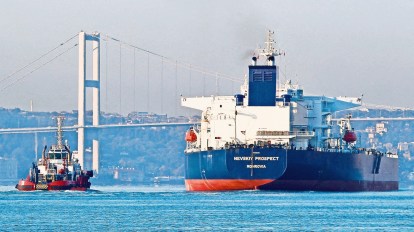
The mechanism relied on a “shadow fleet” of tankers, often older vessels with opaque insurance, willing to navigate the legal grey areas of the price cap. As long as the oil was sold at or below $60 per barrel, Western service providers (like insurers and shipping companies) were allowed to facilitate the trade.
The Turning Point: The US Tightens the Noose
The precipitous drop beginning in early 2024 is a direct consequence of a more aggressive and sophisticated enforcement of sanctions by the United States. The initial price cap had loopholes; the new approach aims to close them.
The key trigger was a series of Office of Foreign Assets Control (OFAC) sanctions imposed in late 2023 and early 2024 on specific tankers and shipping companies accused of violating the price cap mechanism. These weren’t blanket sanctions; they were surgical strikes. The US Treasury specifically targeted vessels accused of using Western maritime services while carrying Russian oil sold above the cap.
This had an immediate chilling effect. Key players in the shipping ecosystem—international insurers, ship owners, and traders—began to withdraw their services for fear of secondary sanctions, which could lock them out of the critical US financial system. The cost and complexity of arranging shipments skyrocketed. Freight rates for moving Russian oil to India jumped, eroding the attractive discount that made the trade viable in the first place.
Furthermore, the payment mechanism became a major hurdle. With Indian refiners insisting on settlements in currencies like UAE Dirhams and Russian banks facing increasing isolation from the international financial messaging system SWIFT, transactions became slow, cumbersome, and risky. The fear of banks involved in these transactions facing US sanctions caused significant delays and rejections, creating a logistical nightmare for traders.
The Numbers Tell the Story: A Steep and Sustained Decline
The impact is starkly visible in the data. After hovering around 1.5-1.8 million bpd for most of 2023, India’s imports of Russian crude have fallen sharply.
· In April 2024, imports plummeted to a 10-month low of approximately 1.3 million bpd.
· This represents a drop of nearly 20-25% from the previous months and a more than 40% fall from the mid-2023 peak.
Perhaps more tellingly, Russia’s share of the Indian oil market has slipped, ceding ground to traditional suppliers like Iraq and Saudi Arabia, and even new entrants like the United States. This indicates that the shift is not just a temporary blip but a structural recalibration driven by enforced economic realities.
Strategic Repercussions: New Delhi’s Delicate Balancing Act
The drop in Russian imports forces India to walk a familiar diplomatic tightrope. While the economic benefits were immense, New Delhi has always been careful not to alienate its strategic partners in the West, particularly the US.
1. Diversification is Back: India is swiftly returning to a more diversified import strategy. It is increasing purchases from the Middle East and is even looking at long-haul supplies from the Americas. This reduces its vulnerability to any single source and strengthens its bargaining power.
2. The China Factor: As Russian flows to India dwindle, there are reports of a redirection of these cargoes towards China. This could deepen the Russia-China energy alliance, a development that Western strategists view with concern, but one that also makes Russia more dependent on a single, powerful patron.
3. Inflationary Pressures: For the Indian economy, the reduction in cheap Russian crude poses a risk. Higher-priced oil from alternative sources could widen the trade deficit, put pressure on the rupee, and potentially fuel inflation, complicating the Reserve Bank of India’s monetary policy.
The Road Ahead: A New Normal in Global Oil Trade
The sharp decline in Russian oil exports to India marks a significant victory for US sanctions policy. It demonstrates that with targeted enforcement, the West can effectively disrupt Moscow’s revenue streams even without the direct cooperation of major neutral nations like India.
For the India-Russia oil trade, the golden era of deep discounts and easy shipments is likely over. A new, more constrained relationship will emerge, operating at a lower volume and with higher transaction costs. It will continue, but it will no longer be the market-defining phenomenon it was in 2022-2023.
This episode underscores a critical lesson in 21st-century geopolitics: economic interdependence is a powerful tool, but it is fragile in the face of determined financial statecraft. The flow of oil, the lifeblood of the global economy, is not just dictated by supply and demand, but by the invisible architecture of insurance, shipping, and banking—an architecture that the United States still overwhelmingly controls. The pullback from India is a stark reminder that in today’s fragmented world, no trade relationship, no matter how mutually beneficial, is entirely immune to the long arm of geopolitical power.
Discover more from AMERICA NEWS WORLD
Subscribe to get the latest posts sent to your email.






























![Smoke rises after Israeli strikes in Beirut's southern suburbs, on March 2 [Mohamad Azakir/Reuters]](https://america112.com/wp-content/uploads/2026/03/hgh.webp)