By Sarah Holt and Suraj Karowa/ANW
Freetown, Sierra Leone – November 26, 2025

The remote isle where pygmy hippos roam
In the heart of West Africa’s ancient rainforests, a tiny island the size of a small town has captured the world’s attention.
Tiwai Island, known locally as “Big Island” in the Mende language, spans just 11.9 square kilometers but punches far above its weight in biodiversity.
Home to elusive pygmy hippos, endangered chimpanzees, and some of the planet’s densest primate populations, the island was officially inscribed as a UNESCO World Heritage Site in July 2025, alongside the adjacent Gola Rainforest National Park.

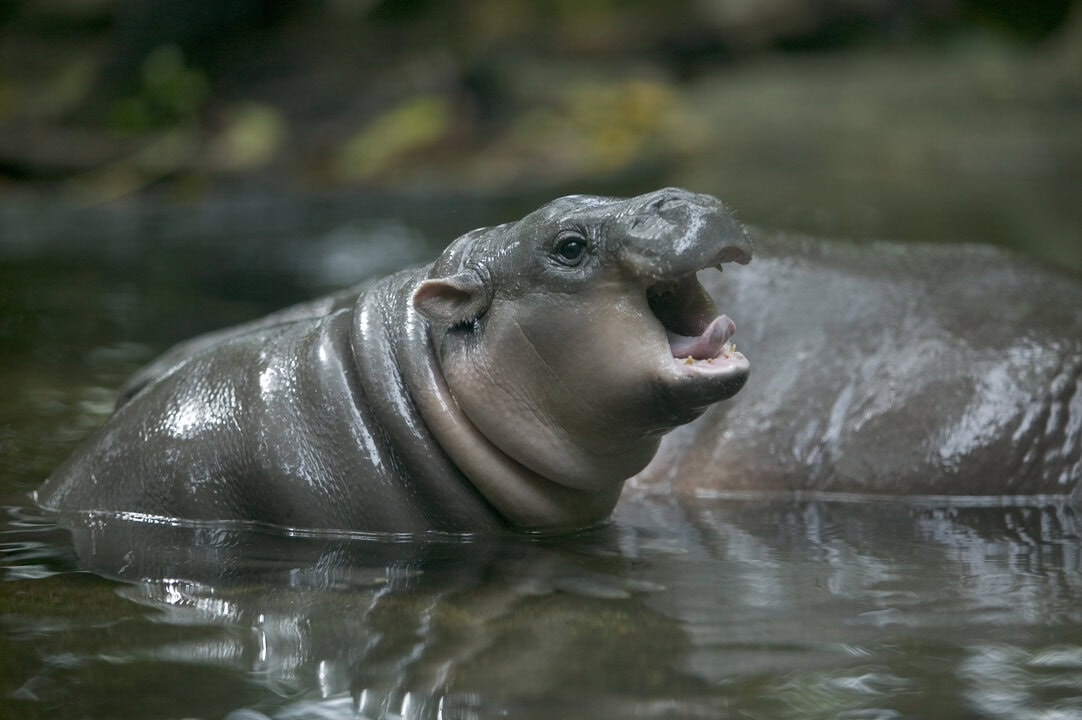
Tiwai Island is a key conservation site for the endangered and elusive pygmy hippopotamus
This milestone marks Sierra Leone’s first such recognition and signals a bold step toward eco-tourism revival in a nation scarred by conflict and crisis.
The road to Tiwai is as rugged as the rewards are rich. From Freetown, Sierra Leone’s bustling capital, visitors endure a 240-kilometer drive along cracked highways before veering onto rust-red dirt tracks pocked with potholes.
The final leg—a moonlit canoe crossing of the Moa River—feels like slipping into another era.

Sometimes the journey is the adventure. In Ends of the Earth, we revel in far-flung destinations that are well worth the trek.
Often navigated by torchlight under a canopy of stars, the journey underscores the island’s remoteness.
Yet, for those who make it, the payoff is a symphony of untamed wilderness.
Nestled amid towering piptadeniastrum trees, liana vines, and bamboo thickets, Tiwai’s off-grid camp offers simple solace: mesh-sided wooden huts draped in mosquito netting, a communal bandstand for meals, and rudimentary showers fed by rainwater.
Comforts are sparse, but the allure lies in immersion. At night, the jungle awakens with a cacophony of hoots, rustles, and distant calls, a soundtrack that drowns out the modern world.

Visitors stay in mesh-sided wooden huts in an off-grid camp or can book beds in the research lodge
Bea Meitiner, a British traveler who visited in 2022, recalls the thrill of vulnerability.
“Lying in bed, I heard this explosion of sounds—frogs, insects, something larger crashing through the underbrush,” she said.
“One night, I bolted awake to footsteps outside my tent. Heart pounding, I pictured a predator on the prowl. Dawn revealed pygmy hippo tracks inches from camp.
Terrifying then, magical now.” Such encounters highlight Tiwai’s crown jewel: the pygmy hippopotamus, a secretive, golf ball-sized-eyed creature classified as endangered, with fewer than 2,500 left in the wild.

Visitors can explore the island and surrounds on guided forest walks, night hikes and canoe trips
But hippos are just the start. The island teems with life, boasting over 1,000 plant species—113 endemic—and 55 mammals, including 19 globally threatened ones like the African forest elephant.
Primates dominate: ginger-whiskered red colobus monkeys swing through the canopy, Diana monkeys chatter in troops, sooty mangabeys forage in the treetops, and Western chimpanzees—critically endangered—navigate the forest floor.
Dr. Ibrahim Bakarr, a primatologist researching here since 2005, suspects at least three chimp groups reside on the island. “Camera traps show one with about nine individuals,” he notes. “Their presence is a testament to the habitat’s resilience.”

The newly recognised Unesco World Heritage site is celebrated for its rare wildlife and biodiversity
UNESCO’s nod in July 2025 celebrated this bounty, citing Tiwai-Gola’s role as a “biodiversity hotspot” vital for conservation amid climate threats.
The site also harbors vibrant freshwater ecosystems, with butterflies, dragonflies, and endemic fish darting through streams.
For visitors, guided experiences unlock it all: dawn forest walks spotting colobus troops, dusk canoe paddles along the river, and night hikes alive with hornbills’ whirring wings and monkeys’ unexpected “showers” from above.
Ali Lucas-Chee, who explored Tiwai during a 2024 overland odyssey across Africa, laughed at the memory.
“My guide, Bobo—a farmer by day—pointed out medicinal trees and even hallucinogenic ones. We hiked twice daily, glimpsing black-and-white colobus and Diana monkeys.
But the night walk? Hornbills sounded like tiny helicopters. And that ‘rain’? Just monkeys peeing from the branches. Pure, unfiltered jungle.”
This vibrancy wasn’t always the norm. Tiwai’s story is one of rebirth from ruin. Discovered for science in the late 1970s and declared a wildlife sanctuary in 1987, the island drew global researchers.
Then came Sierra Leone’s brutal civil war (1991-2002), which left forests littered with bullet casings, felled giants, and silenced wildlife.
“In 2000, I arrived expecting monkey mayhem,” recalls Tommy Garnett, founder of the Environmental Foundation for Africa (EFA).
“Instead, eerie quiet. Cartridges everywhere, trees hacked down. It was a distress call we couldn’t ignore.”
Garnett rallied local chiefs in traditional “hanging heads” councils, securing bans on poaching and logging while rebuilding 1980s research outposts.
Progress stuttered: the 2014 Ebola outbreak shuttered access, a 2015 storm ravaged 70% of infrastructure, and COVID-19 halted tourism.
Undeterred, EFA partnered with Sierra Leone’s Ministry of Tourism and UNESCO. Tentative listing came in January 2022; full inscription followed in July 2025.
Tears flowed at the announcement. “As an African man, admitting I cried is embarrassing, but I did,” Garnett said.
“Vindication for decades of grit—from 1970s pioneers to today’s guardians. Mother Nature and our communities prevailed.”
Tourism Minister Nabeela Farida Tunis echoed the emotion: “Joy, pride, gratitude—it swelled my heart. A national celebration, fueling our eco-tourism vision.”
This UNESCO badge aligns with Sierra Leone’s 2025 “Year of Eco-Tourism,” eyeing eco-lodges on spots like Jaibui Island.
Practical tips abound: Visit November to April for dry-season ease. Book via tiwaiisland.org for day trips, overnights, or research lodge beds.
Mandatory guides—often locals like farmer Bobo—ensure safety and storytelling, weaving civil war tales with plant lore.
Tiwai’s future gleams brighter than its canoe-lit arrivals. “We’re in the global family now,” Garnett affirms. “Local chiefs beam with ownership.”
For Sierra Leone, emerging from war, plague, and pandemic, this “Big Island” isn’t just a destination—it’s a declaration: Nature endures, and so do we.
Discover more from AMERICA NEWS WORLD
Subscribe to get the latest posts sent to your email.