By Manisha Sahu | America News World
December 04,2025
In a decisive message aimed at stabilizing the country’s fragile political environment, the President has reaffirmed his commitment to invoking constitutional powers to ensure that a fully functional parliament is elected within the next six months. His declaration comes at a time when the nation finds itself at a complex crossroads—facing political disagreements, institutional tensions, and public anxieties about the future. As debates intensify across party lines, the administration insists that any delay or obstruction to the parliamentary election process will only deepen the prevailing uncertainties.

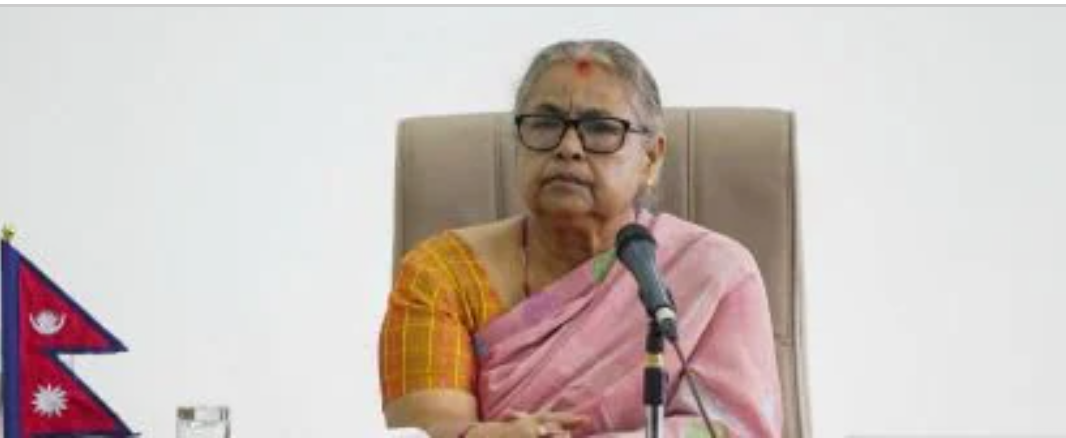
Nepal Prime Minister Sushila Karki
The President’s statement, delivered through his spokesperson, underscores what many analysts describe as a “make-or-break” moment for democratic governance. “The President, in exercise of powers vested in him by the Constitution, is determined to elect a functional parliament within six months, and any obstruction will only create more uncertainties in the country,” she said. Her remarks were direct, signaling both urgency and resolve in the face of mounting political turbulence.
A Nation in Political Limbo
For months, the country has struggled with a widening governance gap following the dissolution of the previous parliament. With legislative functions stalled and key national decisions awaiting parliamentary approval, citizens and institutions alike have increasingly voiced impatience.
Political parties remain divided on the timing and structure of the next elections. While the ruling administration advocates immediate action, several opposition groups argue that underlying issues—such as electoral reforms, constituency disputes, and transparency measures—must be resolved before rushing into fresh polls.
Critics warn that prolonged political limbo could risk weakening democratic institutions further, emboldening extremist narratives, and diminishing public trust. Meanwhile, supporters of the President argue that the Constitution clearly empowers him to restore democratic order when political actors fail to do so voluntarily.
The Constitutional Mandate
Legal scholars note that the President’s authority to call for parliamentary elections is not only rooted in constitutional doctrine but also historically recognized during national crises. The Constitution grants him the mandate to intervene when repeated delays threaten governance stability. However, it remains a contentious issue among political groups, some of whom fear that such interventions may set precedents for executive overreach.
Despite these concerns, constitutional experts emphasize that the current situation demands clarity and action. “The Constitution anticipated moments like these,” one analyst explained. “The framers understood that prolonged deadlock can paralyze a nation. The President’s role is to ensure continuity of governance.”
According to insiders, the administration has already begun preliminary consultations with the Election Commission, security agencies, and regional governance bodies to initiate preparations for the electoral process.
Opposition Leaders React
Predictably, the President’s statement sparked mixed reactions among political factions. Opposition leaders criticized the tone of urgency, alleging that it could undermine consensus-building efforts and democratic checks. They contend that the government should first address demands for reforms that ensure free and fair elections.
Some opposition parties argue that rushing into polls without structural updates—particularly on issues such as campaign financing, voter list accuracy, and electronic voting systems—risks repeating the problems that caused the earlier legislative breakdown.
Others, however, took a more measured stance. A few moderate leaders acknowledged the need for timely elections but encouraged open dialogue between political stakeholders and the administration. “We must balance urgency with responsibility,” said one opposition representative. “Elections should be timely, but they must also be credible.”
Public Reaction and Institutional Pressures
The public response has been equally varied. Urban voters, business communities, and civil society organizations have largely expressed relief at the prospect of a clear timeline toward political resolution. Many believe that economic stability, investment confidence, and social security reforms are suffering due to persistent political paralysis.
Conversely, rural communities and marginalized groups have voiced concerns about whether the next elections will adequately address their needs, especially in regions affected by developmental delays and administrative neglect.
Institutions—including the judiciary, election bodies, and administrative departments—are also feeling the pressure. The Election Commission faces an extensive logistical challenge: updating voter lists, training election officers, planning security deployment, securing polling stations, and ensuring the neutrality of the process.
A Call for National Responsibility
The President’s spokesperson emphasized that the administration remains open to discussions but will not accept indefinite delays. She reiterated that obstruction—whether through political maneuvering, legal challenges, or street protests—could push the nation deeper into uncertainty at a time when firm leadership is crucial.
“The President is committed to transparency and accountability,” she stated. “His priority is to return the country to constitutional normalcy. At this juncture, delaying elections will not strengthen democracy—it will only weaken it.”
Political analysts agree that the next six months will be decisive. The government must strike a careful balance between enforcing its constitutional mandate and maintaining an inclusive political atmosphere. Opposition parties must decide whether to engage constructively or risk being seen as contributors to national instability.
What Lies Ahead
As the nation waits for definitive action, the next steps will likely involve intensive negotiations, legal clarifications, and administrative preparations. If the government and opposition achieve consensus, the electoral timeline could be smoother and more credible. If not, the President may need to take additional constitutional steps to ensure the process stays on track.
The coming months will test the resilience of democratic institutions, the maturity of political leadership, and the patience of citizens. Whether seen as a constitutional necessity or an assertive political move, the President’s call for a functional parliament marks a turning point.
One thing remains certain: the country cannot afford prolonged paralysis. With the clock ticking toward the six-month deadline, all eyes will remain on the political establishment—watching whether leaders rise to the occasion or allow uncertainty to deepen further.
Discover more from AMERICA NEWS WORLD
Subscribe to get the latest posts sent to your email.