By _ shalini oraon

—
A New Dawn in Ayodhya: PM Modi Hoists the Saffron Flag, Culminating a Centuries-Old Journey
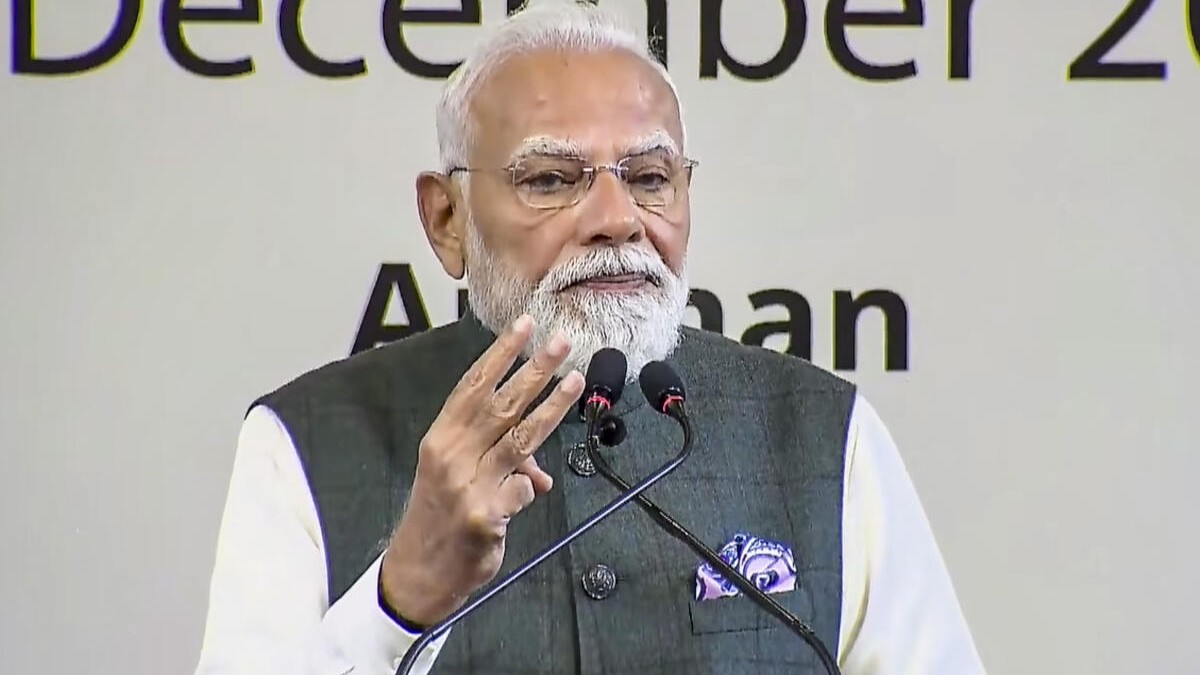
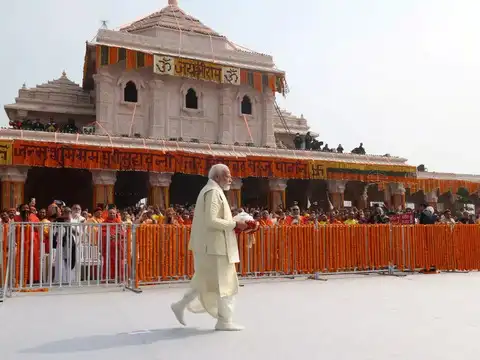
The ancient city of Ayodhya, cradled in the soft morning light of a historic day, stood still. On the banks of the Sarayu River, a sense of palpable anticipation mingled with the chill air. This was not just another day; it was the day when a long, turbulent, and defining chapter in India’s modern history was reaching its symbolic zenith. Prime Minister Narendra Modi was set to hoist the saffron flag, the Bhagwa Dhwaj, atop the newly constructed Ram Temple, a moment millions had awaited for generations. The city, fortified by layers of security, was the epicenter of a national event that resonated with deep religious faith, potent political symbolism, and profound historical consequence.
The event can be understood through ten critical points that capture its essence, its preparation, and its far-reaching implications:
1. The Culmination of a Pledge:
For the Prime Minister and the Bharatiya Janata Party(BJP), this was the fulfillment of a core promise that has been a cornerstone of their political ideology for decades. The movement to build a Ram Temple at the believed birthplace of Lord Ram was one of the most potent forces in Indian politics in the late 80s and 90s, directly leading to the BJP’s rise as a national powerhouse. For PM Modi, a leader who meticulously connects his actions to their symbolic weight, hoisting the flag was the ceremonial closing of a circle that began with the Rath Yatras and the political mobilizations of a previous era.
2. The Saffron Flag: More Than a Symbol:
TheBhagwa Dhwaj is not just a religious flag; in the Hindu tradition, it represents righteousness, sacrifice, and liberation. Its hoisting atop the temple’s shikhara (spire) was a declaration of victory and sanctification. For devotees, it signified the divine reclaiming of a sacred space, a visual affirmation that Lord Ram was in his rightful home. In the socio-political landscape, the saffron hue is inextricably linked to Hindu nationalism, making the act a powerful statement of cultural assertion.
3. Fortress Ayodhya: Unprecedented Security:
Understanding the event’s sensitivity and the sheer volume of devotees,authorities transformed Ayodhya into a veritable fortress. A multi-layered security blanket was thrown over the city, involving thousands of personnel from the UP Police, Central Armed Police Forces (CAPFs), and elite commandos. Sharp-shooters were positioned on high-rises, drone surveillance was continuous, and a strict no-fly zone was imposed. Every entry and exit point to the city was heavily monitored, with vehicle checks creating long queues for miles. This was not merely about managing crowds; it was about preventing any incident that could mar an event of this national significance.
4. The Political Landscape Reshaped:
While presented as a purely religious and cultural moment,the event’s political undertones were undeniable. Occurring just months before a general election, it was seen as a masterstroke in consolidating the BJP’s core voter base. It served as a potent reminder of the party’s commitment to its ideological agenda and its ability to deliver on long-standing promises. For the opposition, it presented a complex challenge, forcing them to navigate between respecting public sentiment and critiquing the majoritarian politics it represented.
5. A Nation Watching, A Diaspora Rejoicing:
The event was not confined to Ayodhya.Across India, temples large and small held special prayers and ceremonies. Television channels broadcast live, and social media was flooded with messages of jubilation. The Indian diaspora in countries from the United States to Australia organized live screenings and cultural events, connecting a global community to a seminal moment in the motherland’s cultural life. It was a national spectacle that transcended geographical boundaries.
6. The Architectural Marvel: The Ram Temple Itself:
The flag-hoisting was the most prominent ceremonial event for a structure that is itself a marvel of traditional Indian architecture.Built in the Nagara style without the use of iron or steel, the temple is designed to last for a thousand years. The use of granite, sandstone, and marble, intricately carved with religious motifs, makes it not just a place of worship but a testament to resurrected Indian craftsmanship and heritage, intended to stand as a cultural beacon for centuries.
7. Healing and Division: The End of a Legal Battle, The Persistence of Social Fractures:
The Supreme Court’s landmark 2019 verdict,which paved the way for the temple’s construction, also acknowledged the illegal demolition of the Babri Masjid in 1992. While the judgment was intended to provide legal closure, the socio-religious fault lines it addressed remain. For many Hindus, the temple’s construction is a moment of rectification and justice. For many Muslims, it is a painful reminder of a contested history and a sense of alienation. The event in Ayodhya was thus a moment of triumph for one community and a moment of sober reflection for another, highlighting the complex tapestry of India’s secular fabric.
8. The Economic Rebirth of a Sacred City:
Beyond the immediate religious and political implications,Ayodhya is undergoing a massive infrastructural and economic transformation. The government has launched ambitious projects to develop it into a world-class spiritual tourism destination. A new airport, a redeveloped railway station, wider roads, and better hospitality infrastructure are changing the city’s face. The flag-hoisting ceremony was as much about inaugurating this new “global Ayodhya” as it was about the temple, promising jobs, investment, and a new identity for the city and its residents.
9. The Personal Pilgrimage of Narendra Modi:
For PM Modi,this was deeply personal. Hailing from a background of grassroots Hindu nationalist organizing, his entire political life has been intertwined with the Ram Janmabhoomi movement. To be the Prime Minister who not only oversaw the temple’s construction but also performed its foundational ceremony (the Bhoomi Pujan in 2020) and now its symbolic completion, cements his legacy as the leader who delivered what his ideological predecessors could not. It is the ultimate consolidation of his image as a leader who turns promises into reality.
10. A New Chapter for “Ram Rajya”:
The concept of”Ram Rajya” — the ideal kingdom of Lord Ram — is often invoked in Indian political discourse to signify a period of perfect justice, prosperity, and righteousness. As the saffron flag fluttered atop the temple, proponents saw it as the dawn of this new era for India—a period of cultural renaissance and national confidence. Critics, however, watch with caution, concerned about the implications for India’s constitutional secularism.
In conclusion, the hoisting of the saffron flag in Ayodhya was far more than a single ceremonial act. It was a dense, multi-layered event where faith, history, politics, and national identity converged. It marked the end of a long and often painful struggle and the beginning of a new, uncertain, yet profoundly significant chapter in the story of India. As the flag caught the wind, it signaled not just the culmination of a temple’s construction, but the powerful, and contested, ascendancy of a new idea of India itself.
Discover more from AMERICA NEWS WORLD
Subscribe to get the latest posts sent to your email.