
By _shalini oraon

A City’s Agony Repeats: Mumbai BEST Bus Accident Near Bhandup Station Kills Four, Injures Dozens
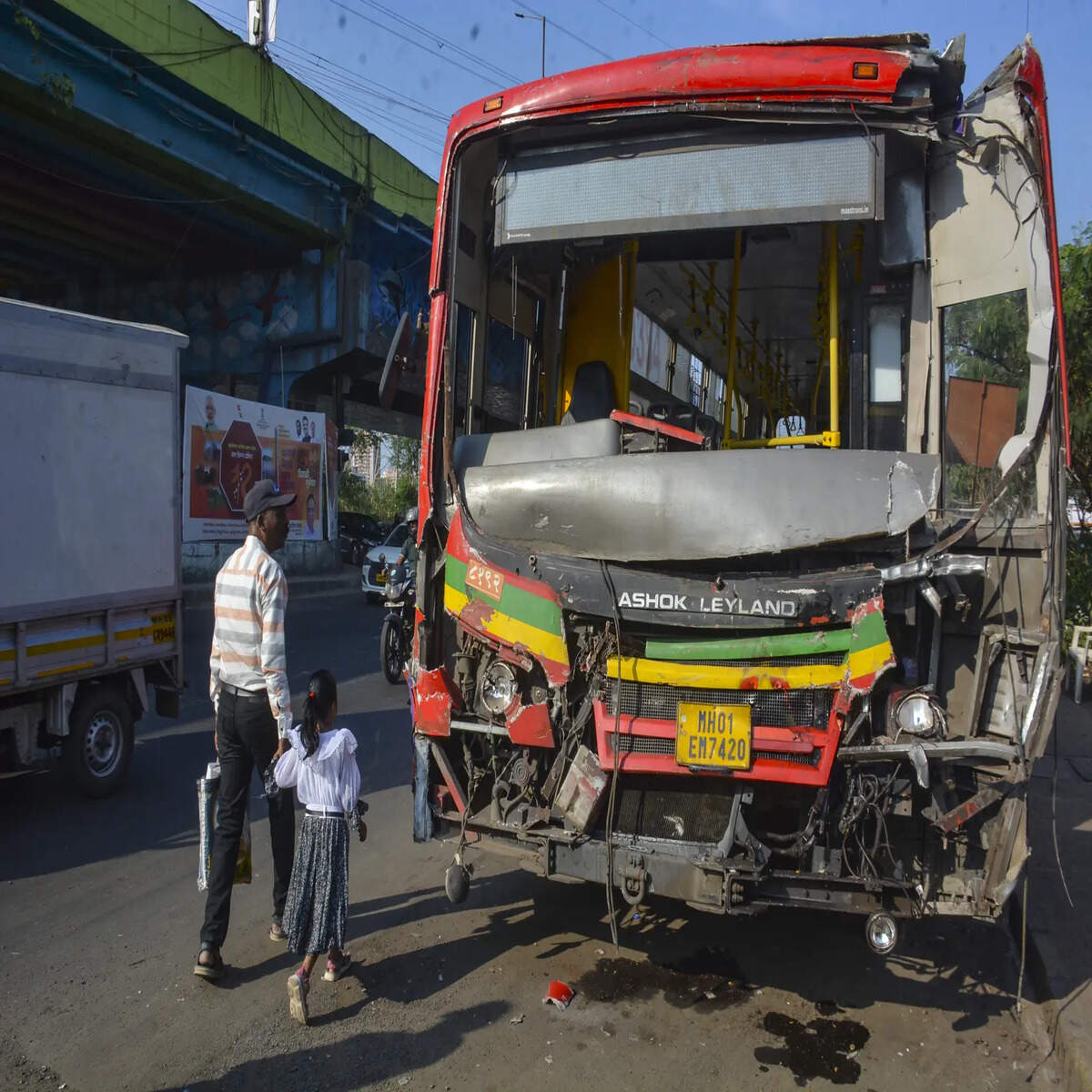
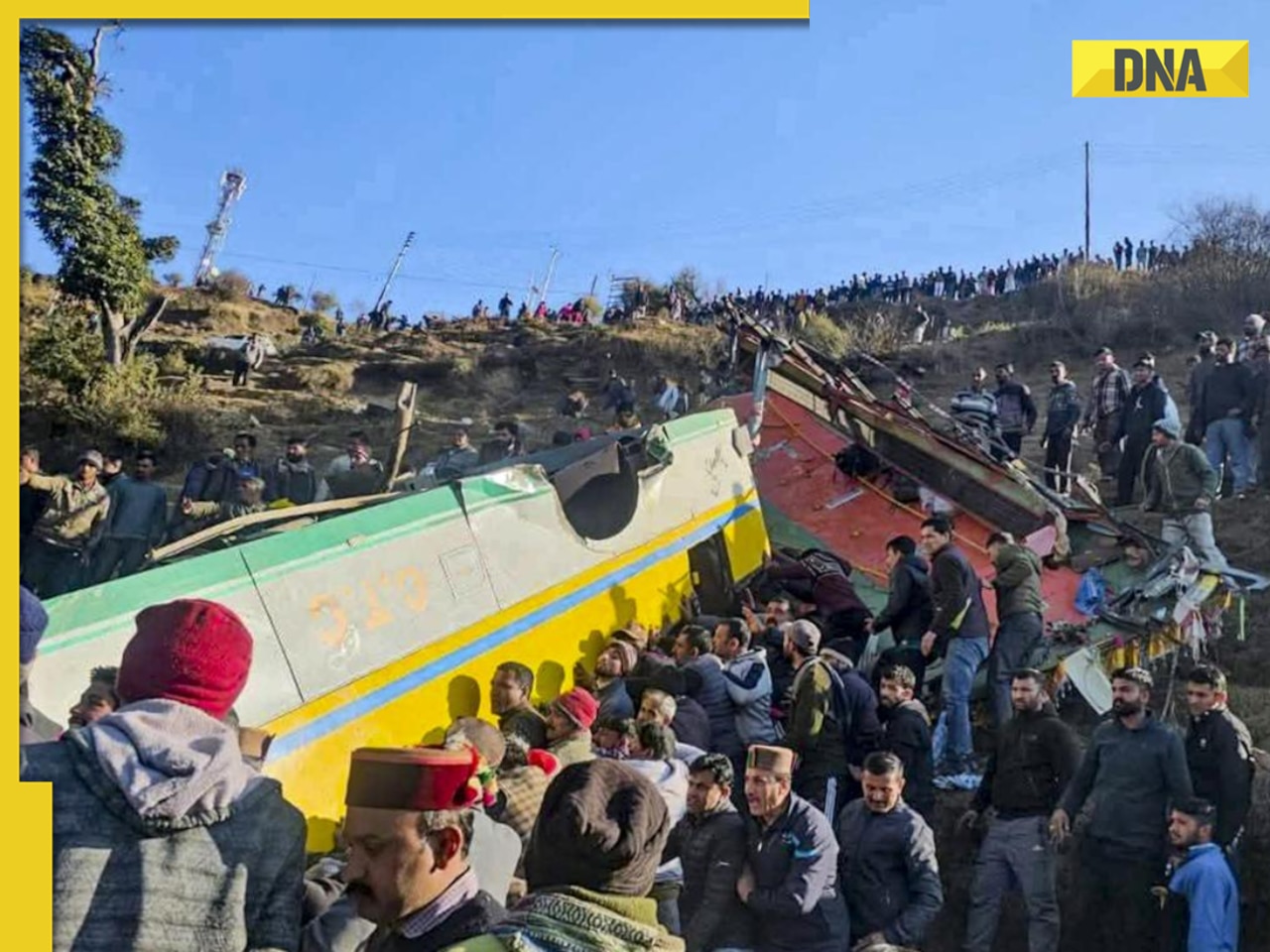
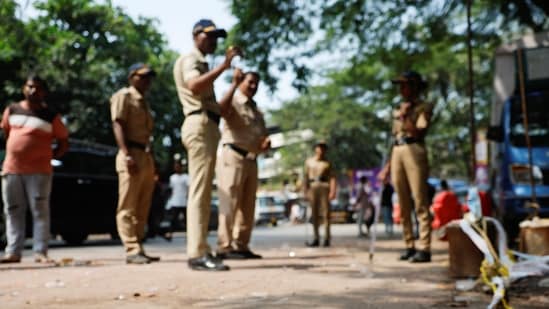
The morning of a typical Mumbai weekday was shattered by the screech of metal and the screams of bystanders near Bhandup railway station. A Brihanmumbai Electric Supply and Transport (BEST) undertaking bus, part of the city’s iconic and ubiquitous public transport fleet, lost control, plowing into pedestrians, vehicles, and finally crashing into a wall. The horrific accident left at least four people dead and several others injured, casting a pall of grief and raising urgent, familiar questions about the safety of the city’s arterial roads. This incident is not an isolated tragedy but a symptom of a deeper, systemic malaise plaguing Mumbai’s urban mobility.
Key Points of the Bhandup Bus Accident
· The Incident: A speeding BEST bus (route number 588, plying between Kanjurmarg and Mulund) lost control near Bhandup railway station (east side) during the morning rush hour. It first hit multiple two-wheelers and pedestrians on the service road before crashing into a boundary wall of a residential complex.
· Casualties: The crash resulted in the deaths of four individuals, including pedestrians and motorists. Several others, some critically, were rushed to nearby hospitals including Rajawadi and Shatabdi.
· Immediate Cause & Driver: Preliminary reports suggest the bus was speeding and the driver, who was arrested, allegedly lost control. There are unverified accounts from witnesses of the driver possibly suffering a health issue, but investigations are ongoing. The driver has been charged under sections of the Indian Penal Code (IPC) for rash driving and culpable homicide not amounting to murder.
· Response: Emergency services, including police and fire brigade, responded swiftly. The injured were extricated and transported to hospitals. BEST officials announced an ex-gratia compensation of ₹10 lakh to the kin of each deceased and promised to cover medical expenses of the injured.
Beyond the Headlines: The Anatomy of a Recurring Tragedy
While the specifics of Bhandup are being investigated, the accident fits a devastating pattern. BEST bus accidents, often fatal, make headlines with grim regularity. To view this as merely a case of one driver’s error is to ignore the complex web of factors that set the stage for such disasters.
1. The Human Factor Under Pressure:
BEST drivers operate under immense physical and mental strain.They navigate congested, chaotic traffic for long, monotonous hours, often with rigid schedules to meet. Fatigue is a critical, under-reported factor. The pressure to maintain timeliness on Mumbai’s clogged roads can lead to risk-taking behaviors like speeding and sudden lane changes. Furthermore, there are serious questions about the rigor of medical check-ups for drivers to rule out underlying conditions that could impair their ability to operate a heavy vehicle.
2. The Infrastructure Trap:
Mumbai’s road infrastructure is fundamentally mismatched with its volume of traffic.The accident site near Bhandup station epitomizes this: a bustling area with a mix of high-speed traffic, pedestrians spilling from the station, haphazardly parked vehicles, and vulnerable two-wheeler riders. Service roads, footpaths, and traffic management around railway stations—the hubs of public movement—are often an afterthought, creating deadly zones of conflict. Poor road design, inadequate signage, and a lack of dedicated, safe pedestrian pathways force all users into a dangerous free-for-all.
3. The Fleet and Maintenance Question:
BEST operates one of the largest bus fleets in the country.While it has been modernizing, concerns linger about the maintenance schedules and mechanical fitness of every vehicle in its vast arsenal. A brake failure or steering malfunction in a heavy bus on a crowded street can have catastrophic consequences. A transparent, foolproof system of daily checks and periodic overhaul is non-negotiable but difficult to perfectly enforce across thousands of vehicles.
4. The Culture of Chaotic Compliance:
Mumbai’s traffic is a unique beast—a mix of high discipline and utter lawlessness.While BEST buses are generally seen as disciplined, they must share space with vehicles that constantly flout rules—sudden stops, illegal turns, and encroachments. This environment of unpredictable chaos necessitates defensive driving at all times. Any lapse, from any party, can cascade into tragedy.
A City’s Dilemma: Punish or Prevent?
The immediate official response follows a predictable script: arrest the driver, announce compensation, and order an inquiry. While accountability is essential, it is a reactive measure. The deeper need is for a proactive, systemic overhaul.
· For BEST: It must go beyond tokenism. This includes:
· Revamping Driver Welfare: Instituting scientific work hours with adequate breaks, mandatory and advanced defensive driving training, and stringent, regular health screenings.
· Technology as Guardian: Accelerating the installation of speed governors, telematics to monitor rash driving, and driver fatigue detection systems must be a top priority.
· Maintenance as a Sacred Duty: Digitizing and strictly auditing maintenance logs to ensure zero compromise on mechanical safety.
· For Civic Authorities (BMC, Police, MMRDA): The accident is a stark reminder that roads must be designed for safety, not just for vehicle movement.
· Safe Zone Mandate: Areas around railway stations and markets need immediate redesign—wide, unobstructed footpaths, regulated pedestrian crossings, clear lane markings, and enforced parking rules.
· Traffic Calming: Implementing physical measures like rumble strips, speed breakers (where appropriate), and narrowed lanes near junctions to naturally reduce vehicle speed in high-footfall areas.
· Strict Enforcement: A consistent, technology-driven crackdown on all traffic violations, not just during special drives, to inculcate a culture of fear for the law.
Conclusion: Mourning with Purpose
The four lives lost in Bhandup are more than a statistic. They are someone’s parent, child, or breadwinner, their futures erased in a moment of urban breakdown. The injured carry both physical and psychological scars. Mumbai, a city that prides itself on resilience, must channel its collective anguish into relentless demand for change.
Each such accident is a failed test of our systems. The mourning for the victims of the Bhandup tragedy will only be meaningful if it translates into uncompromising political will, administrative accountability, and public demand to fix the root causes. The iconic red BEST bus is a symbol of Mumbai’s democratic mobility, carrying the city’s lifeblood. Ensuring its journey is safe is not just a transport imperative, but a fundamental covenant of urban life. The time for temporary fixes and blame-shifting is over. The memory of those lost on that Bhandup road must fuel the mission to make Mumbai’s streets safe for everyone who uses them.
Discover more from AMERICA NEWS WORLD
Subscribe to get the latest posts sent to your email.








![Smoke rises after Israeli strikes in Beirut's southern suburbs, on March 2 [Mohamad Azakir/Reuters]](https://america112.com/wp-content/uploads/2026/03/hgh.webp)
drover sointeru
Wonderful web site. Lots of useful information here. I am sending it to several friends ans also sharing in delicious. And obviously, thanks for your effort!