By Manisha Sahu | America News World
Published: November 25, 2025
A late-night Pakistani airstrike in Afghanistan’s Khost province has allegedly killed nine children and one woman, according to the Taliban government in Kabul, marking one of the deadliest cross-border incidents reported in recent months between the two uneasy neighbours. The Taliban administration has strongly condemned the attack, accusing Pakistan of violating Afghan sovereignty and targeting civilians. Pakistan, however, has not issued an official statement at the time of reporting, leaving the nature and motive of the airstrikes under intense scrutiny.

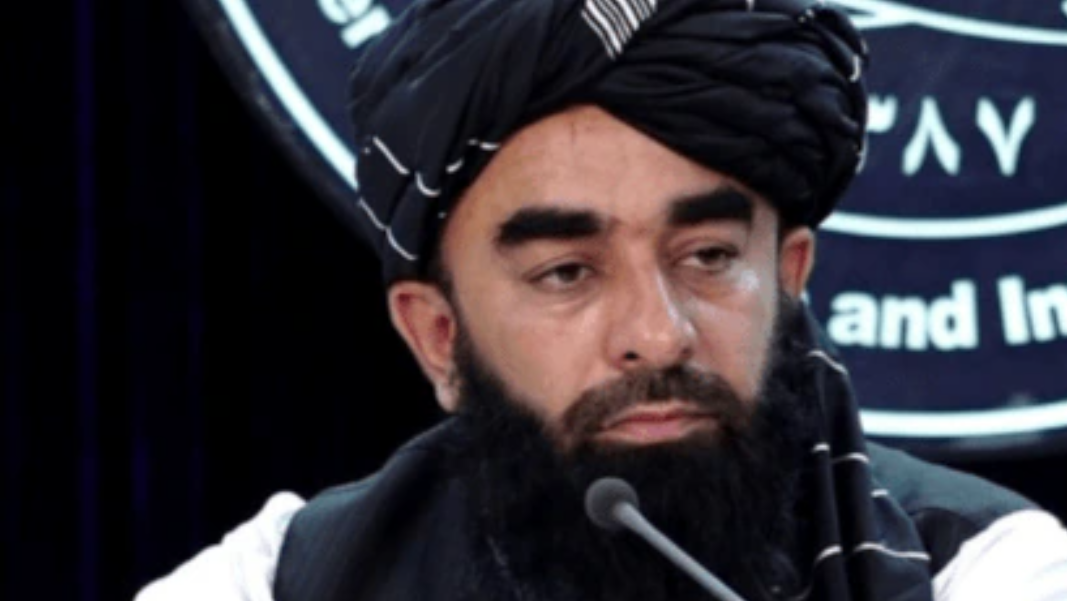
Zabihullah Mujahid, the Taliban’s spokesperson, stated that nine children were killed in a Pakistani airstrike in Afghanistan on Monday night. (Photo: Middle East Institute)
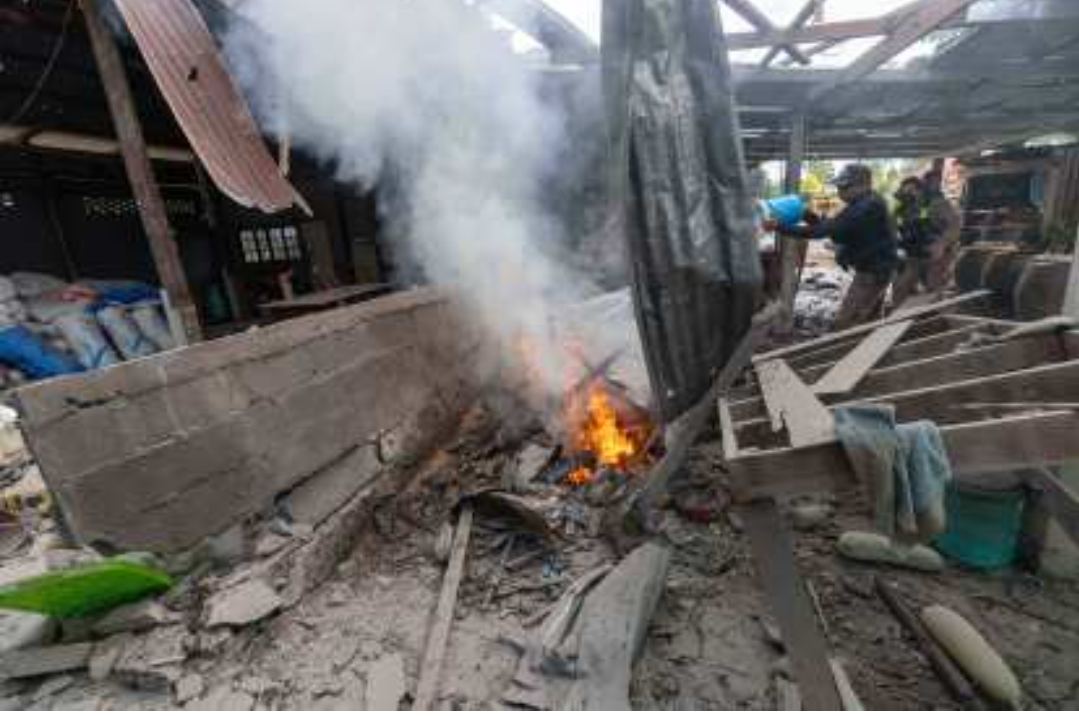
The allegation was made public by Zabihullah Mujahid, the chief spokesperson for the Taliban government, who posted details of the incident on social media, triggering outrage and drawing attention from regional observers already wary of escalating tensions between Islamabad and Kabul. According to Mujahid, Pakistani forces launched aerial strikes around midnight on a residential home in the Mughalgai (Mughalgay) area of Gurbuz district in Khost province, killing nine children — five boys and four girls — as well as a woman. The attack reportedly destroyed the residence of the targeted family.
“Last night, around 12 o’clock, Pakistani invading forces carried out a bombing on the home of a local resident, Wilayat Khan, son of Qazi Mir, in the Mughalgay area of Gerbaz district in Khost province. As a result, nine children and one woman were martyred, and his home was destroyed,” Mujahid wrote.
He further claimed that Pakistani forces also carried out strikes in Kunar and Paktika provinces, injuring at least four civilians. Afghan officials have not yet released footage or independent evidence verifying the deaths, and no international humanitarian organisation has confirmed casualty figures so far. Still, the Taliban’s detailed allegation has heightened regional sensitivities and sparked renewed debate over Pakistan’s military operations along the border.
A Cycle of Accusations and Counter-Accusations
The relationship between Pakistan and Afghanistan has been tense for decades, but the friction has intensified since the Taliban returned to power in 2021. Pakistan frequently accuses Afghanistan of harbouring the Tehreek-e-Taliban Pakistan (TTP), a militant group responsible for attacks inside Pakistani territory. The Taliban government, however, denies offering safe havens and insists that Pakistan must address its own internal security challenges instead of blaming Afghanistan.
Airstrikes and artillery exchanges along the Durand Line, the disputed 2,600-kilometre border separating the two nations, are not unheard of. Civilians have often paid the highest price for these clashes. Afghan authorities say Pakistan routinely conducts cross-border operations under the pretext of targeting TTP militants but ends up hitting civilian structures, a claim Islamabad typically rejects.
In previous incidents, Pakistan has argued that militant sanctuaries in Afghan border districts pose a direct threat to its security forces. Kabul, in turn, accuses Pakistan of violating territorial sovereignty and using military pressure to extract political leverage. This latest episode, involving the deaths of several children, could further strain already fraught relations.
Khost: A Volatile Border Region
Khost province, located in southeastern Afghanistan, lies close to the Pakistani border and has long been a region of strategic and security interest. It has historically served as a passageway for insurgent groups moving between the two countries. The Mughalgai area, where the alleged strike took place, is sparsely populated but has seen previous clashes involving local tribes, Taliban forces, and cross-border militants.
Residents of Khost reported hearing explosions late Monday night, though communications remain limited and independent verification remains challenging. Local tribal elders contacted by Afghan media described the strike as “devastating” and “unprecedented in recent months,” claiming that the targeted family had no known ties to militant groups.
International Reaction and Humanitarian Concerns
Human rights organisations and regional analysts have expressed alarm over the alleged killing of children, calling for an impartial investigation. Civilian casualties from airstrikes—whether in Afghanistan, Pakistan, or neighbouring regions—have been a persistent concern for global observers.
International agencies, however, face severe operational restrictions in Taliban-ruled Afghanistan, making on-the-ground verification difficult. The Taliban’s claims, while detailed, have not yet been independently corroborated by outside bodies such as the United Nations Assistance Mission in Afghanistan (UNAMA). The UN has historically documented cross-border casualties, but confirmation often requires field access that is currently limited.
Nevertheless, the reported deaths of nine children have sparked widespread condemnation on Afghan social media channels, with many users accusing Pakistan of showing “complete disregard” for civilian life. Others urged both governments to prioritise diplomacy over military escalation.
Pakistan’s Silence Raises Questions
As of now, Pakistani authorities have not released a statement acknowledging or denying the airstrikes. Pakistan’s military typically issues briefings through the Inter-Services Public Relations (ISPR) department, but no such communication has been made public. Analysts say Islamabad may be assessing the political implications before responding or may be preparing an explanation linking the operations to counter-terrorism efforts against the TTP.
If Pakistan confirms the strike, it may argue that the targeted location was a militant hideout or that its security forces were responding to cross-border attacks. If it denies involvement, the situation could further complicate relations with the Taliban government, which has been increasingly vocal in blaming Pakistan for destabilising Afghan border provinces.
A Dangerous Trend in the Region
Whether or not Pakistan confirms responsibility, the allegations highlight an increasingly dangerous dynamic: the use of air power in densely populated civilian zones near the Afghan-Pakistani border. Such tactics risk triggering broader conflict between two nations already navigating mistrust, economic instability, and persistent insurgencies.
The Taliban government, seeking international legitimacy, has been eager to position itself as a victim of external aggression. Pakistan, on the other hand, faces growing internal pressure to tackle TTP attacks that have surged over the past two years. In this climate, the potential for miscalculation or escalation is high.
What Comes Next
The Afghan government has called the attack an “unacceptable act of aggression” and urged international bodies to intervene. Depending on Pakistan’s response, diplomatic protests or security escalations could follow.
Meanwhile, families in the affected districts of Khost, Kunar, and Paktika remain fearful. With winter approaching and humanitarian resources stretched thin, any further military action could deepen the suffering of civilians caught between two powerful forces.
For now, the deaths of nine children stand as a tragic reminder of the human cost of geopolitical conflicts—a cost borne disproportionately by those with no role in the violence.
Discover more from AMERICA NEWS WORLD
Subscribe to get the latest posts sent to your email.