By_shalini oraon

_ the shifting battleground of JNU’s conflicts from campus to courtroom.
—
The Courtroom Campus: How JNU’s Ideological Battleground Shifted from the Streets to the Bench
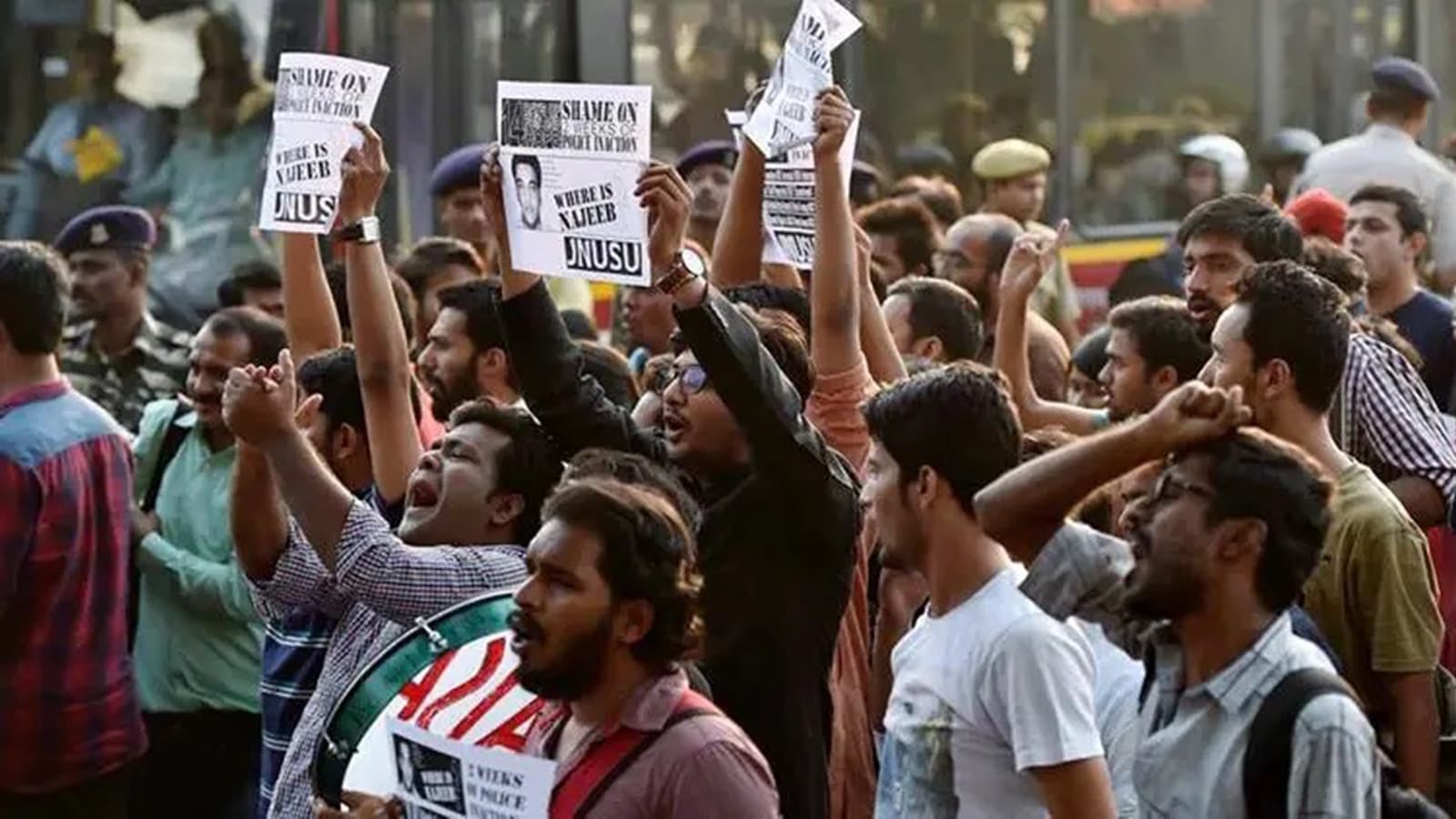
For decades, Jawaharlal Nehru University (JNU) has been more than an educational institution; it is an idea, a symbol, and a perpetual political storm. Its sprawling, verdant campus in South Delhi has long been the nation’s most vibrant arena for ideological combat, where debates over nationalism, socialism, and imperialism were fought with posters, pamphlets, and passionate sloganeering. Today, however, the epicenter of this conflict has undergone a profound shift. The fault lines that once cracked open in administrative blocks and student union offices have now snaked their way into the hallowed halls of the Delhi High Court and the Supreme Court. JNU is now fighting its most consequential battles not through dialogue or protest, but through legal affidavits and court orders, pitting the university administration against a coalition of its own students and faculty.
This transition from the maidan to the courtroom is not merely a change of venue; it is a fundamental transformation in the character of the conflict. It signifies the breakdown of internal democratic mechanisms and the weaponization of institutional power, a story whose roots lie in the seismic political shifts of the past decade.
The Genesis of the Grievance: A Clash of Visions
The current legal onslaught can be traced back to a fundamental clash of visions about what a university should be. For the students and a significant section of the faculty, JNU’s essence is its autonomy, its critical pedagogy, and its commitment to social justice, encapsulated in its unique admission policy that provided weightage to deprivation and empowered marginalized sections of society. For the current administration, backed by the ruling dispensation at the centre, JNU was seen as a “dysfunctional” bastion of left-leaning “anti-national” politics, in need of drastic disciplinary and academic overhaul.
This clash crystallized into a series of concrete disputes:
1. The Hostel Manual Amendments: The introduction of a new hostel manual that significantly hiked fees, coupled with curfew timings and other disciplinary measures, was seen as an assault on JNU’s egalitarian culture. Students argued it would financially exclude the very poor and marginalized students the university was meant to serve.
2. The Compulsory Attendance Debate: The imposition of a mandatory 75% attendance rule struck at the heart of JNU’s self-directed, research-oriented academic culture, which traditionally valued scholarly exploration over regimented classroom presence.
3. The Dissolution of Elected Bodies: The sidelining of the JNU Students’ Union (JNUSU) and the teachers’ association eroded the traditional channels for negotiation and grievance redressal, leaving stakeholders with no forum for dialogue.
4. The Appointment and Removal of Faculty: A series of contentious appointments to key administrative posts, coupled with the suspension and dismissal of teachers critical of the administration, created an atmosphere of distrust and intimidation.
With internal avenues for dissent and discussion systematically closed, the aggrieved parties had little choice but to seek the intervention of an external arbiter: the judiciary.
The Court as the New Administrative Block
The courtrooms have now become the de facto administrative blocks where JNU’s policies are being debated, dissected, and often, dismantled. The litigation is multi-pronged, involving a complex web of petitions and counter-petitions.
Students vs. Administration: Student bodies, particularly the JNUSU, have filed numerous petitions challenging the hostel fee hike and the compulsory attendance policy. Their arguments hinge on the principles of equality and the right to education. They have contended, with significant success, that the fee hike is arbitrary and violates the university’s own ethos of inclusivity. The courts have often agreed, staying the implementation of the hikes and forcing the administration back to the drawing board.
Faculty vs. Administration: The legal war with the faculty is perhaps even more consequential. When Professor Rakesh Kumar, the elected President of the JNU Teachers’ Association (JNUTA), was suspended, the association moved the Delhi High Court. The court’s stinging rebuke of the administration was telling. It noted that the suspension seemed to be a “counterblast” for the teacher’s criticism and that the principles of natural justice were not followed. The court reinstated him, highlighting how the administration’s actions were being perceived as vindictive and procedurally flawed.
In another landmark case, the Delhi High Court set aside the dismissal of Professor Nivedita Menon, a prominent intellectual and critic of the administration, calling the decision “manifestly illegal” and “unsustainable.” The court found that the Executive Council’s decision was based on a “non-existent” inquiry report and violated the university’s own statutes.
These judicial interventions are more than just legal victories for the petitioners; they are a public indictment of the administration’s style of governance. The courts have repeatedly emphasized due process, the adherence to statutes, and the protection of dissent as non-negotiable principles.
The Chilling Effect and the Stakes for Indian Academia
The legal battles have created a chilling effect on campus. The constant threat of litigation, disciplinary action, and police presence has altered the social and intellectual fabric of the university. The spontaneous debates and fearless criticism that defined JNU are now tempered by caution and calculation. The administration, in turn, appears entrenched, using legal delays and appeals to prolong disputes, effectively governing through litigation.
The stakes of this conflict extend far beyond the boundaries of JNU. It is a proxy war for the future of Indian higher education. A victory for the administration’s model would signal a move towards a more centralized, disciplined, and market-driven university system, where dissent is a manageable exception rather than a celebrated norm. A victory for the students and faculty, as mediated by the courts, would reaffirm the values of institutional autonomy, academic freedom, and social inclusion.
The tragedy, however, is that the courtroom, for all its necessity, is a poor substitute for a functioning university. A judgment can enforce a rule, but it cannot foster the trust and collaboration essential for a vibrant academic community. The legal victories for students and faculty, while crucial, are defensive actions—they prevent further erosion but have so far been unable to restore the spirit of open inquiry.
As the cases continue to wind their way through the judicial system, JNU stands as a cautionary tale. It demonstrates what happens when political polarization overwhelms educational governance, when dialogue is replaced by diktat, and when a university’s leadership finds itself perpetually defending its decisions in court against its own community. The fault lines have indeed moved, and the tremors are being felt across every university in India, asking a fundamental question: In the battle for the soul of a university, can a gavel ever truly replace a conversation?
Discover more from AMERICA NEWS WORLD
Subscribe to get the latest posts sent to your email.