By Manisha Sahu | America News World
November 23, 2025
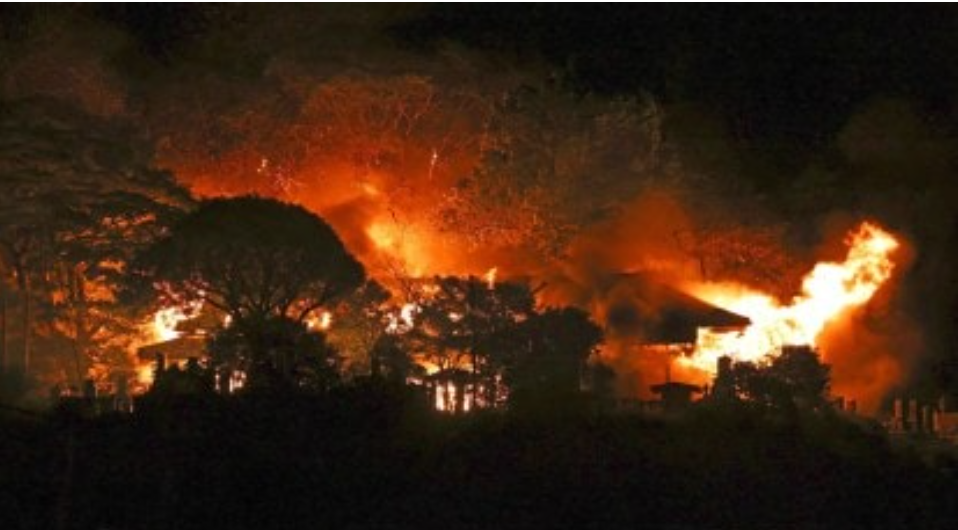
A massive fire that broke out in the southwestern Japanese city of Oita has left a trail of destruction, damaging or destroying at least 170 homes and forcing hundreds of residents to flee overnight. The blaze, which erupted Tuesday evening amid powerful gusts of wind, continued burning well into Wednesday, prompting a widespread emergency response from firefighters, police personnel, and army helicopters.

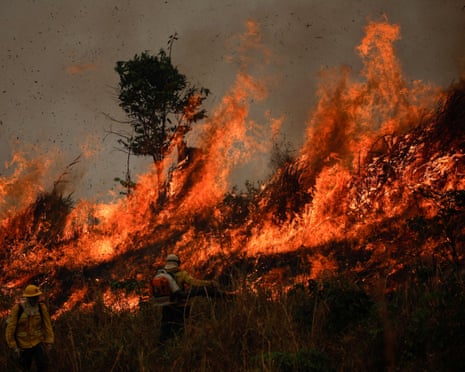
Flames shoot up from the scene of a blaze in Oita, southern Japan. (Kyodo News via AP)
The disaster has shaken communities across Oita, a coastal city on Kyushu — Japan’s southernmost major island — as residents recount the terrifying speed with which the flames engulfed homes, infrastructure, and nearby forested areas.
Also read:-“Voters Back Marjorie Taylor Greene Despite Rift With Trump”
Fire Breaks Out Near Fishing Port, Spreads Rapidly
According to Japan’s Fire and Disaster Management Agency, the fire began near a fishing port during strong winds that accelerated its spread. Within minutes, flames moved through tightly packed residential areas, reaching surrounding forests and sparking a large-scale emergency.
Local authorities reported that at least 170 homes had been damaged or completely burned down, marking one of the region’s most destructive urban fires in recent years. A man in his 70s remains unaccounted for, heightening concern as emergency crews continue to sift through debris.
Witnesses described a frightening scene that unfolded in “the blink of an eye.”
One resident, speaking to Kyodo News Agency, said she had only seconds to react before the fire reached her neighborhood. “The flames moved so fast I had to leave everything behind. There was no time to collect belongings,” she recalled, illustrating the chaos that gripped the area as families fled their homes with little more than the clothes they were wearing.
Unrelenting Winds Challenge Firefighters
Despite the deployment of dozens of fire engines and more than 200 firefighters, the blaze proved extremely difficult to contain. As of Wednesday afternoon—nearly 20 hours after the fire began—emergency officials said it had still not been fully brought under control.
The strong winds that fanned the flames on Tuesday continued into Wednesday, hindering containment efforts and forcing rescuers to redirect resources to protect additional homes and evacuate vulnerable residents.
Aerial footage broadcast on Japanese television showed vast stretches of charred land, entire blocks of homes reduced to their foundations, and grey plumes of smoke rising from smoldering ruins. Though flames were no longer clearly visible by midday, officials warned that the situation remained unstable due to lingering embers and the possibility of reignition.
Army Helicopters Join Firefighting Efforts
Recognizing the scale of the crisis, Japan’s Ground Self-Defense Force deployed two UH-1 helicopters to assist firefighters from above. The aircraft carried out continuous water-dousing operations over the worst-hit areas, focusing on forest edges and densely built neighborhoods where fire engines had limited access.
Local authorities said the involvement of military aircraft was crucial in slowing the fire’s progress as firefighters on the ground worked tirelessly to secure residential zones.
Images shared by Kyodo News showed army helicopters releasing large torrents of water over smoking hillsides, while teams of firefighters moved through narrow lanes with hoses, searching for hotspots.
Hundreds Evacuated as Families Lose Their Homes
More than 170 people were ordered to evacuate as the fire spread uncontrollably through the coastal district. Emergency shelters quickly filled with residents who had fled in the night, many barefoot or carrying small bags packed in haste.
Municipal authorities said they were working to ensure the needs of evacuees — including food, temporary lodging, and medical care — were being met. Disaster response teams were also assessing the structural safety of partially burned homes and determining when residents could safely return to salvage belongings.
For many families, however, the loss is total. Rows of devastated properties captured in aerial footage underscore the human and economic cost of the disaster — a blow that will take months, if not years, for the community to recover from.
Prime Minister Takaichi Vows Maximum Support
Prime Minister Sanae Takaichi issued a statement on X (formerly Twitter), offering her condolences to those affected by the fire and pledging full government support.
“My heart goes out to everyone who has lost their homes or been impacted by the fire in Oita,” she wrote. “We will mobilize all available resources to provide maximum support for evacuation, relief, and recovery efforts.”
Her office confirmed that national agencies have been placed on alert to assist in search-and-rescue operations and help coordinate relief supplies.
A Community in Shock, but United
As daylight revealed the extent of the devastation, community leaders described the fire as one of the most traumatic events in Oita’s recent memory. Yet, amid the destruction, stories of resilience and solidarity emerged.
Local volunteers arrived at evacuation centers with food, clothing, and blankets. Neighbors consoled one another, shared updates, and coordinated with officials to help locate missing family members or pets.
Emergency personnel praised residents for their quick compliance with evacuation orders, noting that timely departures likely prevented greater loss of life.
Cause Still Under Investigation
While officials confirmed that the fire began near the fishing port, the precise cause remains unclear. Investigators are examining whether electrical faults, human activity, or environmental factors triggered the blaze. Strong winds, however, were undoubtedly responsible for its unusually rapid spread.
The Fire and Disaster Management Agency said a full investigation would begin once the site is deemed safe.
Next Steps: Recovery and Rebuilding
As firefighters continue to monitor scorched neighborhoods for flare-ups, government agencies and local officials are shifting their attention to long-term recovery.
Authorities plan to assist displaced families with temporary housing, financial aid, and the reconstruction of homes and infrastructure. Restoration of utilities—electricity, water, and gas—will also be a priority in the coming days.
For many residents, the path ahead remains uncertain. But with community support, national aid, and the resilience that characterizes disaster-affected regions of Japan, there is hope that Oita will rebuild stronger and safer.
Discover more from AMERICA NEWS WORLD
Subscribe to get the latest posts sent to your email.