

By Manisha Sahu | America News World
Dateline: Jerusalem | December 4, 2025
Israel carried out an airstrike late Wednesday in southern Gaza, targeting what officials described as a Hamas militant involved in an earlier attack that wounded five Israeli soldiers. The escalation has placed renewed strain on an already fragile ceasefire that has largely held since early October, despite recurring accusations of violations by both sides.

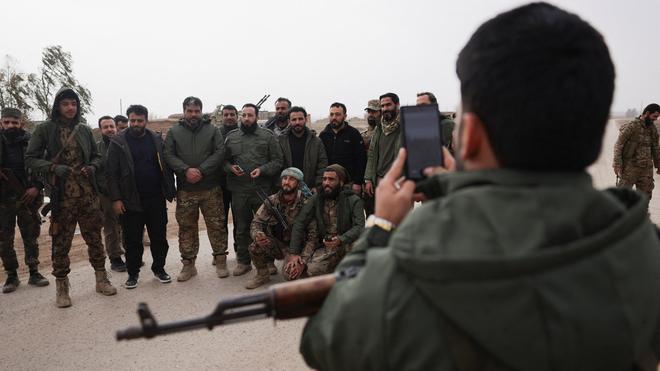
Islamic Jihad and Hamas fighters look for the bodies of dead hostages in Beit Lahiya, in northern Gaza.
The Israeli military said the strike in Khan Younis was a direct response to the incident hours earlier in which militants allegedly emerged from a tunnel and opened fire on Israeli forces stationed in an area under their control. Prime Minister Benjamin Netanyahu blamed Hamas for “blatantly violating” the ceasefire, asserting that Israel would continue to respond to threats against its soldiers and citizens.
Hamas issued a statement condemning the airstrike and rejected Israel’s claims of responsibility for the earlier attack. The group accused Israel of attempting to undermine international efforts to stabilize the ceasefire and advance negotiations for the next phase of the agreement.
Ceasefire Under Pressure After Tunnel Attack
Wednesday’s escalation came as officials on both sides were attempting to navigate the complex terms of the U.S.-backed ceasefire plan. The fragile truce, in place since early October, has been marred by periodic flare-ups. Israel has frequently accused Hamas of orchestrating violations to provoke retaliation, while Hamas claims Israeli forces continue to carry out operations in areas designated as “safe zones.”
Previous Israeli strikes in late October and November killed more than 130 Palestinians, according to local health authorities. Each incident triggered international concern about the stability of the ceasefire, which was crafted with parameters for hostage exchanges, prisoner releases, and humanitarian corridors.
Hostage Remains Recovered as Exchange Process Continues
Earlier Wednesday, Israel received remains believed to possibly belong to one of the two final hostages still missing in Gaza. Israeli forensic teams are now conducting detailed examinations to determine whether they match the identities of Israeli national Ran Gvili or Thai national Sudthisak Rinthalak—both abducted during the Hamas-led attack on October 7, 2023.
Forensic reports on remains handed over Tuesday showed no match to the two hostages still unaccounted for. Later that evening, Palestinian militants said they had uncovered additional remains in northern Gaza and delivered them to the International Committee of the Red Cross, acting as the intermediary in the repatriation process.
The return of all hostages is a central obligation of the ceasefire’s first phase. In return, Israel has agreed to release Palestinian detainees held in its prisons. So far, 20 living hostages and the remains of 26 others have been received by Israel since the truce began.
The Thai government reported that 31 Thai nationals were taken hostage on October 7—the largest group of foreign captives. While most have been released, the country continues to grieve the loss of 46 of its citizens killed during the war.
Next Phase of Ceasefire Hinges on Final Hostage Returns
U.S. negotiators have outlined a multi-step plan for the ceasefire: after all hostages or their remains are returned, the agreement will transition into a second phase involving the creation of an international stabilization force, the formation of a technocratic Palestinian government, and eventual disarmament of Hamas.
However, the timeline for moving into the second phase remains uncertain, especially as hostilities continue and humanitarian needs worsen across Gaza.
Rafah Crossing Remains Closed Amid Israeli-Egyptian Dispute
A significant point of contention is the reopening of the Rafah border crossing between Gaza and Egypt. According to the ceasefire agreement, the crossing is expected to resume operations to allow medical evacuations and limited travel for civilians. The World Health Organization estimates that more than 16,500 critically ill or injured Palestinians urgently need to leave Gaza for medical treatment.
Egypt, however, insists that Rafah must allow movement in both directions—and refuses to reopen the crossing unless Palestinians are guaranteed the right to return. Cairo has expressed alarm over the possibility of mass displacement becoming permanent, with President Abdel-Fattah el-Sissi warning that such an outcome could effectively erase the Palestinian cause for statehood.
Israel maintains that Palestinians will not be permitted to return to Gaza through Rafah until the last hostages’ remains are found and repatriated. COGAT, the Israeli body coordinating humanitarian aid, announced that any Palestinian seeking to exit Gaza will require Israeli security clearance and that the process will be closely monitored by a European Union mission.
More than 100,000 Palestinians, including many severely injured, are currently stranded in Egypt after leaving Gaza earlier in the war.
Fatal Shooting in Gaza City Sparks New Outrage
While most of the day’s diplomatic efforts unfolded in southern Gaza and at the border, tension flared in Gaza City as Israeli forces reportedly shot and killed a 46-year-old Palestinian man in the Zeitoun neighborhood. The Al-Ahli hospital confirmed receiving the man’s body and said he was killed in an area designated as a “safe zone” under the ceasefire.
Israel has not commented on the incident. Local health officials say more than 360 Palestinians have been killed since the ceasefire took effect on October 11, despite supposed restrictions on military activity.
Bodies Returned by Israel Continue to Raise Questions
Under the ceasefire’s exchange terms, Israel has been returning the bodies of 15 Palestinians for every hostage or set of remains it receives. Gaza health authorities report that 330 Palestinian bodies have been handed over so far, though identification efforts have been hampered by the shortage of DNA testing kits and the condition of many remains.
The war, triggered by Hamas’s deadly attack on Israel that killed approximately 1,200 people and saw 251 kidnapped, has resulted in a Palestinian death toll of over 70,100, according to Gaza’s Health Ministry.
As international pressure builds, both sides face renewed scrutiny over their commitment to sustaining the ceasefire. For now, the conflict remains delicately poised—balanced between diplomatic negotiations and the ever-present threat of renewed violence.
Discover more from AMERICA NEWS WORLD
Subscribe to get the latest posts sent to your email.


































![Smoke rises after Israeli strikes in Beirut's southern suburbs, on March 2 [Mohamad Azakir/Reuters]](https://america112.com/wp-content/uploads/2026/03/hgh.webp)
FA9LA People are falling in love with Dhurandhar Track - AMERICA NEWS WORLD
[…] read this:-Israel Strikes Gaza After Tunnel Attack Wounds Soldiers […]