By_shalini oraon

Israel First Country to Recognise Somaliland: Why is it Significant?
In a move that has sent ripples across the Horn of Africa and the Middle East, Israel has officially recognized the Republic of Somaliland. This decision, confirmed by Israeli Foreign Minister Eli Cohen on [Date of Announcement], marks a profound shift in regional geopolitics, international law, and diplomatic strategy. Somaliland, a self-declared independent state that broke away from Somalia in 1991, has now received its first formal recognition from a United Nations member state, shattering a three-decade-long quest for international legitimacy. The implications are vast, complex, and multi-layered.
The Breakthrough for Somaliland: More Than Symbolic
For Somaliland, this is a watershed moment of existential importance. Since declaring independence after the collapse of the Siad Barre regime, Somaliland has built a functioning democracy, held peaceful transfers of power, maintained relative stability, and secured its own borders—all in stark contrast to the chronic instability and terrorism plaguing Somalia proper. Yet, despite this, it has been met with a global wall of silence, bound by the international community’s strict adherence to the territorial integrity of Somalia and the fear of triggering secessionist domino effects across Africa.
Israel’s recognition changes the game. It is not merely a symbolic gesture; it is a critical breach in the diplomatic dam. It provides Somaliland with a powerful patron, a seat (however unofficial) at the table of sovereign nations, and a precedent it can now leverage. Economically, it opens the door for formal agreements and investment, particularly in sectors like livestock, agriculture, and the strategic port of Berbera. Politically, it validates Somaliland’s three-decade-long state-building project and offers a powerful counter-narrative to Mogadishu’s claims of sovereignty.
Israel’s Strategic Calculus: A Masterstroke of Realpolitik
Israel’s motivation is a textbook case of pragmatic, interest-driven foreign policy. The recognition serves multiple, intertwined strategic goals:
1. Countering Iranian and Turkish Influence: The Horn of Africa is a key theatre in the Middle Eastern proxy struggle. Iran has sought influence in the region, while Turkey is deeply embedded in Mogadishu, providing military training, aid, and operating the strategically vital Mogadishu port and airport. By aligning with Somaliland, Israel gains a stable, anti-Islamist partner on the Red Sea and Gulf of Aden—a crucial maritime chokepoint for global trade and energy supplies. It creates a new pressure point against adversaries.
2. Access to the Red Sea and Africa: Recognition paves the way for formal security and economic agreements. Israel has long sought reliable access to the Red Sea’s shipping lanes. A potential partnership involving the port of Berbera (already partly managed by DP World) could offer Israel naval and logistical facilities, countering the presence of rivals in Djibouti (where China, the US, and others have bases) and Eritrea.
3. Breaking Diplomatic Isolation in Africa: Israel has been steadily rebuilding ties across Africa, mending fences with countries like Chad and Sudan. Recognizing Somaliland is a bold, low-risk way to demonstrate its value as a partner willing to take decisive action. It signals to other African nations that Israel is a player that can deliver diplomatic victories, potentially earning it goodwill and new alliances.
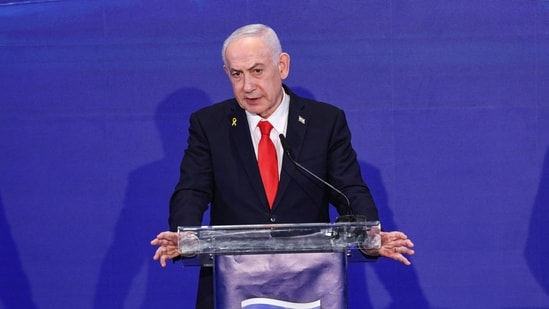
4. Domestic Political Leverage: For Prime Minister Netanyahu’s government, the announcement serves a potent domestic purpose. It projects an image of strength, strategic acumen, and expanding global influence, a narrative beneficial for a leader facing significant political and legal challenges at home.
The Regional Earthquake: Winners, Losers, and Dangers
The move fundamentally disrupts the Horn of Africa’s fragile equilibrium.
· Somalia: This is a catastrophic diplomatic blow. Mogadishu has immediately and vehemently condemned the move, calling it an “aggression” and a violation of international law. It forces Somalia into a corner, likely pushing it closer to rivals of Israel like Turkey and Qatar for support. The risk of a renewed confrontation—diplomatic or even low-level conflict—over Somaliland has just escalated dramatically.
· Arab States: The reaction from the Arab world, particularly from the Gulf, will be critical. The United Arab Emirates (UAE), which has invested heavily in Berbera’s port, has warm ties with Israel (via the Abraham Accords) and has been Somaliland’s most prominent international backer. It may quietly welcome this move. Others, bound by Arab League solidarity with Somalia, will likely condemn it.
· Ethiopia: Addis Ababa, which recently signed a controversial Memorandum of Understanding with Somaliland seeking sea access, will watch closely. Israel’s recognition strengthens Somaliland’s hand in any future deal with Ethiopia, a traditional Israeli ally.
The primary danger is escalation. Somalia may feel compelled to respond aggressively to salvage its authority. The African Union (AU), a staunch defender of colonial-era borders, is placed in an extremely difficult position. It must balance its foundational principle with the new reality Israel has created.
The International Law and Norms Conundrum
Israel’s action strikes at the heart of a central tension in international relations: the principle of self-determination versus the principle of territorial integrity. For 30 years, the world has prioritized the latter in Somaliland’s case, fearing a precedent for other secessionist movements. Israel has now forcefully reintroduced the former argument, effectively stating that Somaliland’s effective sovereignty and democratic governance merit recognition.
This sets a powerful, and to many, a dangerous, precedent. It will be celebrated by other unrecognized or partially recognized states (e.g., Kosovo, Taiwan, Western Sahara). However, it will be denounced by countries like Spain, China, and Russia, which face their own secessionist challenges. The global consensus on non-recognition of breakaway regions has been fractured.
Conclusion: A Paradigm Shift with Uncharted Consequences
Israel’s recognition of Somaliland is not the end of a process but the explosive beginning of a new and uncertain chapter. It is a high-stakes gamble by Israel that has instantly transformed Somaliland from a diplomatic pariah into a recognized international actor, albeit with only one powerful friend.
The significance lies in its catalytic power. It forces the world to re-evaluate Somaliland. It realigns alliances in the Horn of Africa. It challenges a core norm of the post-colonial international order. And it demonstrates Israel’s intent to act as a decisive, independent power in regions far beyond its immediate neighbourhood.
Whether this leads to a cascade of further recognitions, a violent backlash from Somalia, or a new era of economic and security partnerships in the Red Sea basin remains to be seen. What is certain is that the map of the Horn of Africa, and the rules for drawing it, have just been irrevocably altered. The diplomatic earthquake has occurred; the aftershocks will define the region’s future for years to come.
Discover more from AMERICA NEWS WORLD
Subscribe to get the latest posts sent to your email.

![Smoke rises after Israeli strikes in Beirut's southern suburbs, on March 2 [Mohamad Azakir/Reuters]](https://america112.com/wp-content/uploads/2026/03/hgh.webp)