
By Priti
America News World
September 28, 2025
In a vibrant testament to India’s burgeoning digital self-reliance, the Chennai-headquartered tech powerhouse Zoho Corporation has thrust its messaging app, Arattai, into the global spotlight.
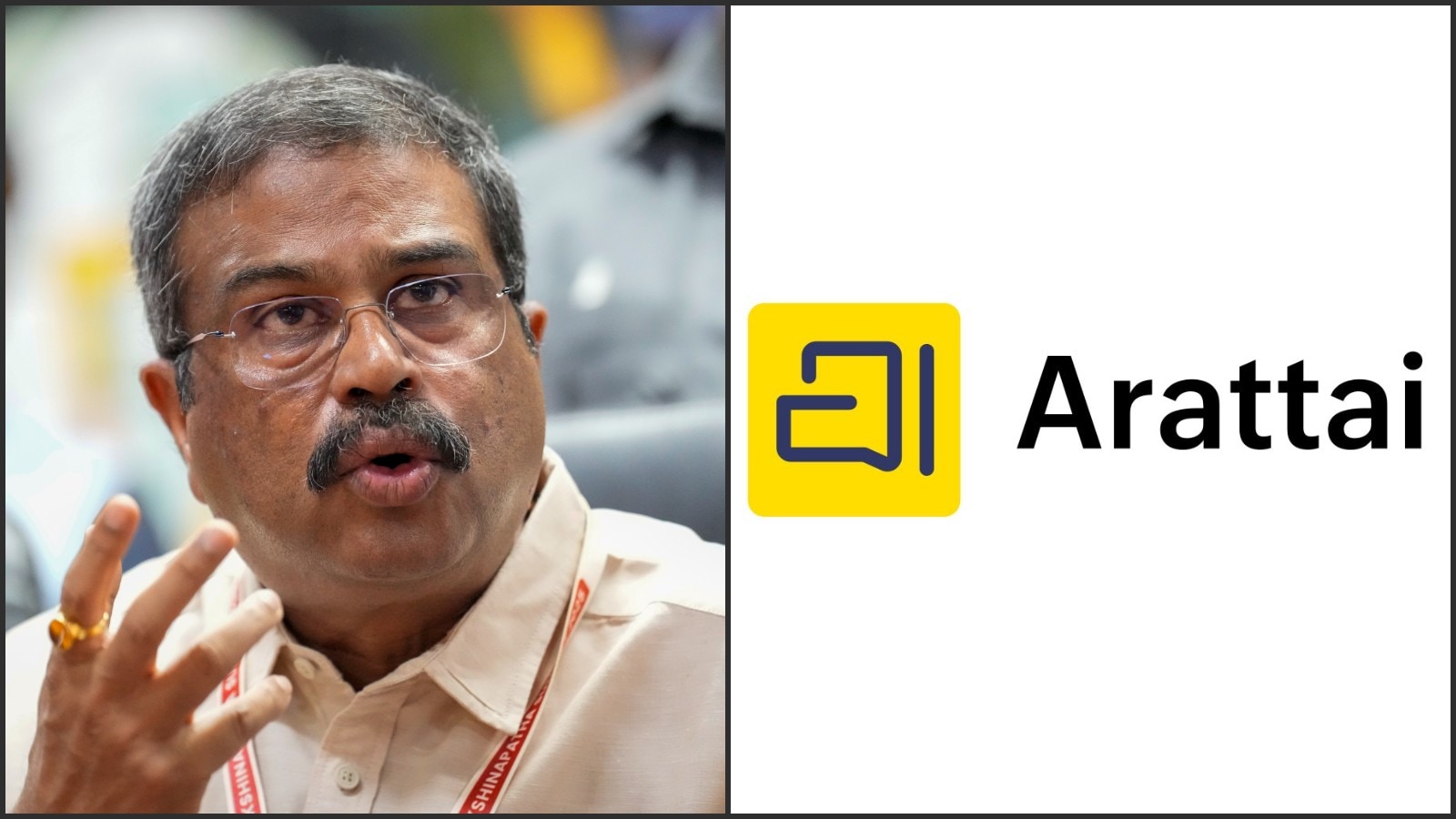
What began as a modest Tamil-inspired tool for “casual chat” has now become a symbol of national pride, propelled by high-profile endorsements from Union Education Minister Dharmendra Pradhan and IT Minister Ashwini Vaishnaw.
As Prime Minister Narendra Modi’s Swadeshi initiative gains momentum, Arattai stands poised as a homegrown antidote to the dominance of Meta’s WhatsApp, challenging users to rethink their digital loyalties in an era of data sovereignty and innovation.

The app’s meteoric rise was ignited earlier this week when Minister Pradhan took to X, the social media platform formerly known as Twitter, to champion Arattai as “free, easy-to-use, secure, and safe.” In a post that resonated across the nation, he urged citizens to embrace Indian-made alternatives for staying connected with loved ones, explicitly tying the endorsement to Modi’s call for Swadeshi—self-reliance in goods and services. “Guided by Hon’ble PM Shri @narendramodi ji’s call to adopt Swadeshi, I appeal to everyone to switch to India-made apps for staying connected with friends and family,” Pradhan wrote, attaching a download link that quickly amassed thousands of shares and downloads.
This wasn’t a lone voice in the wilderness. Just days prior, on September 23, Minister Vaishnaw amplified Zoho’s ecosystem during a Union Cabinet briefing, revealing that the day’s government presentation had been crafted using Zoho Show—a sleek, indigenous rival to Microsoft PowerPoint—rather than the ubiquitous American software. Vaishnaw went further on X, declaring, “I am moving to Zoho, our own Swadeshi platform for documents, spreadsheets & presentations.” This subtle yet powerful pivot underscored the Modi government’s broader strategy to foster a domestic tech landscape, reducing dependence on foreign giants amid concerns over data privacy and geopolitical tensions.
Arattai, launched quietly by Zoho in 2021, derives its name from the Tamil word for “casual chat” or “chit-chat,” evoking the effortless banter of everyday conversations. At its core, the app mirrors the familiarity of WhatsApp while infusing a distinctly Indian ethos. Users can send text messages, share high-resolution images and videos, exchange documents up to 2GB in size, and engage in crystal-clear voice and video calls. Group chats support up to 1,000 participants, making it ideal for community discussions, family reunions, or corporate brainstorming sessions. Beyond basics, Arattai introduces stories—ephemeral updates akin to Instagram—for personal flair, and broadcast channels tailored for businesses to disseminate announcements, promotions, or educational content to vast audiences.
Read this-private spacecraft to boost nasa
read this-microsoft fire Lisa monaco
What sets Arattai apart in a crowded market is its unyielding commitment to accessibility and performance. Zoho CEO Sridhar Vembu, a vocal advocate for rural innovation, emphasized that the app is engineered to thrive on low-end smartphones and sluggish internet connections—realities for millions in India’s hinterlands. “Arattai will run smoothly on low-end phones,” Vembu assured in a recent statement, highlighting its lightweight design that ensures fast loading times even on 2G networks. This inclusivity aligns seamlessly with the Swadeshi vision, democratizing digital communication for the masses rather than catering solely to urban elites with premium devices.
Privacy, however, emerges as both Arattai’s strongest suit and its most glaring vulnerability. The app boasts end-to-end encryption (E2EE) for voice and video calls, safeguarding real-time interactions from interception by hackers or overzealous surveillance. Zoho proudly hosts all servers within India, ensuring user data remains on home soil and never traverses international borders—a boon in light of recent global scandals involving foreign apps harvesting personal information. “Built with privacy in mind,” the company proclaims, positioning Arattai as a “spyware-free” haven in an age of Big Tech scrutiny. Yet, herein lies the rub: text messages and media shares currently lack E2EE, a standard feature on WhatsApp since 2016. This gap has sparked debates among cybersecurity experts, who warn it could expose sensitive chats to breaches. Zoho has responded swiftly, announcing on social media that “end-to-end encryption for chats is under development and coming soon,” signaling a proactive roadmap to parity.
The ministerial endorsements have catalyzed an explosion of interest. Within hours of Pradhan’s post, Arattai catapulted to the number one spot in the social networking category on Apple’s App Store in India, briefly eclipsing WhatsApp, Telegram, and Signal. On Google Play, it climbed to the 18th most-downloaded app overall, with Zoho reporting a deluge of new sign-ups that strained servers and caused temporary lags in syncing. “We’re officially #1 in Social Networking on the App Store!” the company exulted on X, while candidly admitting, “working hard to expand servers” to handle the surge. Early adopters have flooded social media with glowing reviews: “Super user-friendly, sleek, plus they’re proudly Made in India! 🇮🇳 Perfect for personal work,” tweeted one enthusiast. Tech influencer Vivek Wadhwa, after a hands-on trial, praised its stability but quipped, “Rename it to something the world can actually spell,” igniting a wave of lighthearted memes about the app’s phonetic quirks.
Yet, for all its buzz, Arattai confronts a Goliath in WhatsApp, which boasts over 500 million active users in India alone—roughly a third of its global 3 billion tally. WhatsApp’s ironclad E2EE across all features, seamless integrations with Facebook and Instagram, and decade-long entrenchment create formidable network effects. Switching costs are high; convincing friends and family to migrate en masse is a herculean task. As one analyst noted, “Arattai isn’t just competing with an app—it’s battling a cultural staple.” Zoho, however, brings formidable ammunition to the fray. With over 55 interconnected business applications—from CRM to email—and a user base exceeding 130 million worldwide, the company serves blue-chip clients like Amazon, Netflix, and Toyota under the mantra “Made in India. Made for the world.” Vembu hailed the endorsements as “a huge morale boost for our engineers who have worked hard for over two decades.”
This moment transcends mere app rivalry; it’s a microcosm of India’s tech renaissance. The Swadeshi push, amplified by Atmanirbhar Bharat (Self-Reliant India), has already birthed successes like UPI for payments and ONDC for e-commerce. Arattai fits this narrative, blending cultural resonance with cutting-edge utility. As Vaishnaw’s switch to Zoho’s suite illustrates, even policymakers are walking the talk, fostering an ecosystem where innovation flourishes without foreign strings attached. Challenges persist—full encryption rollout, user acquisition, and feature parity loom large—but Zoho’s track record suggests resilience.
For global observers, Arattai’s ascent offers a compelling case study in emerging-market disruption. In a world weary of Silicon Valley’s monopoly, could this Tamil-tinged upstart inspire similar homegrown revolts elsewhere? As downloads soar and servers hum, one thing is clear: Arattai isn’t just chatting casually anymore—it’s commanding the conversation. Whether it dethrones WhatsApp remains an open question, but in the spirit of Swadeshi, it’s undeniably making India heard.
Discover more from AMERICA NEWS WORLD
Subscribe to get the latest posts sent to your email.































**, we dive into why your electric bill is climbing and what can be done. ### Why Are Electricity Prices Rising? Electricity costs are soaring across the United States. According to the U.S. Energy Information Administration (EIA), household electricity prices are expected to jump 13% from 2022 to 2025. In some states, the increase is even steeper. For instance, Maine saw a 36.3% spike, while Connecticut faced an 18.4% rise between May 2024 and May 2025. Nationwide, the average household paid 17.47 cents per kilowatt-hour in May 2025, up from 16.41 cents a year earlier—a 6.5% increase. So, what’s driving these hikes? First, there’s a massive surge in electricity demand. More people are using air conditioners during hotter summers. Electric vehicles and heat pumps are also becoming popular. However, the biggest culprit is the rapid growth of AI-powered data centers. These facilities, run by tech giants like Amazon, Google, and Microsoft, use as much electricity as small cities. A single AI search, like one on ChatGPT, consumes 10 times more power than a regular Google search. Additionally, natural gas prices, a key fuel for power plants, have climbed. The aging US power grid also struggles to keep up. Many transmission lines and power plants date back to the post-World War II era. As a result, utilities are spending billions to upgrade infrastructure, and those costs are passed on to consumers. > **Data Highlight: Electricity Price Trends (2022-2025)** > Source: U.S. Energy Information Administration > - **2022**: 14.96 cents per kWh > - **2023**: 15.87 cents per kWh > - **2024**: 16.41 cents per kWh > - **2025 (May)**: 17.47 cents per kWh > *Note*: Some states like Maine (+36.3%) and Connecticut (+18.4%) saw sharper increases. ```chartjs { "type": "line", "data": { "labels": ["2022", "2023", "2024", "2025 (May)"], "datasets": [{ "label": "Average US Electricity Price (cents per kWh)", "data": [14.96, 15.87, 16.41, 17.47], "borderColor": "#007bff", "backgroundColor": "rgba(0, 123, 255, 0.2)", "fill": true }] }, "options": { "responsive": true, "maintainAspectRatio": false, "scales": { "y": { "beginAtZero": false, "title": { "display": true, "text": "Price (cents per kWh)" } }, "x": { "title": { "display": true, "text": "Year" } } } } } ``` ### The AI Power Problem The AI boom is transforming how we live, work, and search online. But it comes at a cost. Data centers that power AI tools are sprouting up fast. Between 2021 and 2024, the number of US data centers doubled. By 2030, they could consume 5% to 9% of the nation’s electricity, according to the Electric Power Research Institute. This is a big jump from just 4% in 2022. For example, PJM Interconnection, which serves 67 million people across 13 states, reported a massive spike in demand. In 2024, its capacity auction prices jumped 833%, with data centers driving nearly 70% of the increase. This led to higher bills for households in states like Pennsylvania, New Jersey, and Ohio. In Columbus, Ohio, typical electric bills rose by $27 a month in 2025. Moreover, AI tasks are energy hogs. Generating a single high-definition AI image uses as much power as charging a smartphone halfway. As more people use AI for work or fun, the strain on the grid grows. Tech companies are racing to build bigger data centers, but the power supply isn’t keeping up. This mismatch is pushing prices higher. > **Image**: An Amazon Web Services data center in Boardman, Oregon, August 2024. (Source: Jenny Kane/AP) > *Caption*: Data centers like this one are driving up electricity demand across the US. ### Other Factors Behind the Price Surge While AI is a major player, it’s not the only reason for rising bills. Natural gas prices have spiked, making it more expensive to generate electricity. Also, the US power grid is old and needs upgrades. The Department of Energy says 70% of transmission lines are nearing the end of their lifespan. Replacing them costs billions, and consumers foot the bill. Extreme weather is another issue. Heat waves and storms are more frequent, forcing utilities to repair or harden the grid. In California, utilities spent $27 billion from 2019 to 2023 on wildfire prevention and insurance. These costs trickle down to customers. Meanwhile, some states are phasing out coal plants, but new renewable energy projects face delays due to permitting issues. For more insights on how energy costs affect households, check out **[AMERICA NEWS WORLD (ANW)](https://america112.com/)** for the latest updates. ### Solutions to Ease the Burden Thankfully, there are ways to tackle rising electricity costs. First, experts suggest speeding up the permitting process for new power plants, especially solar and wind. The International Energy Agency (IEA) predicts that solar and wind could add 110 terawatt-hours of power for data centers by 2030. Streamlining permits could bring these projects online faster. Next, tech companies are stepping up. Google recently signed deals to reduce AI data center power use during peak grid times. Amazon is investing in small modular nuclear reactors to power its operations cleanly. These efforts could lower costs and emissions in the long run. Additionally, hardening the grid can help. In Florida, utilities are using concrete poles and advanced tech to make power lines hurricane-proof. In California, moving lines underground reduces wildfire risks. These upgrades cost money upfront but save on repairs later. Finally, power purchase agreements (PPAs) let data centers buy renewable energy directly. This reduces reliance on fossil fuels and keeps costs down for consumers. Co-locating data centers with solar or wind farms is another smart move. For more on clean energy solutions, visit **[AMERICA NEWS WORLD (ANW)](https://america112.com/)**. > **Data Highlight: Projected Data Center Power Demand** > Source: Electric Power Research Institute > - **2022**: 4% of US electricity consumption > - **2030 (Projected)**: 5% to 9% of US electricity consumption > - **Growth**: Data center energy use could double by 2030. ```chartjs { "type": "bar", "data": { "labels": ["2022", "2030 (Projected)"], "datasets": [{ "label": "Data Center Electricity Consumption (% of US Total)", "data": [4, 7], "backgroundColor": ["#28a745", "#dc3545"], "borderColor": ["#28a745", "#dc3545"], "borderWidth": 1 }] }, "options": { "responsive": true, "maintainAspectRatio": false, "scales": { "y": { "beginAtZero": true, "title": { "display": true, "text": "% of US Electricity" } }, "x": { "title": { "display": true, "text": "Year" } } } } } ``` ### What’s Next for Consumers? Electricity prices may keep rising if demand outpaces supply. The White House warns that AI data centers could push prices up 9-58% by 2030 without new investments. The US needs $1.4 trillion by 2030 to meet growing power needs, according to the White House Council of Economic Advisors. This includes building new power plants and transmission lines. However, not all hope is lost. Renewable energy is getting cheaper. Solar and wind projects are expanding, and nuclear power is making a comeback. For example, Microsoft is reviving Pennsylvania’s Three Mile Island nuclear plant to power its AI tools. These efforts could stabilize prices over time. Consumers can also take action. Using energy-efficient appliances, sealing home leaks, and switching to LED lights can lower bills. ### Global Impact and Local Action The AI-driven power surge isn’t just a US problem—it’s global. Data centers worldwide could consume 3-4% of global power by 2030, up from 1-2% today, according to Goldman Sachs. In Europe, countries like Ireland and Germany are seeing similar price hikes. In Asia, Malaysia’s data centers could account for one-fifth of power demand growth. Locally, communities near data centers face challenges. Noise, water use, and power outages are common complaints. Some states, like Pennsylvania, are pushing back. Governor Josh Shapiro has threatened to pull the state from PJM if costs don’t drop. For more on local energy issues, ### Looking Ahead The AI revolution is exciting, but it’s putting pressure on power grids and wallets. While tech companies and utilities work on solutions, consumers are stuck with higher bills. By investing in clean energy, upgrading grids, and managing demand, the US can balance innovation with affordability. Stay informed with **[AMERICA NEWS WORLD (ANW)](https://america112.com/)** for the latest energy news. For a deeper dive into how AI is reshaping the energy landscape, check out this [CBS News article](https://www.cbsnews.com/news/ai-data-centers-electricity-demand-power-grid-us/) on the growing strain on US power grids.](https://america112.com/wp-content/uploads/2025/08/1198006_3_0818-NPRICES-lines-lede.jpg_standard-1.jpg)







![Smoke rises after Israeli strikes in Beirut's southern suburbs, on March 2 [Mohamad Azakir/Reuters]](https://america112.com/wp-content/uploads/2026/03/hgh.webp)

Trump has announced 100% tariff on all foreign-made movies - ANW
[…] India’s Swadeshi Surge: Zoho’s Arattai Emerges as Bold WhatsApp Challenger Amid Governme… […]