By_shalini oraon

A Sacred Sentinel Toppled: India’s Response to the Vishnu Statue Demolition and the Complexities of Heritage
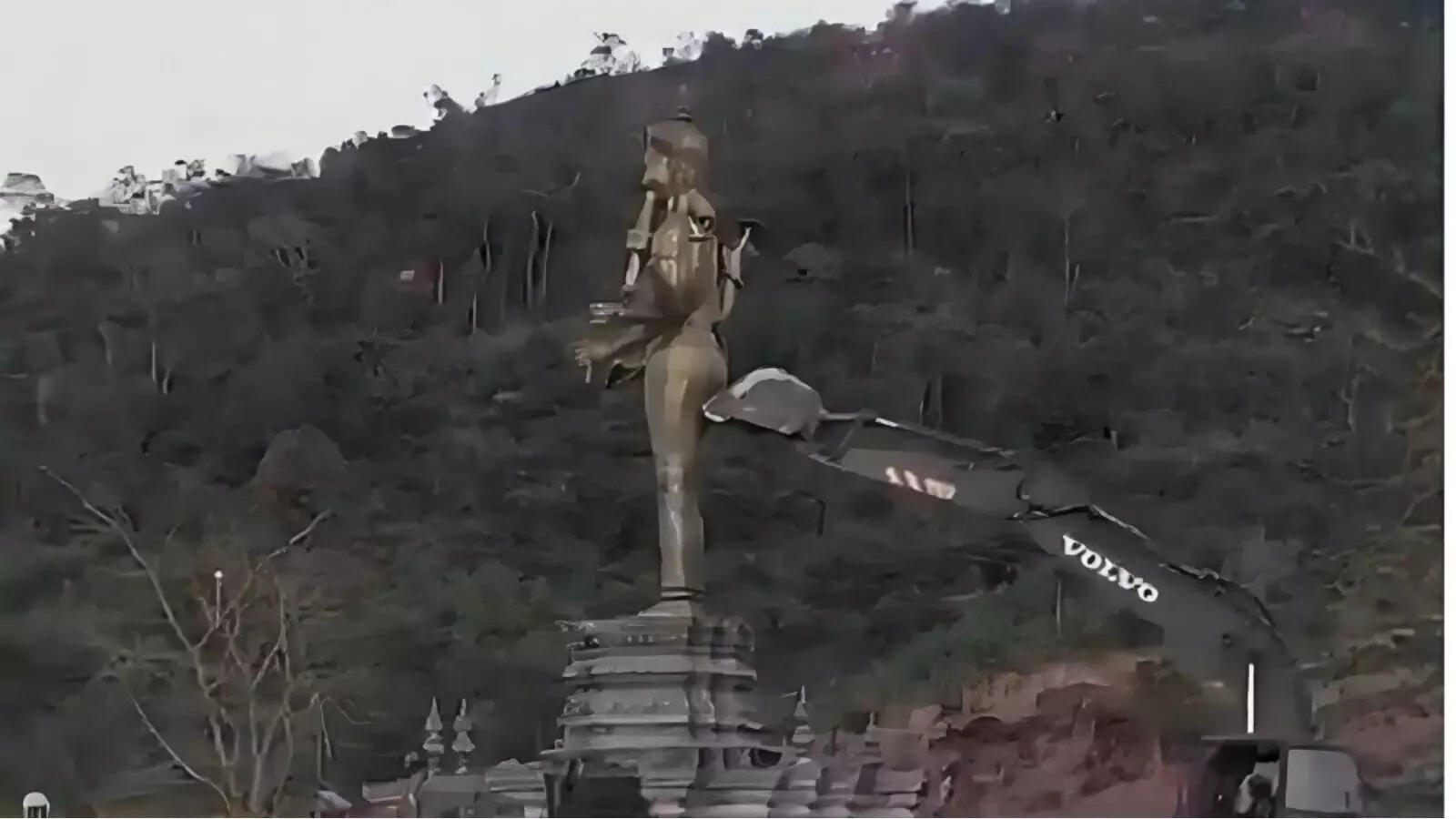
The recent demolition of a centuries-old statue of the Hindu deity Vishnu, located in a disputed border region between Thailand and Cambodia, has reverberated far beyond its immediate geographical confines, striking a deep chord in India. The official reaction from New Delhi, expressing that the act had “hurt sentiments globally,” encapsulates more than diplomatic displeasure; it reveals the intricate web of civilizational identity, diasporic legacy, and the fragile politics of heritage in a globalized world.
The statue, believed to date back to the 11th or 12th century, was a relic of the mighty Khmer Empire. This empire, at its zenith, was a Hindu-Buddhist polity whose cultural and religious influence stretched across mainland Southeast Asia. Its temples, most famously Angkor Wat (originally dedicated to Vishnu), stand as UNESCO-protected testaments to a era when Indian cosmology, art, and kingship models profoundly shaped the region. The toppled statue was not merely a piece of stone; it was a cultural synapse connecting modern Southeast Asia to its ancient Indic civilizational roots, a tangible fragment of a shared past that predates modern national borders.
India’s Reaction: Civilizational Custodian and Soft Power
India’s statement, therefore, operates on multiple levels. Firstly, it positions India as a contemporary custodian of a civilizational heritage that once radiated outward. While India makes no territorial claim, it asserts a profound cultural and spiritual stake. Hinduism, though no longer the majority religion in Cambodia or Thailand, is recognized as the foundational bedrock upon which much of their classical art, architecture, and statecraft was built. The demolition is seen in New Delhi as an assault on this shared patrimony.
Secondly, the reaction is tied to India’s domestic polity and its evolving concept of cultural nationalism. For a government that emphasizes Hindu civilizational pride and the revival of India’s global cultural influence (Project Mausam), such an incident resonates powerfully with its base. It reinforces a narrative of a ancient, influential India whose legacy requires recognition and protection abroad.
Thirdly, it touches upon India’s sophisticated soft-power diplomacy. Cultural diplomacy is a central pillar of India’s engagement with ASEAN nations. Promoting shared Buddhist and Hindu heritage trails is a key strategy for building people-to-people connectivity. The vandalism of such a symbol undermines this carefully cultivated narrative of peaceful, shared history, replacing it with one of neglect and conflict.
The Thorny Context: Border Disputes and Nationalism
However, the incident is inextricably mired in the bitter, long-standing border dispute between Thailand and Cambodia. The area around the Preah Vihear temple (a UNESCO site itself) has been a flashpoint for decades, witnessing sporadic armed clashes. In such zones, heritage becomes a pawn, not a treasure. Archaeological sites and artifacts are often enlisted as evidence in historical territorial claims. A Hindu statue in a disputed zone ceases to be solely a religious artifact; it transforms into a marker of historical influence used to bolster national narratives.
The demolition reportedly occurred during a road construction project by Thai authorities. Cambodia decried it as an intentional act of destruction, while Thailand called it an accident during a necessary development activity. This dichotomy is telling: one side sees cultural eradication, the other sees unfortunate collateral damage in the pursuit of modern infrastructure and territorial control. The tragedy highlights how heritage in contested lands is perpetually vulnerable, caught between the bulldozers of development and the crossfire of nationalism.
The “Global Sentiments” and the Hindu Diaspora
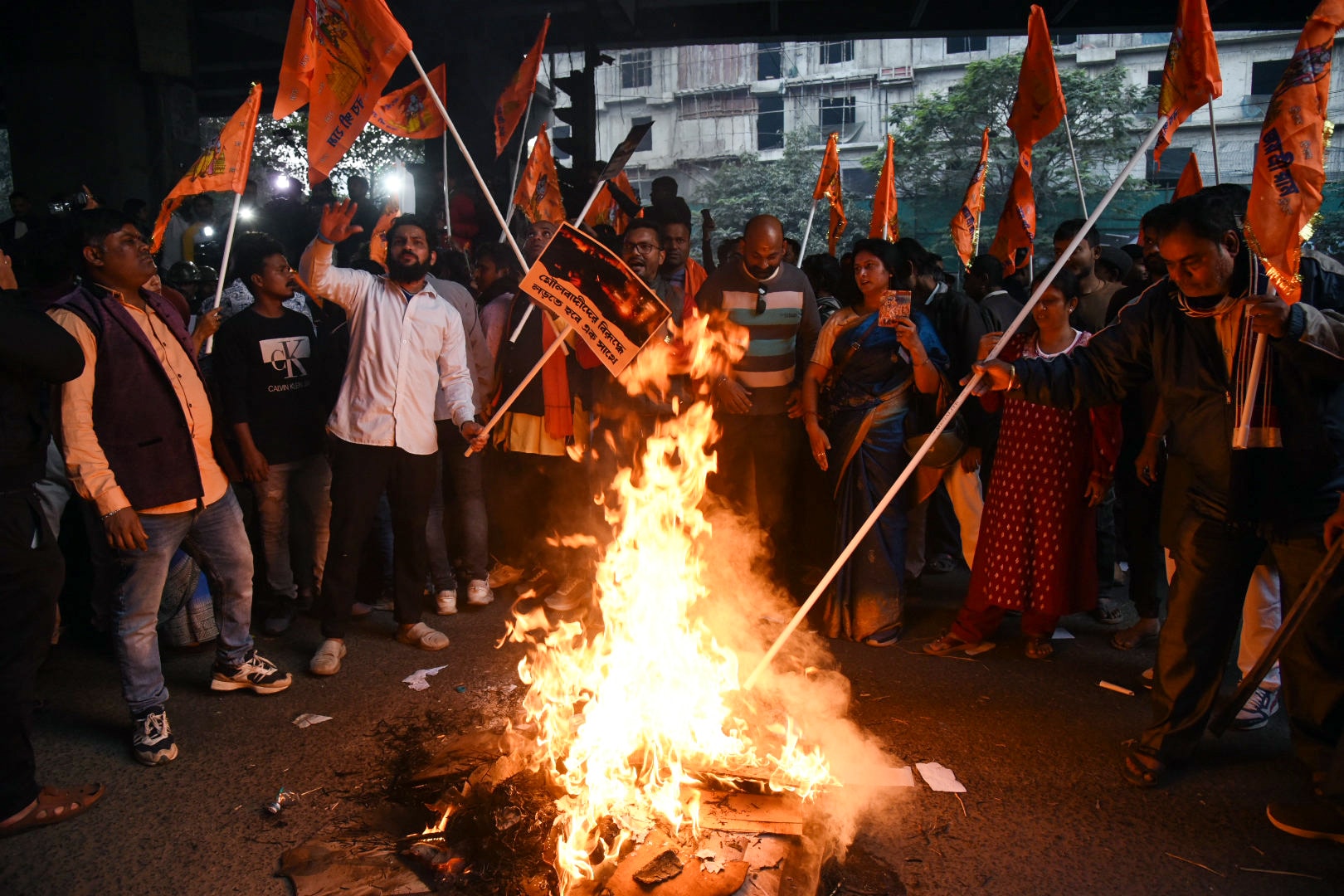
India’s invocation of “global sentiments” is significant. It expands the issue beyond bilateral tensions or India’s own hurt. It acknowledges the global Hindu diaspora, for whom such deities are living symbols of faith, not historical artifacts. The outrage on social media and among diaspora communities from the United States to Singapore validates this claim. In an era of identity politics, attacks on religious symbols are felt personally by communities worldwide, creating transnational networks of grievance and solidarity.
This global aspect also implicates international bodies like UNESCO. The statue was not a listed World Heritage site, which raises questions about the protection of significant but less-famous cultural property. The incident serves as a call for broader mechanisms to safeguard vulnerable heritage in conflict zones, beyond the spotlight of famous monuments.
A Path Forward: Beyond Diplomacy
India’s measured but firm response must now navigate a delicate path. Heavy-handedness could be seen as interference in a sensitive bilateral dispute and damage relations with both Thailand and Cambodia. The challenge is to translate sentiment into constructive action.
This could involve:
1. Offering Technical Expertise: Proposing joint archaeological teams with both nations to assess damage and salvage what remains, positioning India as a helpful, knowledge-based partner rather than a critic.
2. Cultural Diplomacy Renewal: Using this as an impetus to deepen tripartite cultural exchanges, workshops on heritage conservation, and academic collaborations on shared Khmer history, fostering cooperation around the very heritage that was damaged.
3. Advocating for Documentation: Supporting independent, international efforts to digitally archive and document vulnerable heritage sites in conflict zones across the world, providing a model for future protection.
The demolition of the Vishnu statue is a multilayered tragedy. It is a loss of an irreplaceable archaeological treasure, a wound to Hindu religious sentiments, and a symptom of the destructive power of border nationalism. India’s reaction underscores that in our interconnected world, the destruction of heritage is no longer a local affair. It is an event that echoes through civilizations, diasporas, and the conscience of a global community that increasingly defines itself through respect for cultural memory. The true test will be whether this hurt can be channeled not into further division, but into a renewed, collaborative commitment to protect the fragile, stone-and-metal threads that connect us to our collective human past. The statue may have fallen, but the duty to guard what remains of our shared history now stands more clearly revealed than ever.
Discover more from AMERICA NEWS WORLD
Subscribe to get the latest posts sent to your email.