By Manisha Sahu | America News World
December 06,2025
India’s civil aviation sector was thrown into turmoil this week after an unprecedented wave of IndiGo flight cancellations left thousands of passengers stranded at major airports nationwide. The crisis, triggered by operational disruptions linked to the newly introduced Flight Duty Time Limitation (FDTL) norms, has prompted the Union Civil Aviation Ministry to launch a high-level investigation. Civil Aviation Minister Ram Mohan Naidu has assured that strict action will follow and that those responsible “will pay for it.”

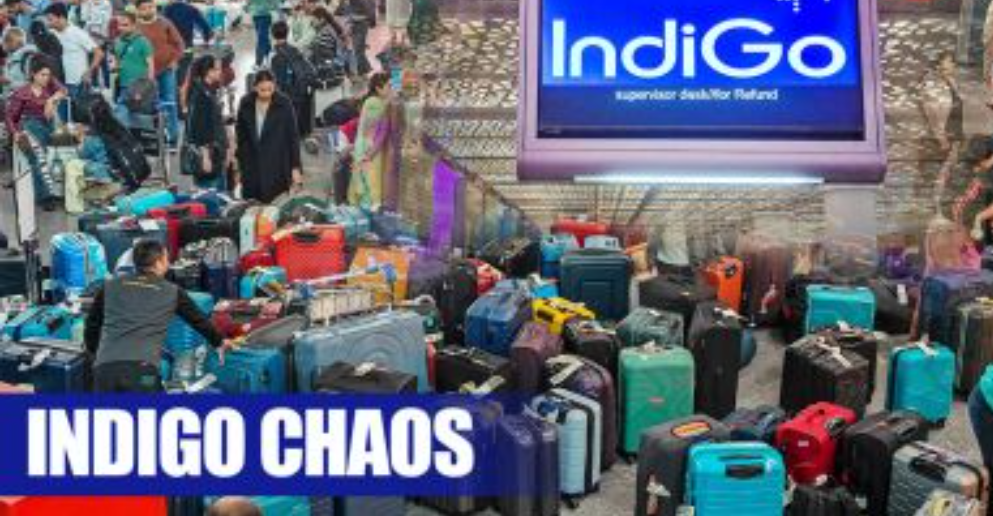
Passengers stranded at Terminal 1 of Delhi’s IGI Airport. (Express photo by Arul Horizon)
The disruption began earlier this week when IndiGo, India’s largest airline by market share, abruptly cancelled hundreds of flights across key metro cities including Delhi, Mumbai, Bengaluru, Hyderabad, and Chennai. While the airline cited crew unavailability and FDTL-related transitions as primary factors, the scale of the cancellations exposed deeper systemic issues that the government now intends to probe thoroughly.
Government Orders Inquiry, Puts FDTL Norms ‘In Abeyance’
Addressing the media, Civil Aviation Minister Ram Mohan Naidu confirmed that the ministry has ordered a high-level inquiry into the IndiGo fiasco, emphasising that restoring normalcy and safeguarding passenger interests remain top priorities.
“We have taken the situation very seriously. An inquiry has been launched, and those who are responsible will pay for it,” Naidu stated firmly. The minister added that the government is closely monitoring IndiGo’s operations to ensure that flight schedules return to normal at the earliest.
The new FDTL norms — designed to regulate pilot flying hours and enhance safety — inadvertently triggered chaos when airlines struggled to realign rosters under the updated requirements. With crew availability impacted, IndiGo reportedly faced extensive scheduling mismatches, leading to last-minute flight cancellations.
To stabilise operations across the sector, the central government temporarily kept the new norms in abeyance, giving airlines breathing room to adapt without compromising service levels. Naidu pointed out that while safety remains the top priority, passenger convenience cannot be overlooked, and therefore a balanced approach is necessary.
Travel Mayhem: Passengers Left Stranded for Hours
As cancellations grew steadily over the week, thousands of travellers across India found themselves stranded at airports, many without clear guidance on rebooking, refunds, or alternate travel arrangements. Airports witnessed chaotic scenes as long queues formed at check-in counters, customer service desks, and boarding gates.
Passengers took to social media posting videos of overcrowded terminals, blocked helpdesks, and frustrated flyers seated on the floor waiting for updates. Many expressed anger over the lack of timely communication from the airline, accusing IndiGo of mishandling the situation.
Families travelling with children, senior citizens, and international travellers faced some of the worst difficulties. For passengers with connecting flights abroad, missed itineraries resulted in heavy financial losses and further complications.
“I reached the airport at 5 AM only to find my flight cancelled. There was no prior email or message. The staff kept telling us to wait but had no answers,” said Ananya Verma, a passenger stranded at Delhi’s Indira Gandhi International Airport (IGIA). Her experience mirrors that of countless others caught in the disruption.
Skyrocketing Fares Add to Passenger Woes
As IndiGo flights were cancelled en masse, remaining flights across domestic routes witnessed unprecedented fare spikes, adding to the frustration of desperate passengers seeking alternate travel options.
On Friday, December 5, the only available Mumbai–Delhi flight was priced at an astonishing ₹51,860 per passenger, while the sole Delhi–Mumbai flight displayed a fare of ₹48,972 — amounts normally associated with international, not domestic, travel.
Price surges were observed across multiple routes, raising concerns about predatory pricing during a crisis. While airlines technically operate under dynamic pricing models, aviation experts argue that such extreme spikes highlight the need for regulatory intervention during emergencies.
“Whenever one major carrier experiences widespread cancellations, other airlines experience an immediate surge in demand. Without caps or guidelines during crisis periods, fares can become unreasonably high,” said aviation analyst Rohit Verma.
For many passengers, especially students and working professionals, such fares were simply unaffordable, forcing them to abandon travel plans or resort to costly last-minute alternatives such as trains, buses, or rental cars.
IndiGo Operations ‘Gradually Returning to Normal’, Says Delhi Airport
Amid mounting public pressure, IndiGo began restoring flight operations gradually. The Indira Gandhi International Airport (IGIA) in Delhi issued a statement confirming that IndiGo’s schedule was slowly stabilising after the initial shock.
“IndiGo operations are gradually returning to normal,” IGIA announced, adding that airport authorities were working closely with the airline to ensure smoother passenger handling and minimal further disruption.
However, passengers have reported ongoing delays, rescheduled flights, and limited customer support availability. While the situation is improving, complete normalcy may take days, industry insiders say.
Wider Impact on India’s Civil Aviation Sector
The crisis has raised broader questions about the preparedness of Indian airlines and regulatory bodies to handle operational transitions, especially those affecting crew duty cycles and safety compliance.
FDTL norms, though essential for preventing pilot fatigue, require sophisticated planning tools, efficient crew rostering systems, and clear communication between management and flight crew. Any misalignment can have cascading effects — as seen in the current scenario.
A senior aviation official indicated that the probe will examine not only IndiGo’s internal management but also whether there were communication gaps between the airline and aviation authorities.
“This is not merely an airline-specific issue. It reflects systemic challenges. The inquiry will ensure accountability and recommend solutions to prevent such incidents in the future,” the official said.
Government Promises Transparency and Passenger Protection
Minister Naidu reiterated the government’s commitment to maintaining transparency and protecting consumer rights. He assured travellers that the ministry will monitor refund policies, rebooking practices, and fare regulations to ensure that passengers are not exploited during crises.
“We will not allow chaos or inconvenience to continue. Passengers must be treated fairly, and we will make sure corrective action is taken,” the minister emphasised.
As normalcy gradually returns, India’s aviation sector is set for close scrutiny. The IndiGo flight fiasco has exposed vulnerabilities in operations, crisis management, and communication — issues that the ongoing probe aims to address comprehensively.
Discover more from AMERICA NEWS WORLD
Subscribe to get the latest posts sent to your email.