By Manisha Sahu
America News World
December 13,2025
Google has taken a major step forward in breaking language barriers by rolling out a new Gemini-powered real-time live translation feature in India. The update enhances Google Translate with advanced artificial intelligence capabilities, allowing users to hear natural-sounding translations instantly through their headphones. With this move, Google aims to make cross-language communication smoother, faster, and more human-like than ever before.

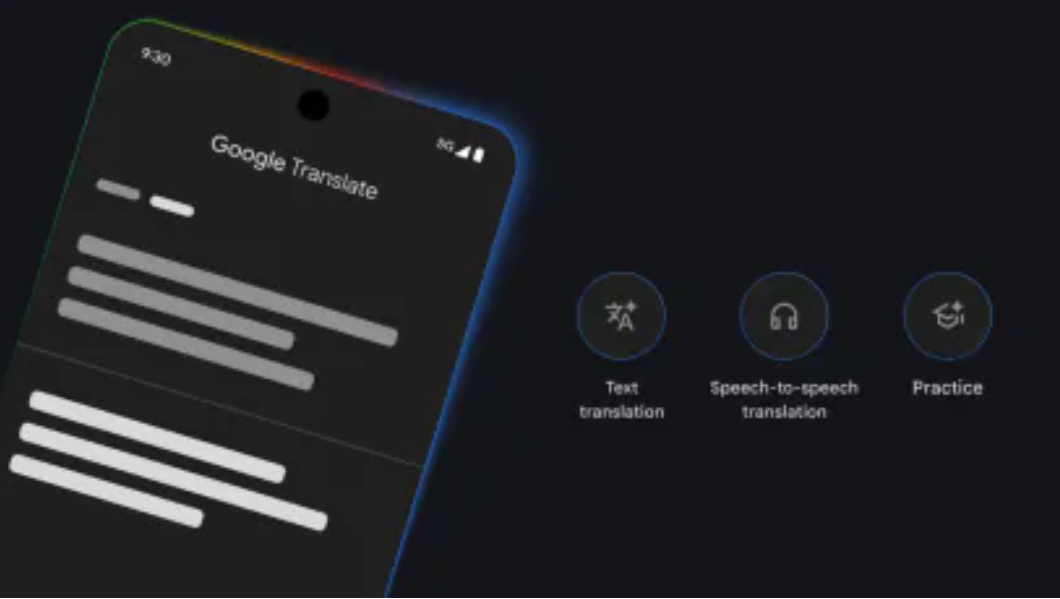
Google Translate Gets Natural-Sounding Live Speech Translation.(Image Source: Google )
Google Translate is already one of the world’s most widely used translation tools, serving millions of users every day across smartphones, desktops, and web platforms. Over the years, the service has evolved from basic text translation to include image-based translation, conversation mode, and offline language packs. Now, with the integration of Gemini’s latest AI models, Google is pushing translation technology into a new era of real-time, speech-to-speech communication.
What’s New in Live Translate?
According to Google, the newly introduced Live Translate feature brings “state-of-the-art text translation quality” to both Google Search and the Translate app. More importantly, it introduces a beta version of live speech translation that delivers real-time audio translations directly to users’ headphones or earbuds.
Powered by Gemini’s native speech-to-speech translation technology, Live Translate does more than simply convert words from one language to another. It captures and preserves the speaker’s tone, emphasis, rhythm, and cadence, making the translated speech sound more natural and easier to understand. This represents a significant improvement over traditional robotic or monotone translations that often strip away emotional and contextual cues.
The feature effectively turns a pair of headphones into a one-way real-time translation device. Users simply need to wear their headphones, open the Google Translate app, and tap on the “Live Translate” button. The app then listens to the spoken language and delivers the translated audio almost instantly.
How It Works
At the heart of this upgrade is the Gemini 2.5 Native Audio large language model. Unlike older translation systems that worked in separate steps—speech-to-text, text translation, and text-to-speech—Gemini’s native audio model processes speech more holistically. This allows it to produce smoother, more accurate translations with reduced delays.
Because the model understands speech patterns at a deeper level, it can better differentiate between speakers, pauses, and emotional cues. This makes conversations easier to follow, especially in situations where multiple people are speaking or when the tone of voice carries important meaning.
Google says the feature works not only for live conversations but also for listening to speeches, lectures, television shows, or films in another language. This could be particularly useful for students, professionals, travelers, and content consumers who regularly engage with foreign-language material.
Why India Matters
India is one of the most linguistically diverse countries in the world, with hundreds of languages and dialects spoken across its regions. While English and Hindi serve as common languages in many contexts, communication barriers remain a daily challenge for millions of people.
By launching Gemini-powered Live Translate in India, Google is addressing a real and pressing need. The feature has the potential to help people communicate across state boundaries, access educational content in different languages, and consume global media without relying on subtitles or delayed translations.
For travelers within India, the tool could make it easier to navigate unfamiliar regions, interact with locals, and understand announcements or instructions in real time. For professionals, it could support multilingual meetings and presentations. For students, it opens up access to lectures and learning resources from around the world.
A More Natural Translation Experience
One of the standout aspects of the new Live Translate feature is its focus on natural-sounding audio. Traditional translation tools often prioritize accuracy at the expense of fluency, resulting in awkward phrasing or unnatural speech patterns. Google claims that Gemini’s audio model addresses this issue by closely matching the speaker’s original delivery.
This means listeners can better grasp not just what is being said, but how it is being said. In conversations, this can help users understand intent, urgency, or emotion. In lectures or speeches, it makes the translated content more engaging and easier to follow over longer periods.
Google says this approach also reduces listener fatigue, which is a common issue with continuous machine-generated audio. By sounding more human-like, the translated speech becomes less distracting and more comfortable to listen to.
Privacy and Practical Use
While Google has not detailed all technical aspects of data handling, the company has emphasized its ongoing commitment to user privacy and security across its AI-powered services. As with other Google Translate features, users are expected to have control over when Live Translate is active, ensuring the app listens only when explicitly enabled.
The beta nature of the rollout suggests that Google will continue refining the feature based on user feedback. This includes improving language support, accuracy, and performance in noisy environments—an important consideration for real-world use in crowded places or public settings.
The Future of Translation Technology
Google’s latest update highlights how rapidly AI-driven language tools are evolving. What once required human interpreters or delayed subtitles can now happen instantly, through a smartphone and a pair of headphones. While the technology is not yet a replacement for professional translators in complex or sensitive contexts, it represents a powerful step toward more inclusive and accessible communication.
As Gemini continues to be integrated across Google’s ecosystem, users can expect further improvements in how AI understands and generates human language. For Google Translate, this could mean even more seamless conversations, broader language coverage, and deeper cultural understanding.
A Game-Changer for Global Communication
The rollout of Gemini-powered Live Translate in India marks an important milestone in Google’s vision of a world without language barriers. By combining real-time translation with natural-sounding audio, the company is redefining how people interact across languages.
For millions of users in India and beyond, this feature promises to make everyday interactions simpler, learning more accessible, and global content easier to enjoy. As the beta expands and the technology matures, real-time live translation may soon become an everyday tool—quietly working in the background to connect people, one conversation at a time.
Discover more from AMERICA NEWS WORLD
Subscribe to get the latest posts sent to your email.




























**, we dive into why your electric bill is climbing and what can be done. ### Why Are Electricity Prices Rising? Electricity costs are soaring across the United States. According to the U.S. Energy Information Administration (EIA), household electricity prices are expected to jump 13% from 2022 to 2025. In some states, the increase is even steeper. For instance, Maine saw a 36.3% spike, while Connecticut faced an 18.4% rise between May 2024 and May 2025. Nationwide, the average household paid 17.47 cents per kilowatt-hour in May 2025, up from 16.41 cents a year earlier—a 6.5% increase. So, what’s driving these hikes? First, there’s a massive surge in electricity demand. More people are using air conditioners during hotter summers. Electric vehicles and heat pumps are also becoming popular. However, the biggest culprit is the rapid growth of AI-powered data centers. These facilities, run by tech giants like Amazon, Google, and Microsoft, use as much electricity as small cities. A single AI search, like one on ChatGPT, consumes 10 times more power than a regular Google search. Additionally, natural gas prices, a key fuel for power plants, have climbed. The aging US power grid also struggles to keep up. Many transmission lines and power plants date back to the post-World War II era. As a result, utilities are spending billions to upgrade infrastructure, and those costs are passed on to consumers. > **Data Highlight: Electricity Price Trends (2022-2025)** > Source: U.S. Energy Information Administration > - **2022**: 14.96 cents per kWh > - **2023**: 15.87 cents per kWh > - **2024**: 16.41 cents per kWh > - **2025 (May)**: 17.47 cents per kWh > *Note*: Some states like Maine (+36.3%) and Connecticut (+18.4%) saw sharper increases. ```chartjs { "type": "line", "data": { "labels": ["2022", "2023", "2024", "2025 (May)"], "datasets": [{ "label": "Average US Electricity Price (cents per kWh)", "data": [14.96, 15.87, 16.41, 17.47], "borderColor": "#007bff", "backgroundColor": "rgba(0, 123, 255, 0.2)", "fill": true }] }, "options": { "responsive": true, "maintainAspectRatio": false, "scales": { "y": { "beginAtZero": false, "title": { "display": true, "text": "Price (cents per kWh)" } }, "x": { "title": { "display": true, "text": "Year" } } } } } ``` ### The AI Power Problem The AI boom is transforming how we live, work, and search online. But it comes at a cost. Data centers that power AI tools are sprouting up fast. Between 2021 and 2024, the number of US data centers doubled. By 2030, they could consume 5% to 9% of the nation’s electricity, according to the Electric Power Research Institute. This is a big jump from just 4% in 2022. For example, PJM Interconnection, which serves 67 million people across 13 states, reported a massive spike in demand. In 2024, its capacity auction prices jumped 833%, with data centers driving nearly 70% of the increase. This led to higher bills for households in states like Pennsylvania, New Jersey, and Ohio. In Columbus, Ohio, typical electric bills rose by $27 a month in 2025. Moreover, AI tasks are energy hogs. Generating a single high-definition AI image uses as much power as charging a smartphone halfway. As more people use AI for work or fun, the strain on the grid grows. Tech companies are racing to build bigger data centers, but the power supply isn’t keeping up. This mismatch is pushing prices higher. > **Image**: An Amazon Web Services data center in Boardman, Oregon, August 2024. (Source: Jenny Kane/AP) > *Caption*: Data centers like this one are driving up electricity demand across the US. ### Other Factors Behind the Price Surge While AI is a major player, it’s not the only reason for rising bills. Natural gas prices have spiked, making it more expensive to generate electricity. Also, the US power grid is old and needs upgrades. The Department of Energy says 70% of transmission lines are nearing the end of their lifespan. Replacing them costs billions, and consumers foot the bill. Extreme weather is another issue. Heat waves and storms are more frequent, forcing utilities to repair or harden the grid. In California, utilities spent $27 billion from 2019 to 2023 on wildfire prevention and insurance. These costs trickle down to customers. Meanwhile, some states are phasing out coal plants, but new renewable energy projects face delays due to permitting issues. For more insights on how energy costs affect households, check out **[AMERICA NEWS WORLD (ANW)](https://america112.com/)** for the latest updates. ### Solutions to Ease the Burden Thankfully, there are ways to tackle rising electricity costs. First, experts suggest speeding up the permitting process for new power plants, especially solar and wind. The International Energy Agency (IEA) predicts that solar and wind could add 110 terawatt-hours of power for data centers by 2030. Streamlining permits could bring these projects online faster. Next, tech companies are stepping up. Google recently signed deals to reduce AI data center power use during peak grid times. Amazon is investing in small modular nuclear reactors to power its operations cleanly. These efforts could lower costs and emissions in the long run. Additionally, hardening the grid can help. In Florida, utilities are using concrete poles and advanced tech to make power lines hurricane-proof. In California, moving lines underground reduces wildfire risks. These upgrades cost money upfront but save on repairs later. Finally, power purchase agreements (PPAs) let data centers buy renewable energy directly. This reduces reliance on fossil fuels and keeps costs down for consumers. Co-locating data centers with solar or wind farms is another smart move. For more on clean energy solutions, visit **[AMERICA NEWS WORLD (ANW)](https://america112.com/)**. > **Data Highlight: Projected Data Center Power Demand** > Source: Electric Power Research Institute > - **2022**: 4% of US electricity consumption > - **2030 (Projected)**: 5% to 9% of US electricity consumption > - **Growth**: Data center energy use could double by 2030. ```chartjs { "type": "bar", "data": { "labels": ["2022", "2030 (Projected)"], "datasets": [{ "label": "Data Center Electricity Consumption (% of US Total)", "data": [4, 7], "backgroundColor": ["#28a745", "#dc3545"], "borderColor": ["#28a745", "#dc3545"], "borderWidth": 1 }] }, "options": { "responsive": true, "maintainAspectRatio": false, "scales": { "y": { "beginAtZero": true, "title": { "display": true, "text": "% of US Electricity" } }, "x": { "title": { "display": true, "text": "Year" } } } } } ``` ### What’s Next for Consumers? Electricity prices may keep rising if demand outpaces supply. The White House warns that AI data centers could push prices up 9-58% by 2030 without new investments. The US needs $1.4 trillion by 2030 to meet growing power needs, according to the White House Council of Economic Advisors. This includes building new power plants and transmission lines. However, not all hope is lost. Renewable energy is getting cheaper. Solar and wind projects are expanding, and nuclear power is making a comeback. For example, Microsoft is reviving Pennsylvania’s Three Mile Island nuclear plant to power its AI tools. These efforts could stabilize prices over time. Consumers can also take action. Using energy-efficient appliances, sealing home leaks, and switching to LED lights can lower bills. ### Global Impact and Local Action The AI-driven power surge isn’t just a US problem—it’s global. Data centers worldwide could consume 3-4% of global power by 2030, up from 1-2% today, according to Goldman Sachs. In Europe, countries like Ireland and Germany are seeing similar price hikes. In Asia, Malaysia’s data centers could account for one-fifth of power demand growth. Locally, communities near data centers face challenges. Noise, water use, and power outages are common complaints. Some states, like Pennsylvania, are pushing back. Governor Josh Shapiro has threatened to pull the state from PJM if costs don’t drop. For more on local energy issues, ### Looking Ahead The AI revolution is exciting, but it’s putting pressure on power grids and wallets. While tech companies and utilities work on solutions, consumers are stuck with higher bills. By investing in clean energy, upgrading grids, and managing demand, the US can balance innovation with affordability. Stay informed with **[AMERICA NEWS WORLD (ANW)](https://america112.com/)** for the latest energy news. For a deeper dive into how AI is reshaping the energy landscape, check out this [CBS News article](https://www.cbsnews.com/news/ai-data-centers-electricity-demand-power-grid-us/) on the growing strain on US power grids.](https://america112.com/wp-content/uploads/2025/08/1198006_3_0818-NPRICES-lines-lede.jpg_standard-1.jpg)