By John Zurcher | America News World | March 10, 2026
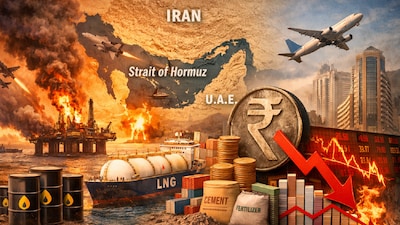
While missiles and drones dominate the headlines of the Iran-US war, a quieter but equally consequential battle is being fought thousands of miles away from the front lines. Europe and Asia are locked in a fierce competition for liquefied natural gas, and the stakes could not be higher.

Most of the LNG produced in Qatar and the United Arab Emirates is usually shipped through the Strait of Hormuz to Asia © SeongJoon Cho/Bloomberg
The near-shutdown of the Strait of Hormuz — the narrow chokepoint through which one-fifth of the world’s entire gas supply typically flows — has set off a scramble that is reshaping energy markets in real time.
Ship tracking data tells the story clearly. Gas carrier vessels sailing toward European ports have abruptly changed course mid-voyage, swinging eastward toward Asia instead. These are major decisions made on the fly as prices surge. The contest for every LNG cargo is intensifying by the hour.
Why Asia Is So Exposed
The countries most immediately threatened are in Asia. Taiwan, South Korea and Japan are staring down a supply emergency. Most of the liquefied natural gas produced in Qatar and the United Arab Emirates ordinarily travels through the Strait of Hormuz to Asian buyers. That vital route has now ground to a near standstill.
The numbers make the vulnerability plain. Taiwan sourced more than thirty percent of its total gas consumption from Qatar in 2025 alone. South Korea relied on Qatari gas for fifteen percent of its supply. Japan, for five percent. These are not marginal figures.
Losing them — even temporarily — creates immediate pressure on utilities, households and industries that depend on gas to generate electricity and run operations.
Asia’s situation is made more urgent by the season. Summer is approaching, and Asian countries burn significantly more gas than Europe during the hotter months due to the scale of air conditioning demand across the continent.
Utilities cannot afford to wait. They need to lock in supplies now, and they are willing to pay for the privilege.
Europe Has Been Here Before
For European buyers, the panic in the LNG market carries an uncomfortable familiarity.
Four years ago, when Russia slashed its pipeline gas deliveries to Europe after invading Ukraine, the continent found itself scrambling for the same spare cargoes that Asian buyers were chasing. Prices hit record levels — reaching €342 per megawatt hour in 2022 — and European consumers paid a brutal price.
This time around, European gas prices reached €69.50 per megawatt hour on Monday, more than double where they stood before the Iran conflict broke out. Asian benchmark LNG prices also more than doubled, reaching $24.80 per million British thermal units by the same day — equivalent to roughly €73 per megawatt hour.
Both markets are moving fast, pricing in a crisis that shows no sign of ending soon.
But Europe is not as defenceless as it was in 2022. Buyers have spent the intervening years learning hard lessons. New contract clauses now impose much steeper financial penalties on suppliers who redirect cargoes for commercial gain. Europe has more legal and financial tools at its disposal than it did the last time around, and it is using them.
The American Wildcard
One factor reshaping this entire battle is the growth of American LNG exports. Unlike Qatari gas, which comes with strict rules about where it can be shipped, almost all US LNG exports can go wherever the buyer directs.
That flexibility is enormously valuable in a market this disrupted. It means that gas from terminals along the US Gulf Coast can be pointed toward whichever region offers the highest price on any given day — and right now, those prices are jumping everywhere.
Several analysts have also noted a growing willingness among some producers to break existing contracts if market prices rise far enough above the contracted rate to make the penalty worthwhile. This is making cargo diversions more common and more unpredictable.
A Race Against Time
The longer the Strait of Hormuz stays effectively closed, the more dangerous the situation becomes for both regions. Gas is far harder to store and transport than oil, making its global markets uniquely vulnerable to sudden shocks. Storage facilities at LNG terminals have limited capacity, and tankers cannot simply anchor and wait indefinitely.
Every day without a resolution to the Iran-US conflict adds pressure to a market already near breaking point. Europe and Asia may not be firing weapons at each other, but they are absolutely fighting a war — and natural gas is the ultimate prize.
America News World covers breaking global news, energy markets, and international affairs.
Discover more from AMERICA NEWS WORLD
Subscribe to get the latest posts sent to your email.