
By Manisha Sahu | America News World
December 3,2025
Elon Musk’s charitable foundation has reached a record size of over $14 billion in assets, making it one of the largest in the United States. However, for the fourth consecutive year, the Musk Foundation has fallen short of the legal requirement to distribute a minimum portion of its assets to charitable causes. Moreover, the donations it does make appear to be largely concentrated on organizations closely connected to Musk himself, according to tax filings for 2024 released to The New York Times.

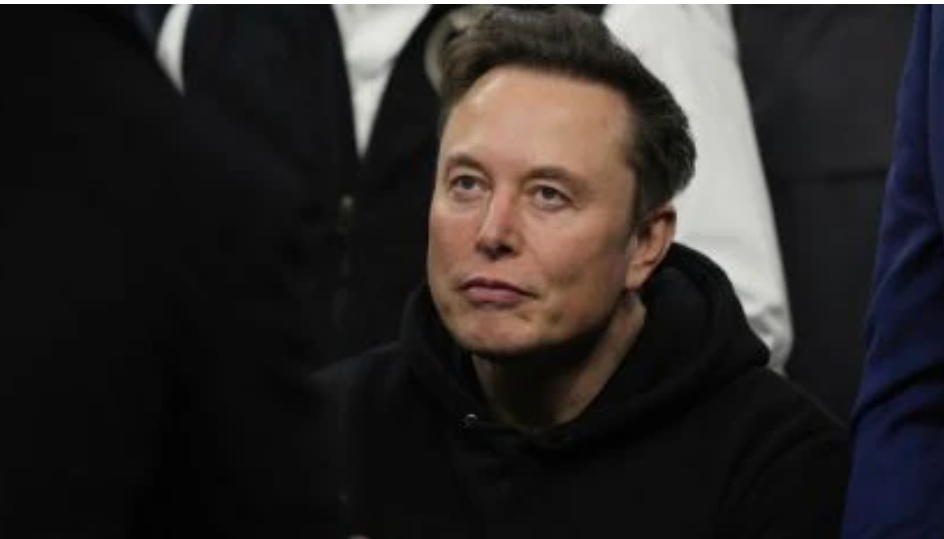
In 2024, a larger share of the Musk Foundation’s donations went to charities closely linked to Musk than in any year since 2020.(AP)
Unlike some of his billionaire peers who use large philanthropic organizations to tackle broad social, political, or humanitarian issues, Musk’s nonprofit activities have increasingly tracked the interests of his for-profit businesses. In 2024, the Musk Foundation gave away a total of $474 million—the largest single-year donation in its history. Yet, more than three-quarters of this amount, $370 million, was directed to a nonprofit in Texas run by Musk’s top aide. This nonprofit operates an elementary school in a rural community near Musk’s companies, benefiting employees’ families in the area.
In addition to this donation, the Musk Foundation allocated $35 million to a philanthropic fund managed by the financial giant Fidelity, which remains under Musk’s influence. The foundation’s tax filings indicate that Musk retains advisory control over these assets, highlighting a continued focus on organizations with personal or business ties rather than broad, independent charitable initiatives.
An analysis by The New York Times shows that 2024 marked the highest proportion of the Musk Foundation’s contributions going to closely connected charities since 2020. This pattern reflects a long-standing trend: although Musk has significantly increased the foundation’s resources, its giving strategy remains tightly aligned with his personal and business interests.
Musk himself acknowledged the difficulty of effective philanthropy in a recent podcast interview with Nikhil Kamath, saying, “The biggest challenge I find with my foundation is trying to give money away in a way that is truly beneficial to people. It’s very easy to give money away to get the appearance of goodness. It is very difficult to give money away for the reality of goodness.”
Founded in 2001 by Musk and his younger brother Kimbal, the Musk Foundation has grown largely through Elon Musk’s personal contributions. Over the years, Musk has donated about 18 million Tesla shares to the foundation, which could have provided him with significant tax deductions. With the rising value of Tesla stock, the foundation had become the 10th-largest charitable foundation in the U.S. by 2023, according to Times analyses. However, unlike other foundations of comparable size, Musk’s foundation operates with a minimal team. In 2024, the foundation’s officers consisted of only three unpaid volunteers: Musk himself, the head of his family office, and another family office aide who reportedly worked an average of six minutes per week on foundation activities.
The Musk Foundation also maintains a bare-bones, plain-text website that has not been updated in years. This is in stark contrast to other billionaires’ foundations, which often invest in staff, research, and communications to ensure their charitable giving is strategic, transparent, and impactful.
The largest recipient of the Musk Foundation’s donations in both 2023 and 2024 has been “The Foundation,” the nonprofit that operates the elementary school near Musk’s businesses in Bastrop, Texas. The school also has plans to expand, aiming to establish a high school and eventually a university. Since 2022, the Musk Foundation has donated approximately $607 million to this nonprofit, which directly benefits the communities around Musk’s corporate operations.
In addition to these locally focused contributions, the foundation made donations to causes in south Texas, near SpaceX’s large rocket development and launch facility. These contributions were initiated after a rocket explosion in March 2021, reflecting Musk’s tendency to direct philanthropic resources to areas connected to his business ventures. Other donations included $5 million to the Windward School in Los Angeles, from which Musk’s son graduated in May 2024, and contributions to several Jewish organizations, especially during a period when Musk faced public scrutiny over accusations of antisemitism.
By law, private foundations such as the Musk Foundation are required to give away at least 5% of their assets each year. Failure to meet this standard results in either paying a penalty to the Internal Revenue Service (IRS) or distributing the shortfall in the following year. The Musk Foundation did not meet this requirement in 2021, 2022, or 2023. At the start of 2024, the foundation carried a $421 million shortfall from 2023, which it distributed that year, primarily to the closely connected nonprofits. However, the foundation still fell $393 million short of the 5% minimum for 2024. The law allows this shortfall to be carried over until the end of 2025, meaning the foundation has another opportunity to comply.
Musk has repeatedly emphasized his struggle with charitable giving in a way that maximizes positive impact. On the Kamath podcast, he said, “I have a large foundation, but I don’t put my name on it,” underscoring his hands-off approach to publicizing or branding his philanthropy despite its vast size.
Despite these criticisms, it is undeniable that Musk’s foundation wields significant financial power. With more than $14 billion in assets, it is among the largest charitable organizations in the U.S., and its donations, even if largely targeted toward his immediate sphere of influence, can have tangible effects on the communities around Musk’s business operations.
Yet, experts note that the pattern of giving raises broader questions about the role of mega-billionaires in philanthropy and the transparency and accountability of foundations. While other foundations with similar assets maintain professional staff to ensure strategic and impactful giving, Musk’s foundation relies on a skeleton team and personal oversight, raising concerns about whether its charitable potential is being fully realized.
As Musk continues to expand his business empire across multiple industries—from space exploration to electric vehicles and artificial intelligence—his foundation’s strategy appears increasingly interwoven with his corporate interests. While the Musk Foundation’s enormous growth is a testament to his wealth accumulation, critics argue that the focus on closely connected nonprofits rather than broader social causes demonstrates a conservative, self-aligned approach to philanthropy rather than a commitment to widespread social impact.
As of now, the foundation’s next challenge will be to meet the legal giving requirements by the end of 2025 and potentially rethink its strategy to ensure that its vast resources benefit communities beyond Musk’s immediate orbit. Until then, Musk’s philanthropic footprint remains a controversial mix of record-setting financial capacity and highly targeted, self-interested giving.
Discover more from AMERICA NEWS WORLD
Subscribe to get the latest posts sent to your email.



























![Smoke rises after Israeli strikes in Beirut's southern suburbs, on March 2 [Mohamad Azakir/Reuters]](https://america112.com/wp-content/uploads/2026/03/hgh.webp)