

By Suraj Karowa and Elena Voss
Washington, D.C. – January 4, 2026

The 2000 film Minority Report, set in 2054, imagined potential future technologies like controlling computers by making hand gestures
As fireworks faded over Times Square and confetti blanketed the streets of Paris, the world awoke to 2026 not with a bang, but with a collective gasp.
This isn’t just another calendar flip; it’s a pivot point. America’s semiquincentennial—its 250th birthday—looms large, the FIFA World Cup returns to North American soil amid geopolitical snarls, and NASA’s Artemis program edges closer to lunar footprints.
Yet beneath the pomp, predictions swirl like storm clouds: recessions, seismic shocks, and the specter of conflict in Taiwan or Venezuela.
In this first dispatch of the new year, we unpack what 2026 holds—and what it might unleash.

In the video game Deus Ex, the protagonist – who enhances his abilities with augmentations – investigates a global conspiracy involving a terrorist group and secret societies.
The United States kicks off the year in patriotic overdrive. On July 4, the nation will mark its 250th anniversary with a spectacle dubbed “America 250.”
Expect a cascade of events from sea to shining sea: a massive parade down Philadelphia’s Broad Street, where replicas of the Liberty Bell will toll in unison; drone swarms over the National Mall forming holographic eagles; and a star-studded concert series featuring everyone from Taylor Swift to a resurrected hologram of Elvis Presley.
President Kamala Harris, fresh off a nail-biter 2024 reelection, has greenlit a $2 billion federal infusion for the festivities, framing it as “a recommitment to the unfinished promise of democracy.”
Critics, however, decry it as tone-deaf amid yawning inequality gaps, with food banks reporting record strains post-holiday.

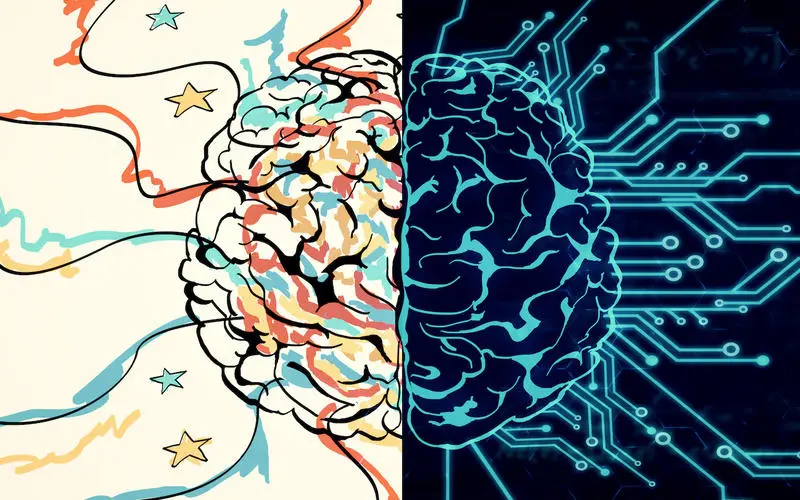
Professor Warwick has undertaken several pioneering experiments with the chip, including controlling a robot arm across the Atlantic Ocean using only his brain.
But the real fireworks ignite in sports. The 2026 FIFA World Cup, co-hosted by the U.S., Canada, and Mexico, promises to be the most politicized tournament since 1978’s Argentina showdown.
With 48 teams and 104 matches across 16 cities—from Miami’s sultry humidity to Seattle’s misty chill—the event could draw 5 million spectators.
Yet shadows loom. Donald Trump, now a spectral influencer from his Mar-a-Lago exile, has vowed boycotts if “woke” FIFA rules on gender parity aren’t rolled back.
Venezuelan tensions add fuel: President Nicolás Maduro’s regime, teetering after U.S. sanctions bites, eyes the tournament as a propaganda coup, potentially sparking border skirmishes if oil-rich fields flare up.
Analysts at the Council on Foreign Relations warn of “World Cup Whiplash,” where soccer euphoria masks diplomatic dynamite.

Waymo is a company developing autonomous driving technology.
Across the Atlantic, Europe braces for its own tremors—literal and figurative. Italian psychic Nicolas Aujula, whose eerie accuracy on 9/11 and Brexit has earned him a Netflix docuseries, foresees “Mediterranean mayhem” in 2026: a 7.8-magnitude quake rattling Greece and Turkey, displacing millions and straining NATO’s already frayed seams.
Seismic experts at the European Geosciences Union echo the peril, citing overdue fault lines in the Hellenic Arc.
Meanwhile, the Winter Olympics in Milan-Cortina di Ampezzo will dazzle with alpine thrills, but eco-activists protest the event’s carbon hoofprint, projecting 150,000 tons of emissions from spectator jets alone.
Italy’s Giorgia Meloni government, leaning hard into greenwashing, counters with promises of carbon offsets via alpine reforestation—skeptics call it “tree-hugging theater.”
Space, ever humanity’s escape hatch, offers brighter beacons. NASA’s Artemis III mission, slated for late summer, will finally plant human boots on the moon’s south pole—diverse ones, at that.
Commander Aisha Rahman, the first Muslim woman in space, leads a crew including a non-binary geologist from Tonga and a Japanese roboticist.
The $93 billion program’s goal? Helium-3 mining for fusion reactors, a Hail Mary against climate Armageddon.
“We’re not just visiting the moon,” Rahman beamed from Kennedy Space Center last week. “We’re homesteading it.”
Private players like SpaceX amplify the stakes: Elon Musk’s Starship fleet eyes Mars cargo runs by year’s end, while Blue Origin sues over lunar landing patents, turning the final frontier into a courtroom coliseum.
Domestically, America’s midterms cast a pall over the optimism. With gerrymandered maps still stinging from 2024, control of Congress hangs by a thread.
Polls from Vox’s Future Perfect forecast a Democratic squeaker in the House but GOP Senate gains, fueled by rural backlash against urban AI job displacements.
Speaking of which, artificial intelligence surges into the spotlight. Quantumrun predicts 41 disruptions this year alone: from AI-orchestrated traffic in Singapore slashing commutes by 30% to deepfake scandals toppling a European prime minister.
In the U.S., states like Florida ban lab-grown meat—yes, really—citing “unnatural abominations,” while California mandates AI ethics audits for Big Tech.
Vox’s crystal ball adds zingers: Will Beyoncé drop a concept album on quantum entanglement? (Odds: 22%.) Will a Category 5 hurricane slam the Gulf Coast?
Economically, the vibe is cautious vertigo. Substack seer “Lint Trap of History” nails it: a “slow-slide recession,” with GDP dipping 1.2% by Q3, per IMF whispers.
Inflation lingers at 3.8%, supply chains snag on Red Sea piracy, and crypto winters thaw into erratic springs—Bitcoin hovers at $85K, buoyed by El Salvador’s surf-city Bitcoin Beach.
Tragedies punctuate the ledger: a Boeing 797 crash in the Andes claims 240 lives, igniting fresh FAA probes; and a former president—whispers point to Jimmy Carter’s graceful exit at 101—leaves a void.
Yet amid the portents, glimmers persist. Ukraine’s peace talks, brokered in neutral Oman, inch forward, with Zelenskyy eyeing a 2026 ceasefire.
Taiwan fortifies its straits with drone swarms, deterring Beijing’s bluster. And in quieter corners, innovations bloom: a UC Berkeley breakthrough in mRNA vaccines zaps pancreatic cancer; dendropy’s open-source biohacking kits empower backyard gene editors.
2026, then, is no mere sequel—it’s a remix of ambition and anxiety. As Aujula intones, “The year of the quake is also the year of the quantum leap.”
Will we stumble into chasms or soar toward stars? The ball’s in our court, or perhaps on the pitch in Atlanta, where kickoff nears. One thing’s certain: in this defining dawn, complacency is the only true disaster.
Discover more from AMERICA NEWS WORLD
Subscribe to get the latest posts sent to your email.





























**, we dive into why your electric bill is climbing and what can be done. ### Why Are Electricity Prices Rising? Electricity costs are soaring across the United States. According to the U.S. Energy Information Administration (EIA), household electricity prices are expected to jump 13% from 2022 to 2025. In some states, the increase is even steeper. For instance, Maine saw a 36.3% spike, while Connecticut faced an 18.4% rise between May 2024 and May 2025. Nationwide, the average household paid 17.47 cents per kilowatt-hour in May 2025, up from 16.41 cents a year earlier—a 6.5% increase. So, what’s driving these hikes? First, there’s a massive surge in electricity demand. More people are using air conditioners during hotter summers. Electric vehicles and heat pumps are also becoming popular. However, the biggest culprit is the rapid growth of AI-powered data centers. These facilities, run by tech giants like Amazon, Google, and Microsoft, use as much electricity as small cities. A single AI search, like one on ChatGPT, consumes 10 times more power than a regular Google search. Additionally, natural gas prices, a key fuel for power plants, have climbed. The aging US power grid also struggles to keep up. Many transmission lines and power plants date back to the post-World War II era. As a result, utilities are spending billions to upgrade infrastructure, and those costs are passed on to consumers. > **Data Highlight: Electricity Price Trends (2022-2025)** > Source: U.S. Energy Information Administration > - **2022**: 14.96 cents per kWh > - **2023**: 15.87 cents per kWh > - **2024**: 16.41 cents per kWh > - **2025 (May)**: 17.47 cents per kWh > *Note*: Some states like Maine (+36.3%) and Connecticut (+18.4%) saw sharper increases. ```chartjs { "type": "line", "data": { "labels": ["2022", "2023", "2024", "2025 (May)"], "datasets": [{ "label": "Average US Electricity Price (cents per kWh)", "data": [14.96, 15.87, 16.41, 17.47], "borderColor": "#007bff", "backgroundColor": "rgba(0, 123, 255, 0.2)", "fill": true }] }, "options": { "responsive": true, "maintainAspectRatio": false, "scales": { "y": { "beginAtZero": false, "title": { "display": true, "text": "Price (cents per kWh)" } }, "x": { "title": { "display": true, "text": "Year" } } } } } ``` ### The AI Power Problem The AI boom is transforming how we live, work, and search online. But it comes at a cost. Data centers that power AI tools are sprouting up fast. Between 2021 and 2024, the number of US data centers doubled. By 2030, they could consume 5% to 9% of the nation’s electricity, according to the Electric Power Research Institute. This is a big jump from just 4% in 2022. For example, PJM Interconnection, which serves 67 million people across 13 states, reported a massive spike in demand. In 2024, its capacity auction prices jumped 833%, with data centers driving nearly 70% of the increase. This led to higher bills for households in states like Pennsylvania, New Jersey, and Ohio. In Columbus, Ohio, typical electric bills rose by $27 a month in 2025. Moreover, AI tasks are energy hogs. Generating a single high-definition AI image uses as much power as charging a smartphone halfway. As more people use AI for work or fun, the strain on the grid grows. Tech companies are racing to build bigger data centers, but the power supply isn’t keeping up. This mismatch is pushing prices higher. > **Image**: An Amazon Web Services data center in Boardman, Oregon, August 2024. (Source: Jenny Kane/AP) > *Caption*: Data centers like this one are driving up electricity demand across the US. ### Other Factors Behind the Price Surge While AI is a major player, it’s not the only reason for rising bills. Natural gas prices have spiked, making it more expensive to generate electricity. Also, the US power grid is old and needs upgrades. The Department of Energy says 70% of transmission lines are nearing the end of their lifespan. Replacing them costs billions, and consumers foot the bill. Extreme weather is another issue. Heat waves and storms are more frequent, forcing utilities to repair or harden the grid. In California, utilities spent $27 billion from 2019 to 2023 on wildfire prevention and insurance. These costs trickle down to customers. Meanwhile, some states are phasing out coal plants, but new renewable energy projects face delays due to permitting issues. For more insights on how energy costs affect households, check out **[AMERICA NEWS WORLD (ANW)](https://america112.com/)** for the latest updates. ### Solutions to Ease the Burden Thankfully, there are ways to tackle rising electricity costs. First, experts suggest speeding up the permitting process for new power plants, especially solar and wind. The International Energy Agency (IEA) predicts that solar and wind could add 110 terawatt-hours of power for data centers by 2030. Streamlining permits could bring these projects online faster. Next, tech companies are stepping up. Google recently signed deals to reduce AI data center power use during peak grid times. Amazon is investing in small modular nuclear reactors to power its operations cleanly. These efforts could lower costs and emissions in the long run. Additionally, hardening the grid can help. In Florida, utilities are using concrete poles and advanced tech to make power lines hurricane-proof. In California, moving lines underground reduces wildfire risks. These upgrades cost money upfront but save on repairs later. Finally, power purchase agreements (PPAs) let data centers buy renewable energy directly. This reduces reliance on fossil fuels and keeps costs down for consumers. Co-locating data centers with solar or wind farms is another smart move. For more on clean energy solutions, visit **[AMERICA NEWS WORLD (ANW)](https://america112.com/)**. > **Data Highlight: Projected Data Center Power Demand** > Source: Electric Power Research Institute > - **2022**: 4% of US electricity consumption > - **2030 (Projected)**: 5% to 9% of US electricity consumption > - **Growth**: Data center energy use could double by 2030. ```chartjs { "type": "bar", "data": { "labels": ["2022", "2030 (Projected)"], "datasets": [{ "label": "Data Center Electricity Consumption (% of US Total)", "data": [4, 7], "backgroundColor": ["#28a745", "#dc3545"], "borderColor": ["#28a745", "#dc3545"], "borderWidth": 1 }] }, "options": { "responsive": true, "maintainAspectRatio": false, "scales": { "y": { "beginAtZero": true, "title": { "display": true, "text": "% of US Electricity" } }, "x": { "title": { "display": true, "text": "Year" } } } } } ``` ### What’s Next for Consumers? Electricity prices may keep rising if demand outpaces supply. The White House warns that AI data centers could push prices up 9-58% by 2030 without new investments. The US needs $1.4 trillion by 2030 to meet growing power needs, according to the White House Council of Economic Advisors. This includes building new power plants and transmission lines. However, not all hope is lost. Renewable energy is getting cheaper. Solar and wind projects are expanding, and nuclear power is making a comeback. For example, Microsoft is reviving Pennsylvania’s Three Mile Island nuclear plant to power its AI tools. These efforts could stabilize prices over time. Consumers can also take action. Using energy-efficient appliances, sealing home leaks, and switching to LED lights can lower bills. ### Global Impact and Local Action The AI-driven power surge isn’t just a US problem—it’s global. Data centers worldwide could consume 3-4% of global power by 2030, up from 1-2% today, according to Goldman Sachs. In Europe, countries like Ireland and Germany are seeing similar price hikes. In Asia, Malaysia’s data centers could account for one-fifth of power demand growth. Locally, communities near data centers face challenges. Noise, water use, and power outages are common complaints. Some states, like Pennsylvania, are pushing back. Governor Josh Shapiro has threatened to pull the state from PJM if costs don’t drop. For more on local energy issues, ### Looking Ahead The AI revolution is exciting, but it’s putting pressure on power grids and wallets. While tech companies and utilities work on solutions, consumers are stuck with higher bills. By investing in clean energy, upgrading grids, and managing demand, the US can balance innovation with affordability. Stay informed with **[AMERICA NEWS WORLD (ANW)](https://america112.com/)** for the latest energy news. For a deeper dive into how AI is reshaping the energy landscape, check out this [CBS News article](https://www.cbsnews.com/news/ai-data-centers-electricity-demand-power-grid-us/) on the growing strain on US power grids.](https://america112.com/wp-content/uploads/2025/08/1198006_3_0818-NPRICES-lines-lede.jpg_standard-1.jpg)






![Smoke rises after Israeli strikes in Beirut's southern suburbs, on March 2 [Mohamad Azakir/Reuters]](https://america112.com/wp-content/uploads/2026/03/hgh.webp)

drover sointeru
You really make it seem really easy with your presentation however I find this topic to be really one thing which I believe I’d never understand. It kind of feels too complicated and extremely broad for me. I am having a look forward in your next submit, I?¦ll attempt to get the cling of it!