By_shalini oraon

Cyclone Ditwah: A City on Pause as Chennai and Coastal Tamil Nadu Brace for Nature’s Fury
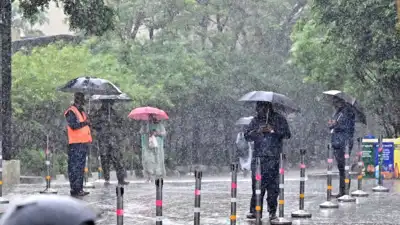
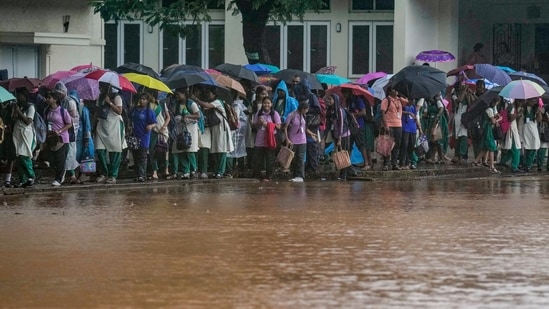
The familiar, rhythmic hum of Chennai’s morning traffic was replaced today by the staccato percussion of heavy rain and the howl of an anxious wind. The catalyst for this sudden urban transformation is Cyclone Ditwah, a brewing meteorological event that has prompted the Tamil Nadu government to take pre-emptive, decisive action. With an ominous red and orange alert plastered across weather maps, the state has declared a shutdown of all educational institutions—schools and colleges—in Chennai, Tiruvallur, Kancheepuram, and Chengalpattu districts. This move, while disrupting daily life, underscores a hard-learned lesson from the past: in the face of nature’s unpredictability, caution is the first and most crucial line of defense.
The Genesis of Ditwah: From Bay Whispers to Roaring Alert
Cyclone Ditwah, named as per the regional meteorological rotation, began its life as a low-pressure system over the southeast Bay of Bengal. Nurtured by warm sea surface temperatures (exceeding 30°C), it rapidly intensified into a depression and then a deep depression, churning its way towards the Tamil Nadu and Andhra Pradesh coast. The India Meteorological Department (IMD), with its enhanced modeling and tracking capabilities, has been closely monitoring its every twist and turn.
The alerts issued are severe and unambiguous. A red alert signifies that authorities expect “extremely heavy rainfall” (over 20 cm in 24 hours) in isolated places, accompanied by winds gusting up to 90-100 kmph. An orange alert warns of “very heavy rainfall” (6 cm to 20 cm) and sustained squally winds. For Chennai and its neighboring districts, the forecast predicts intense, torrential spells starting from the early hours, with the cyclone’s landfall or closest approach expected to bring the peak fury. The shutdown order is a direct response to these specific, dire predictions, aimed squarely at preventing the chaos and tragedy that can unfold when children and young adults are caught in transit during such extremes.
Beyond the School Gates: A Ripple Effect of Preparedness
The closure of schools and colleges is the most visible sign of preparedness, but it is merely the tip of a vast administrative iceberg. The state machinery has swung into a well-rehearsed disaster management protocol:
· The Chennai Corporation: Civic workers are on high alert, focusing on clearing stormwater drains and canals—a critical task in a city where waterlogging can paralyze areas in hours. Pumping stations are being primed, and vulnerable low-lying areas, like those in parts of south Chennai and suburbs, are under special watch.
· Disaster Response Forces: Teams from the National Disaster Response Force (NDRF) and the State Disaster Response Force (SDRF) have been pre-positioned in likely hotspots. Their equipment—inflatable boats, life jackets, ropes, and cutters—stands ready for rescue and evacuation operations.
· Essential Services on Standby: The electricity board has crews stationed to address downed lines and outages, a near-certainty in such storms. The police and traffic departments have issued advisories, urging people to stay indoors and avoid waterlogged underpasses and beaches.
· A Digital Nerve Center: The government is leveraging technology, sending SMS alerts to citizens in vulnerable districts, updating official social media handles in real-time, and urging people to follow only verified sources to avoid panic-inducing misinformation.
The Ghosts of Past Storms: Why Chennai Takes No Chances
The swift, no-hesitation response to Cyclone Ditwah is deeply informed by collective trauma. The memories of Cyclone Vardah in 2016 are still fresh. Vardah, a severe cyclonic storm, barreled into Chennai with winds of 120-130 kmph, uprooting over 10,000 trees, crippling power and communication for days, and causing massive infrastructural damage. The city was brought to its knees, and the image of its lush green canopy laid to waste became a symbol of nature’s raw power.
More recently, the catastrophic floods of 2015 serve as a stark reminder of the compounding dangers of heavy rainfall and inadequate urban drainage. Those floods claimed hundreds of lives and caused unprecedented economic damage. Every heavy rain event since has been measured against that benchmark of calamity.
It is these scars that make today’s pre-emptive shutdown not an overreaction, but a necessary evolution in civic responsibility. The mantra has shifted from “wait and see” to “prepare and prevent.” The government is acutely aware that the cost of a day’s lost academic and economic activity pales in comparison to the potential cost in human life and long-term recovery.
Life in the Pause: A City in Waiting
On the ground, the atmosphere is one of wary anticipation. In the narrow bylanes of Triplicane and Mylapore, shopkeepers are securing their shutters and moving goods to higher shelves. In the coastal fishing hamlets of Nemmeli and Kovalam, boats have been hauled far ashore, and fishermen have heeded the strict warning against venturing out. Markets saw a last-minute rush for essentials—milk, bread, candles, and batteries—though authorities assure supplies remain steady.
For families, it’s an unexpected, weather-enforced holiday. Children, initially delighted by the announcement, are now watching the escalating rain with a mix of excitement and apprehension. Parents are working from home, their schedules intertwined with monitoring weather updates and ensuring their emergency kits—with torches, charged power banks, drinking water, and first-aid—are within reach.
The Larger Picture: Climate Change and the New Normal
Cyclone Ditwah’s emergence is not an isolated event but part of a concerning pattern for the Bay of Bengal region. Climate scientists have long warned that a warming Indian Ocean is leading to more frequent and intense cyclonic activity. The seas are providing more energy, turning potential depressions into dangerous cyclones with alarming speed—a phenomenon known as rapid intensification.
This new normal demands a new standard of resilience. While immediate preparedness is key, long-term strategies are equally critical. This includes:
· Investing in resilient infrastructure: Truly effective stormwater drains, fortified coastline, and underground cabling for power lines.
· Protecting natural buffers: Conserving and restoring mangroves and wetlands, which act as crucial shock absorbers against storm surges.
· Community-based awareness: Ensuring that disaster preparedness trickles down to the last mile, to every household and street.
Conclusion: Vigilance as the True Shelter
As Cyclone Ditwah approaches the coast, the shutdown of Chennai is a symbol not of fear, but of learned prudence. It represents a city and a state that has stared down disaster before and is determined to be better prepared. The silence in the schoolyards and college campuses is a profound statement—a collective decision to prioritize safety over routine.
The coming hours will test the mettle of the city’s infrastructure and the efficiency of its response systems. But for now, Chennai waits, watches, and endures. The hope is that with robust preparation and vigilant citizenship, the impact of Cyclone Ditwah will be one of manageable disruption, not unmanageable devastation. In the era of climate uncertainty, such pre-emptive pauses may well become the most sensible rhythm of urban life along our vulnerable coasts. The rain will fall, the winds will blow, but within the sheltered homes, the resolve to weather the storm, together, remains unbroken.
Discover more from AMERICA NEWS WORLD
Subscribe to get the latest posts sent to your email.