By Manisha Sahu, America News World
November 22, 2025
The COP30 climate summit in Belém, Brazil, plunged into uncertainty on Friday as negotiations entered their final hours, with a major bloc of countries rejecting the latest draft text for failing to include a roadmap on phasing out fossil fuels. The sharp pushback from 29 nations—mostly small island developing states (SIDS) and European countries—left the conference teetering on the edge of breakdown, intensifying concerns about whether this year’s global climate meeting could deliver any meaningful progress.

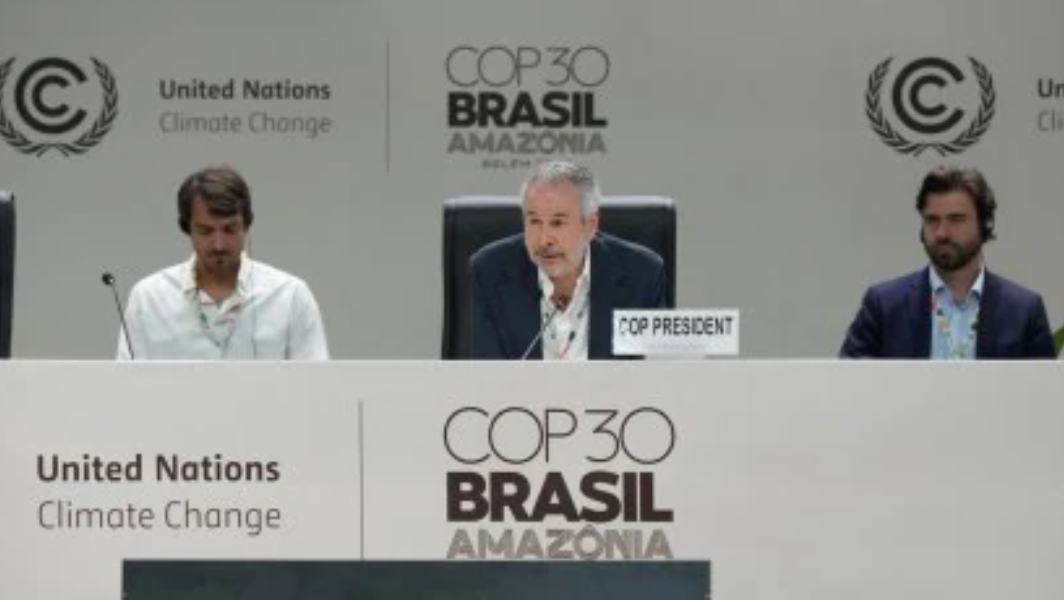
COP30 President André Corrêa do Lago speaks during a plenary session at the climate summit in Belém, Brazil, on Friday. (AP)
The controversial draft text, released late Thursday night, was expected to address four critical issues that had been under discussion throughout the two-week summit: fossil fuel phase-out, climate finance, adaptation support, and mechanisms to enhance accountability in climate action. Instead, negotiators said the document sidestepped each of these points, offering ambiguous language and vague commitments that satisfied almost no one.
COP30 president André Corrêa do Lago attempted to rally delegates during the Friday plenary, urging countries to work collaboratively to rescue the negotiations. However, as he spoke, frustration rippled through the hall, especially among nations for whom climate delays translate into existential threats.
Strongest Opposition From the Most Vulnerable
The group of 29 dissenting countries included representatives from climate-vulnerable island nations—many of which face rising sea levels and devastating storms—and European states that have pushed for more ambitious global action. Their central demand was clear: the draft must include explicit language committing the world to a fossil fuel phase-out, along with a concrete roadmap to achieve it.
For years, the debate over fossil fuels has been the single biggest sticking point at UN climate conferences. While COP28 in Dubai delivered a historic—though heavily negotiated—call to “transition away” from fossil fuels, it stopped short of setting a timeline or detailing actionable steps. At COP30, expectations were high that the world would move beyond symbolic phrasing and toward binding commitments.
Instead, the draft text omitted any reference to a phase-out roadmap. In the words of one SIDS negotiator, the absence was “a direct denial of science-based climate action” and a “betrayal of those whose lives depend on the decisions made here.” Representatives from island nations stressed that any dilution of fossil fuel commitments threatens to push their communities beyond survival thresholds.
A Draft That Pleases No One
While vulnerable nations condemned the lack of ambition, major economies were equally displeased, but for different reasons. Some developing nations questioned whether the text offered sufficient assurances on financial support, arguing that without predictable funding, the transition away from fossil fuels is unrealistic and inequitable.
Large emerging economies, including India and several Latin American countries, raised concerns about potential pressures the roadmap might impose on developing nations that still rely heavily on fossil fuels for growth and poverty alleviation. Even countries that did not outright reject the draft indicated reservations, suggesting that the text lacked clarity, balance, and fairness.
Climate activists and civil society groups wasted no time in criticizing the document, staging demonstrations outside the venue. Their placards carried messages like “Roadmap or Roadblock?” and “No Progress Without Phase-Out.” Many accused negotiators of caving to fossil fuel lobbyists and warned that failure at COP30 would reverberate for years.
Political Tensions and Oil Interests
Behind the scenes, negotiations have been tense. Observers say oil and gas-producing countries pushed strongly to soften the language on fossil fuels, arguing that global energy security depends on a diversified energy mix. Rumors circulated that pressure from some major producers influenced the draft’s weakened stance.
This tension highlights the central conflict that has come to define recent climate summits: how to balance urgent climate science with the economic and geopolitical realities of energy dependency. With the world still heavily reliant on oil, gas, and coal, any firm commitment to phase-out timelines triggers intense debate.
The absence of a fossil fuel roadmap in the draft suggests the extent to which these competing interests are shaping negotiations. But the resistance from 29 nations signals that compromise cannot come at the cost of ambition—especially when climate disasters are accelerating.
A Make-or-Break Moment for COP30
The stakes for COP30 are higher than ever. Over the past decade, climate summits have increasingly been judged not by lofty declarations but by whether they deliver actionable strategies aligned with the 1.5°C target. Scientists have warned that the window for keeping global warming under control is rapidly closing and that global emissions must decline steeply within the next decade.
For small island nations, the consequences of inaction are existential. From rising seas swallowing coastlines to stronger hurricanes ripping through communities, the climate crisis is already a daily reality. Representatives from these nations reiterated that a phase-out roadmap is not merely a political demand—it is a lifeline.
European nations, meanwhile, argue that clear direction on fossil fuels is essential for global markets, investors, and industries to transition effectively. They insist that ambiguity breeds stagnation, while clarity accelerates innovation.
Can the Summit Be Saved?
As negotiators pushed into late-night sessions on Friday, diplomatic efforts intensified. Delegates scrambled to find middle ground that could salvage the summit’s outcomes while maintaining integrity. Possible options under discussion include:
– Adding firm language on fossil fuel phase-out, even if timelines remain flexible
– Inserting a commitment to create a detailed roadmap in the coming year
– Strengthening financial guarantees for developing nations
– Offering clearer mechanisms to support just transitions for fossil-fuel-dependent economies
However, time is running short, and trust is thin. Many fear that failure at COP30 would undercut global confidence in the UN climate process, jeopardizing momentum ahead of future climate negotiations.
The World Watches and Waits
As the final hours of COP30 unfold, the world is watching closely. The crisis over the draft text has revealed once again the deep fractures in global climate politics—fractures between developed and developing nations, between fossil fuel producers and vulnerable communities, and between scientific urgency and economic caution.
Whether COP30 emerges with a unified political package or collapses under the weight of its disagreements will shape global climate action for years to come. For now, uncertainty looms large in Belém.
Discover more from AMERICA NEWS WORLD
Subscribe to get the latest posts sent to your email.























![Smoke rises after Israeli strikes in Beirut's southern suburbs, on March 2 [Mohamad Azakir/Reuters]](https://america112.com/wp-content/uploads/2026/03/hgh.webp)