By_shalini oraon

China Sanctions US Defence Firms Over Taiwan Arms Sale: A Strategic and Political Analysis
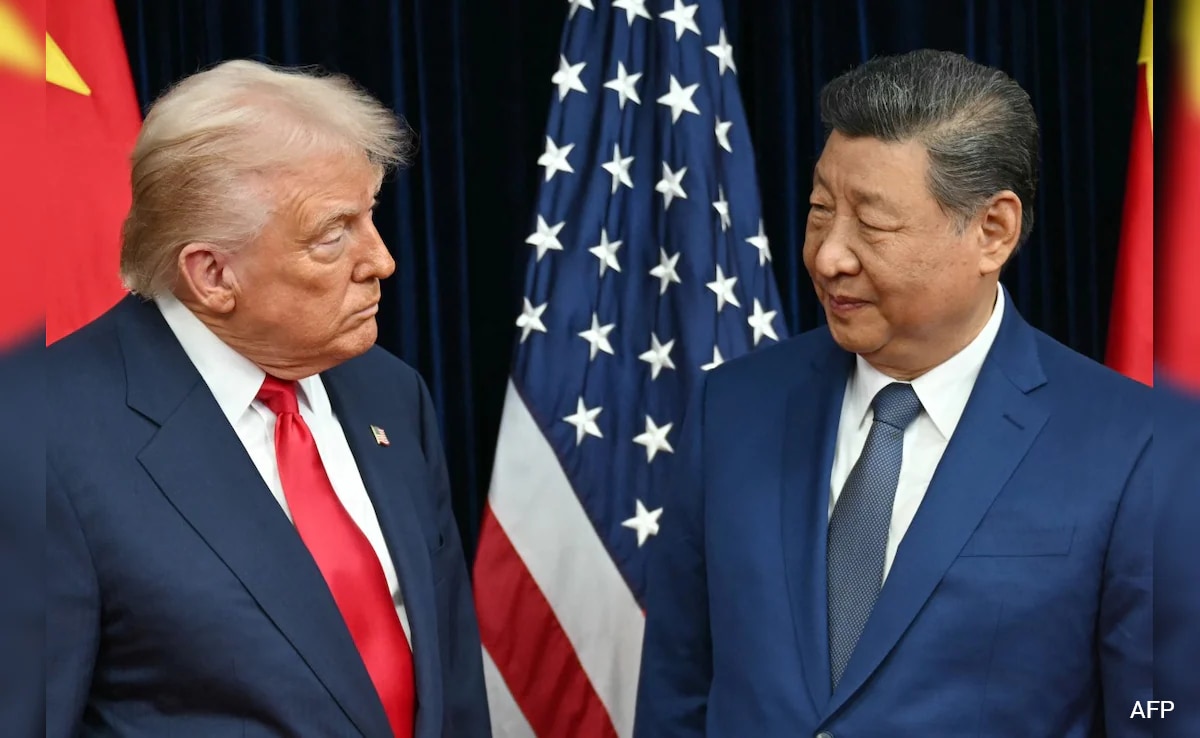
In a decisive move that underscores the deepening geopolitical tensions between Washington and Beijing, China has announced sanctions against several prominent US defence contractors in response to the latest American arms sale to Taiwan. This action, far from a mere diplomatic formality, represents a calculated escalation in the long-standing struggle over the status of the island. To understand the full import of this move, one must examine its immediate targets, its strategic objectives within the broader US-China rivalry, and the complex, often symbolic, nature of such economic countermeasures.
The Immediate Catalyst: The US Arms Package
The trigger for this round of sanctions was the US State Department’s recent approval of a $440 million arms sale to Taiwan, encompassing logistics support for its surveillance radar program and other defence services. For the United States, this sale falls under the purview of the Taiwan Relations Act (TRA) of 1979, which mandates providing Taiwan with defensive weapons to maintain its capacity for self-defence. The American perspective frames this as a commitment to regional stability and the preservation of the status quo.
From Beijing’s vantage point, however, every arms sale is a profound violation of the One-China Principle, a direct interference in China’s internal affairs, and a severe breach of the diplomatic understandings foundational to the 1979 US-China communiqués. China views Taiwan as an inalienable part of its territory and sees US military support as emboldening “separatist forces” on the island, thereby increasing the risk of conflict and undermining China’s sovereignty.
The Sanctioned Firms and the Nature of the Measures
While the Chinese Foreign Ministry’s announcement did not specify the exact measures, past precedents provide a clear blueprint. Sanctions typically target key US aerospace and defence giants historically involved in arming Taiwan. Firms like Lockheed Martin (the primary contractor for F-16 fighter jets and missile systems) and Raytheon Technologies (provider of Patriot missile defence systems) are perennial candidates. The sanctions may also extend to subsidiaries and executives of these corporations.
The concrete measures generally include:
1. Asset Freezes: Prohibiting the sanctioned companies from owning or trading property within Chinese jurisdiction.
2. Transaction Bans: Barring Chinese individuals and institutions from conducting any business or engaging in financial transactions with the firms.
3. Travel Restrictions: Prohibiting senior executives of these companies from entering China, Hong Kong, and Macau.
4. Contract Blacklisting: Formally excluding the firms from participating in the Chinese market, including its vast civilian aerospace and technology sectors.
Strategic Objectives: More Than Symbolic Retaliation
While the immediate impact on billion-dollar defence conglomerates with minimal direct business in China may appear limited, dismissing the sanctions as purely symbolic would be a grave miscalculation. Beijing’s actions are designed to achieve multiple strategic goals:
1. Establishing Diplomatic Parity and Costs: China aims to systematically dismantle the historical dynamic where the US could sell arms to Taiwan without facing direct, named consequences. Each sanctions announcement is a ledger entry, designed to accumulate and signal that Washington’s actions will henceforth incur a formal, public cost. It transforms an implicit grievance into an explicit counter-punch.
2. Signaling Resolve to Domestic and International Audiences: Domestically, the Chinese government demonstrates unwavering commitment to national sovereignty, reinforcing the Communist Party’s role as the guardian of territorial integrity. Internationally, it sends a clear message to other nations that might consider following the US lead: supporting Taiwan militarily will result in concrete economic and political repercussions.
3. Deterring Future Sales and Corporate Lobbying: By repeatedly sanctioning the same firms, China seeks to create a long-term financial calculus for these corporations. Even if their current China exposure is limited, the sanctions permanently foreclose future market opportunities in the world’s second-largest economy, particularly in the growing civilian aviation and technology sectors. The goal is to incentivize these powerful corporate entities to lobby the US government against future arms sales, introducing a domestic American counter-pressure.
4. Laying the Groundwork for Future Escalation: The sanctions create a legal and procedural framework. Should tensions escalate further, Beijing has already established the precedent for punitive actions. This allows for a rapid, justified expansion of measures—potentially targeting secondary suppliers, financial institutions facilitating deals, or related technologies—in any future crisis.
The Complex Reality of Efficacy and Impact
The true effectiveness of these sanctions operates in a grey zone:
· Direct Financial Impact: For giants like Lockheed Martin, direct sales to China are virtually non-existent due to longstanding US export restrictions. Therefore, the immediate revenue hit is negligible.
· Indirect and Long-term Impact: The story is more nuanced. China is a critical growth market for commercial aviation. While defence and civilian arms of these conglomerates are often separate (e.g., Raytheon Technologies and its Pratt & Whitney jet engine division), the sanction on the parent entity creates reputational risk, supply chain complications, and uncertainty for global partners. It also formally blocks any potential future diversification into the Chinese market.
· The Symbolic-Becomes-Material Paradox: The primary power of the move lies in its political symbolism and its function within a broader strategy of “lawfare”—using legal and regulatory tools to wage geopolitical conflict. By consistently imposing sanctions, China is building a body of legal and political justification for more aggressive actions in other domains, from military patrols to economic coercion against third parties dealing with Taiwan.
The Broader Context: A Battle of Narratives and Futures
This latest episode is not an isolated event but a chapter in the accelerating systemic rivalry between the US and China. Taiwan sits at the precarious epicenter of this contest. The US arms sales reinforce its alliance network and its vision of a “free and open Indo-Pacific” upheld by a balance of power. China’s sanctions reinforce its narrative of resisting “hegemonism” and defending its core interests against external interference.
The cycle—US sale, Chinese protest and sanctions, US reiteration of its commitments—has become a dangerous ritual. Each iteration raises the stakes, deepens distrust, and erodes the guardrails that have prevented conflict for decades. The sanctions are Beijing’s chosen tool to wage this battle in the economic and legal domains, seeking to alter Washington’s cost-benefit analysis over time.
Conclusion
China’s sanctions against US defence firms over Taiwan arms sales are a multifaceted political weapon. They are a mandatory diplomatic response, a strategic signalling device, a long-term deterrent instrument, and a brick in the legal wall Beijing is constructing around its claim to Taiwan. While their immediate economic bite on the targeted corporations may be limited, their true significance lies in their contribution to a steadily escalating pattern of action and reaction. They underscore a grim reality: the decades-old fragile equilibrium over the Taiwan Strait is under unprecedented strain, with both superpowers increasingly willing to use all instruments of national power—diplomatic, economic, and military—to shape what they see as a definitive struggle over the island’s future. The sanctions are not the endgame, but they are a critical marker on a path that demands careful statesmanship to avoid a catastrophic miscalculation.
Discover more from AMERICA NEWS WORLD
Subscribe to get the latest posts sent to your email.

![Smoke rises after Israeli strikes in Beirut's southern suburbs, on March 2 [Mohamad Azakir/Reuters]](https://america112.com/wp-content/uploads/2026/03/hgh.webp)