By Suraj Karowa/ANW
November 15, 2025

BEIJING — In a sharp escalation of diplomatic friction, China has issued a stark advisory urging its citizens to avoid travel to Japan, citing heightened risks stemming from recent provocative statements on Taiwan by Japanese Prime Minister Sanae Takaichi. The move, announced Friday by China’s Foreign Ministry, marks Beijing’s most tangible response yet to the controversy, blending symbolic protest with potential economic leverage.
The advisory comes just over a week after Takaichi’s remarks in Japan’s parliament, where she declared that a Chinese military action against Taiwan would constitute “a situation threatening Japan’s survival,” potentially justifying a Tokyo-led response. For Beijing, which claims Taiwan as an inalienable part of its territory and has not ruled out force to achieve unification, such language crosses a sacred “red line.”
The island’s status remains the most volatile flashpoint in Sino-Japanese relations, exacerbated by Tokyo’s deepening security alliance with the United States.

“Recent blatantly provocative remarks on Taiwan have further damaged the atmosphere for people-to-people exchanges… creating additional risks to the safety and security of Chinese citizens in Japan,” the ministry stated in a Friday release.
It explicitly advised Chinese nationals to “refrain from visiting Japan for the time being,” while urging those already there to heighten vigilance.
The timing amplifies the stakes. Between January and September 2025, nearly 7.5 million Chinese tourists flocked to Japan — the highest volume from any nation, per data from Japan’s public broadcaster NHK.
Pre-pandemic, this influx fueled a tourism boom, with visitors snapping photos at icons like Mount Fuji and injecting billions into local economies.
A sustained boycott could ripple through hospitality, retail, and transport sectors, echoing China’s past use of consumer boycotts against Australia and Norway over political spats.
This isn’t mere rhetoric; it’s a page from Beijing’s well-honed playbook of “economic diplomacy.” Analysts see it as a calibrated signal: pressure without outright rupture, especially given the nations’ intertwined trade ties — Japan exported $138 billion worth of goods to China last year, while importing $167 billion, including critical semiconductors and rare earths.
The row ignited last Saturday when Xue Jian, China’s Consul General in Osaka, posted — and later deleted — a fiery X message alongside a news clip of Takaichi’s comments: “The dirty neck that sticks itself in must be cut off.”
The outburst, laced with nationalist fervor, went viral in China, where anti-Japanese sentiment has simmered since historical grievances like the 1937 Nanjing Massacre.
State media piled on: The People’s Liberation Army Daily warned of a “head-on blow” to any Japanese intervention in the Taiwan Strait, while a PLA-linked X account translated threats into Japanese, promising a “heavy price.”
Tokyo fired back swiftly. On Friday, Japan’s Foreign Ministry summoned Chinese Ambassador Wu Jianghao to protest Xue’s “highly inappropriate remarks” and demand accountability.
The day before, Beijing had lodged its own formal complaint, with Vice Foreign Minister Sun Weidong accusing Takaichi of “seriously damaging the political foundation of China-Japan relations” and refusing to retract her words.
Japan’s Foreign Minister Toshimitsu Motegi dismissed calls for an apology, framing Takaichi’s statement as a hypothetical discussion of an “existential crisis.”
Chief Cabinet Secretary Minoru Kihara echoed this, emphasizing that “peace and stability in the Taiwan Strait are important not only for Japan’s security but also for the stability of the international community.”
Takaichi herself, on Monday, clarified her comments as “hypothetical” and pledged to avoid similar parliamentary phrasing moving forward — a nod to the delicacy of the issue.
This dust-up unfolds against a backdrop of fleeting optimism.
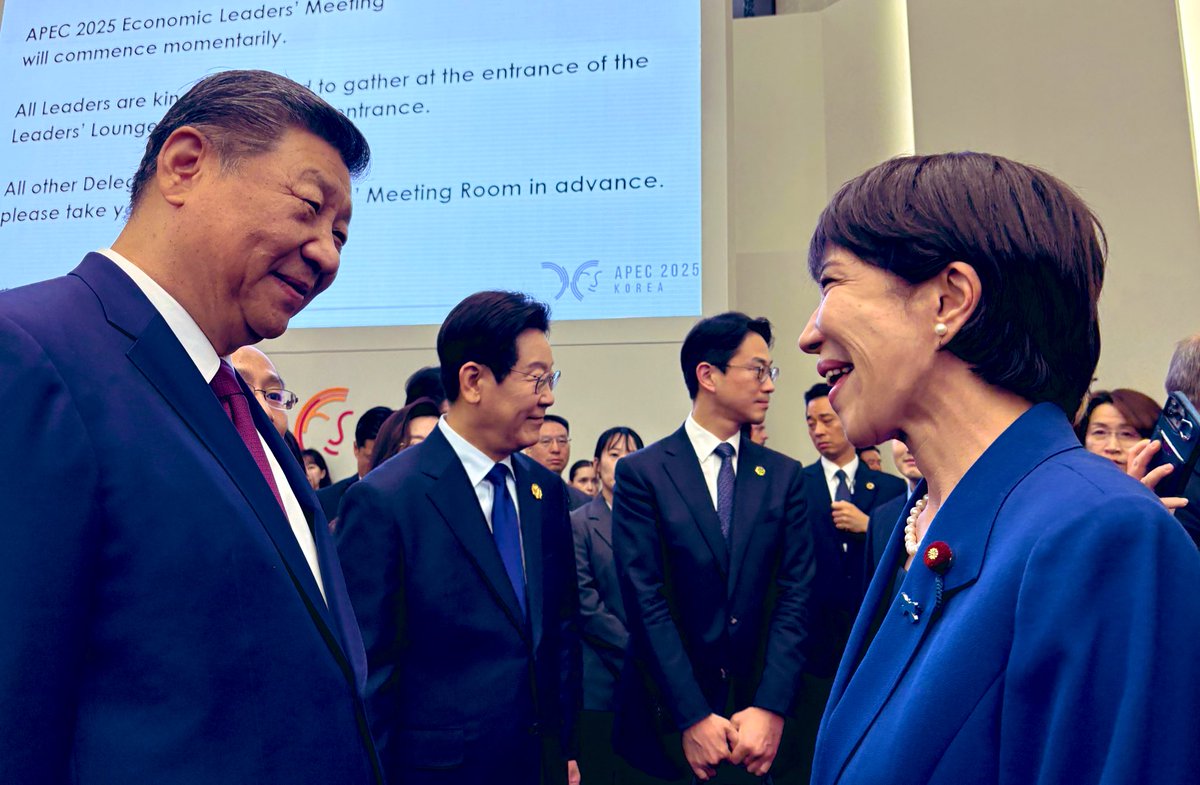
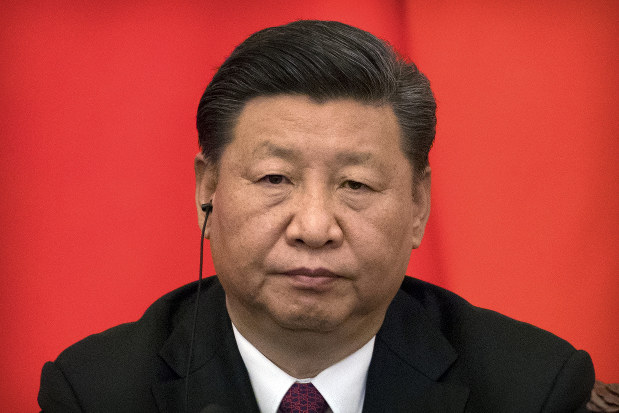
Less than two weeks ago, at the APEC Summit in South Korea, Takaichi and Chinese President Xi Jinping held their first face-to-face, shaking hands and vowing “constructive, stable ties.” Yet, the encounter’s goodwill evaporated amid the Taiwan furor, highlighting the fragility of bilateral relations.
Takaichi, Japan’s first female prime minister, ascended to power promising a muscular foreign policy. She’s accelerated defense spending to 2% of GDP by 2027 and deepened U.S. interoperability, including joint exercises simulating Taiwan contingencies. But she treads carefully: China absorbs 22% of Japan’s exports, making outright confrontation economically suicidal.
Her administration must juggle hawkish domestic voices — emboldened by memories of Beijing’s 2022 Taiwan Strait war games — with pragmatic business lobbies.
Beijing, meanwhile, eyes Japan’s pivot warily. As it asserts dominance in the Indo-Pacific, the U.S.-Japan security pact — formalized in 1960 and upgraded under the Quad framework — looms large.
China’s Defense Ministry amplified the travel warning Friday, vowing a “crushing defeat” for any Japanese meddling. State outlets like Global Times have lambasted Takaichi as a “warmonger,” fueling online vitriol that blends historical animus with modern memes.
Globally, the episode underscores Taiwan’s centrality to great-power rivalry. The U.S. clings to “strategic ambiguity,” neither confirming nor denying intervention in a Chinese invasion — a stance Washington has held since the 1979 Taiwan Relations Act.
Previous Japanese leaders shied from explicit Taiwan linkages, but Takaichi’s candor reflects shifting norms in Tokyo, where public support for arming Ukraine has spilled into Indo-Pacific resolve.
As winter tourism peaks, the advisory’s impact remains unclear. Will it deter holidaymakers, or prove performative? Social media buzz suggests the latter: Weibo users mock it as “overkill,” while some book flights defiantly.
Yet, in a region where miscalculation could ignite conflict, the message is unmistakable — Beijing will brook no encroachments on its core interests.
For now, ambassadors trade protests, and tourists pause at Fuji’s base. But beneath the bluster lies a deeper truth: In the Taiwan tinderbox, words can wound as deeply as weapons.
Discover more from AMERICA NEWS WORLD
Subscribe to get the latest posts sent to your email.














![Reliance Industries, led by Chairman Mukesh Ambani, has exported products made from Russian crude oil to countries that have sanctioned Russia, including the US [File: Ajit Solanki/AP Photo]](https://america112.com/wp-content/uploads/2025/08/AP24010199793503-1755298275.webp)


![In India, a big protest is coming up. About 300 MPs from the I.N.D.I.A. bloc will march to the Election Commission office. This happens on August 11. They say it's against "vote chori," which means vote theft. And they point fingers at SIR. SIR stands for Special Intensive Revision. It's a way to update voter lists. But the opposition thinks it's not fair. First, let's talk about why this matters. The I.N.D.I.A. bloc includes parties like Congress and others. They feel SIR deletes real voters. Especially in places like Bihar. Rahul Gandhi, the Leader of Opposition, has spoken out. He says SIR lets "vote chori" happen. For example, he claims over 1 lakh votes got stolen in Karnataka before. Now, in Bihar, 35 lakh voters are untraceable. That's a huge number. Moreover, Mallikarjun Kharge will host a dinner for these MPs on Monday. That's today, August 10. It's to bring everyone together. Rahul hosted one before. So, they plan as a team. Then, the march starts from Parliament. They want the EC to stop SIR or make it fair. However, the government says SIR cleans up lists. It removes fake or dead voters. The Election Commission started SIR in Bihar from June 24 to July 25. They had 7.89 crore voters at the start. Over 7.24 crore sent back forms. That shows many joined in. But some did not. Reasons include moving away or not found. Here is complete data from the Press Information Bureau. It covers key findings. - Total electors before SIR: 7.89 crore - Forms submitted: 7.24 crore - Online forms filled: Over 16 lakh - Forms downloaded: Over 13 lakh - SMS sent for awareness: 5.7 crore - Acknowledgment SMS: 10.2 crore On deletions and additions, more comes later. Draft list out on August 1. Claims until September 1. No name deletes without notice. Now, look at Booth Level Agents (BLAs). They help check lists. Numbers went up by 16%. Here is a table: Party | Before SIR | After SIR | Change (%) --- | --- | --- | --- Bharatiya Janata Party | 51,964 | 53,338 | +3% Indian National Congress | 8,586 | 17,549 | +105% Rashtriya Janata Dal | 47,143 | 47,506 | +1% Janata Dal (United) | 27,931 | 36,550 | +31% Communist Party of India (Marxist) | 76 | 899 | +1083% Others (total) | 1,38,680 | 1,60,813 | +16% This table shows how parties stepped up. Congress doubled agents. It helps watch the process. For a graph, imagine a bar chart. It shows BLA changes per party. Bars for BJP in blue, short rise. Congress in green, tall bar up. CPI(M) in red, very tall. Total in black. This graph highlights opposition push. It works on mobile and computer. Use colors for highlight: blue for low change, red for high. [Image: Opposition leaders like Rahul Gandhi and Akhilesh Yadav protesting in Parliament over SIR. They hold signs saying "Stop Vote Chori." Credit: Hindustan Times. Source: https://www.hindustantimes.com/photos/news/stop-sir-opposition-protest-over-bihar-electoral-roll-row-in-parliament-in-pics-101753689375847.html] This protest could shake things up. Not just in India. Around the world, people watch elections. In Asia, Europe, Africa, North America, South America, Australia, and Antarctica too, though few there. Fair votes matter everywhere. Like in the US or UK, voter lists get checked. But claims of bias hurt trust. Besides, young people care. If you are 18, check your vote. Old folks remember past polls. All ages can see why clean lists help. But not if it deletes real ones. Meanwhile, the bloc wants talks in Parliament. But no luck yet. They march instead. Sources say it's peaceful. Yet strong. For more on this, read the original story. It's from Deccan Herald: https://www.deccanherald.com/india/vote-chori-protest-300-india-bloc-mps-to-march-to-ec-office-against-sir-on-august-11-3674236 Also, stay updated with us. Visit AMERICA NEWS WORLD (ANW) at https://america112.com/ for global takes on Indian news. We cover it all. In addition, this links to bigger issues. Like in 2019, Kharge said bogus votes cost them. Now, they fight back. Rahul calls for clean rolls. It's key for free polls. Furthermore, Bihar SIR shows gaps. Many migrants can't fill forms easy. Online helps, but not all have net. EC sent SMS, but some miss. To wrap up, watch August 11. Will EC listen? Or more protests? It affects next polls. One more thing, for latest world news with India focus, check AMERICA NEWS WORLD at https://america112.com/. We aim for truth.](https://america112.com/wp-content/uploads/2025/08/deccanherald_2025-08-10_va0tirfq_PTI08082025000165A.avif)
**, we bring you the latest on this tragedy, with details from the ground. ### What Happened in Dharali? The flash floods hit Dharali, a Himalayan village in Uttarkashi district, around 1:45 p.m. local time. Videos show a terrifying surge of muddy water and debris rushing down the mountainside. For instance, homes, hotels, and shops were swept away in seconds. The Kheer Ganga river, swollen by heavy rain, fueled the destruction. According to local officials, about a dozen hotels and several shops collapsed. “Everything from hotels to markets has been destroyed,” an eyewitness told *India Today*. At least four people lost their lives, and over 50 are feared missing. Meanwhile, rescue operations are in full swing. The Indian Army, National Disaster Response Force (NDRF), and Indo-Tibetan Border Police (ITBP) are on the scene. They’ve evacuated at least 70 people so far. However, the exact number of those still trapped remains unclear. “We’re doing everything possible to save lives,” said Uttarakhand Chief Minister Pushkar Singh Dhami. ### Why Did This Happen? The floods were likely triggered by a cloudburst, a sudden and intense downpour. Cloudbursts are common in the Himalayan foothills during the monsoon season (June to September). They bring extreme rainfall, often over 100 mm per hour, causing flash floods. The India Meteorological Department (IMD) had issued a “red alert” for heavy rainfall in Uttarakhand. Some areas saw up to 300 mm of rain in just 24 hours. Additionally, experts point to climate change as a factor. “Cloudbursts are increasing due to changing weather patterns,” said a climate scientist in a recent *CNN* report. Unplanned development in hilly areas also worsens the damage. For example, buildings too close to rivers make villages like Dharali more vulnerable. Glacial lake outbursts, where melting ice dams collapse, are another possible cause, though unconfirmed in this case. ### Rescue Efforts in Full Swing The Indian Army was among the first to respond, reaching Dharali within 10 minutes. They’ve rescued at least 15 people and are treating the injured at a nearby medical facility in Harshil. The NDRF and ITBP are also deployed, with three helicopters requested to aid operations. “We’re working on a war footing,” said Dhami. Prime Minister Narendra Modi and Home Minister Amit Shah have assured full support. Despite these efforts, heavy rain is slowing down rescues. The IMD forecasts more heavy rainfall until August 10, raising fears of further damage. Schools in districts like Dehradun and Haridwar are closed for safety. ### Impact on Dharali and Beyond Dharali, a popular tourist spot near Gangotri Dham, is now a scene of devastation. The floods washed away roads, cutting off access to the sacred site. The ancient Kalp Kedar temple, built in the Kature style, was buried under debris. Locals fear 10-12 laborers may be trapped. “I haven’t seen a disaster like this before,” a villager told *India Today*. The tragedy adds to Uttarakhand’s history of monsoon disasters. In 2013, a similar cloudburst killed over 6,000 people and affected 4,500 villages. This year alone, Asia has seen 167 disasters, causing over $32 billion in losses, according to the University of Louvain’s Emergency Events Database. ### Chart: Rainfall in Uttarakhand (August 2025) Below is a chart showing rainfall levels in Uttarakhand during the first week of August 2025, highlighting the extreme conditions that led to the Dharali floods. ```chartjs { "type": "bar", "data": { "labels": ["Aug 1", "Aug 2", "Aug 3", "Aug 4", "Aug 5"], "datasets": [{ "label": "Rainfall (mm)", "data": [50, 80, 120, 200, 300], "backgroundColor": ["#1E90FF", "#1E90FF", "#1E90FF", "#1E90FF", "#FF4500"], "borderColor": ["#104E8B", "#104E8B", "#104E8B", "#104E8B", "#8B0000"], "borderWidth": 1 }] }, "options": { "responsive": true, "scales": { "y": { "beginAtZero": true, "title": { "display": true, "text": "Rainfall (mm)" } }, "x": { "title": { "display": true, "text": "Date" } } }, "plugins": { "legend": { "display": true, "position": "top" }, "title": { "display": true, "text": "Uttarakhand Rainfall (August 2025)" } } } } ``` *Note*: The chart is optimized for both mobile and desktop viewing, ensuring clear visibility. ### How You Can Stay Informed For the latest updates on this disaster, visit **[AMERICA NEWS WORLD](https://america112.com/)**. Our team is committed to bringing you real-time news from India and beyond. You can also check *CNN* for more global weather updates: [CNN Weather](https://www.cnn.com/weather). ### Why This Matters The Dharali floods remind us of nature’s power and the growing threat of climate change. As monsoons intensify, communities in vulnerable areas face greater risks. Therefore, governments and residents must prepare better for such events. For now, our thoughts are with the people of Uttarakhand. Stay safe, and keep following **[america112.com](https://america112.com/)** for updates.](https://america112.com/wp-content/uploads/2025/08/210207053831-01-india-glacier.jpg)


Leave a Reply