By Suraj Karowa/ANW
Mumbai, India – November 25, 2025 –

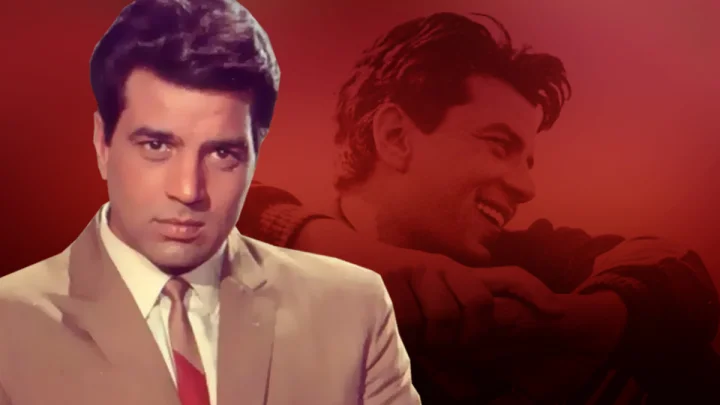
Dharmendra often said he was ’embarrassed’ by talk about his looks
The Indian film industry is in mourning following the death of Bollywood icon Dharmendra at the age of 89.
The veteran actor, revered as the “He-Man” of Hindi cinema, breathed his last in Mumbai, leaving behind a legacy of over 300 films, timeless romances, and heart-pounding action sequences that captivated generations.
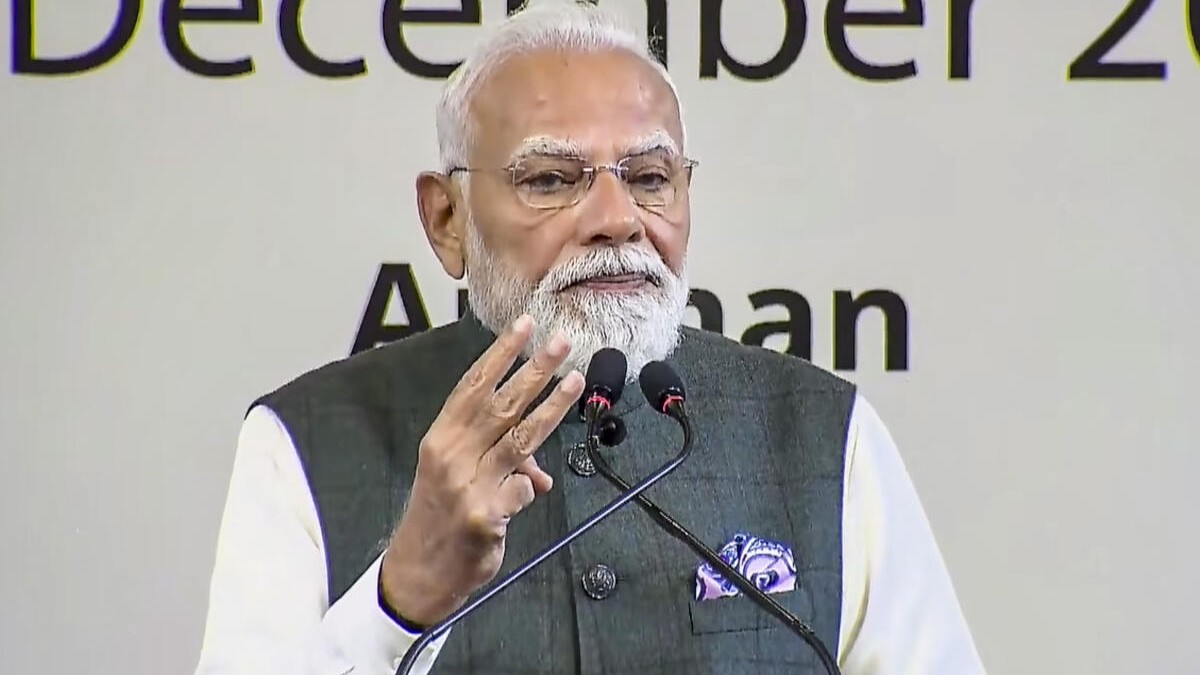
Prime Minister Narendra Modi led the tributes, describing Dharmendra’s passing as “the end of an era in Indian cinema.”
In a heartfelt post on social media, Modi recalled the actor’s ability to blend simplicity with stardom, noting, “Dharmendra ji’s warmth and charisma lit up screens and touched countless hearts.

Dharmendra (right) with Amjad Khan in Sholay
His departure leaves a void that words cannot fill.”
Born Dharam Singh Deol on December 8, 1935, in the quaint village of Nasrali in Punjab’s Ludhiana district, Dharmendra hailed from a middle-class Jatt-Sikh family.
His father, a schoolteacher, envisioned a scholarly path for his eldest son, but young Dharam was enchanted by the silver screen from an early age.
In a 2018 interview with BBC Hindi, he reminisced about his first cinematic encounter in ninth grade: “I watched a film and was hooked.
I wondered, ‘Where is this heaven where all these beautiful people live?’ I knew I belonged there.”
Family resistance was fierce—his mother emphasized his responsibilities as the eldest child—but fate intervened through Filmfare magazine’s All India Talent Contest.

Dharmendra with wife Bollywood actor Hema Malini
To Dharmendra’s astonishment, he won, catapulting him to Bombay (now Mumbai) in 1960.
His debut film, Dil Bhi Tera, Hum Bhi Tere, marked the beginning of a stellar career that spanned six decades.
Dharmendra’s rise was meteoric. His breakthrough came in 1963 with Bimal Roy’s Bandini, where he portrayed a compassionate prison doctor falling for a convict, earning critical acclaim for his nuanced performance.
The 1960s solidified him as Bollywood’s romantic lead, opposite luminaries like Nutan, Meena Kumari, Mala Sinha, and Saira Banu.

Dharmendra with sons Sunny (right) and Bobby Deol (left) at his Mumbai residence
He worked almost to the end of his life, acting alongside his sons Sunny and Bobby Deol, judging reality shows, and connecting with fans via social media.
Hits like Phool Aur Patthar (1966) introduced his action-hero persona, but it was Mera Gaon Mera Desh (1971) that etched him as an indomitable force, performing his own daring stunts with a towering 6-foot frame and effortless charisma.
Nicknamed “Garam Dharam” for his smoldering intensity and the “original He-Man” for his chiseled physique, Dharmendra topped global “most handsome men” lists in his prime.
Fans idolized him to extremes—some reportedly slept with his photos under their pillows—while peers weren’t immune.
Madhuri Dixit called him “one of the most handsome people on screen,” Salman Khan dubbed him “the most beautiful looking man,” and Jaya Bachchan likened him to a “Greek God.”
Yet, the star remained bashful, attributing his allure to “nature, my parents, and my genes,” and admitting embarrassment over the fuss.
His personal life was as dramatic as his reels. Dharmendra’s most iconic on-screen chemistry was with Hema Malini, whom he met at a 1965 premiere.
Struck by her grace, he whispered to Shashi Kapoor in Punjabi, “Kudi badi changi hai” (The girl is quite pretty).
Their 1970s collaborations—Seeta Aur Geeta, Raja Jani, and the epochal Sholay (1975)—ignited a real-life romance.
Already married to Prakash Kaur with children Sunny and Bobby Deol, Dharmendra faced tabloid frenzy.
The couple wed in 1980 amid rumors of conversion to Islam for polygamy, which he later denied.
Their bond endured, producing daughters Esha and Ahana, and symbolizing enduring love in Bollywood lore.
Sholay, the 1975 multi-starrer co-starring Amitabh Bachchan, Hema Malini, and Jaya Bachchan, remains Dharmendra’s crowning glory.
As Veeru, the roguish yet loyal bandit-hunter, he delivered lines and antics that became cultural touchstones.
Fans hail him as the film’s “soul,” and Dharmendra himself reflected, “I don’t think I’ve ever done a better role than Veeru’s.”
The movie’s dialogues, songs, and bromance with Bachchan’s Jai have permeated Indian pop culture, from memes to monsoons of reruns.
Versatility defined Dharmendra. He aced thrillers, comedies like the riotous Chupke Chupke (1975)—praised for his “impeccable comic timing”—and family dramas.
Despite dozens of blockbusters, he never clinched the “number one” spot, overshadowed by Dilip Kumar, Rajesh Khanna, and Bachchan. Awards eluded him until 1997’s Filmfare Lifetime Achievement and 2012’s Padma Bhushan.
“I never chased the rat race,” he said. “Fame is transient; all I wanted was people’s love.”
Politics beckoned briefly. As a BJP MP from Rajasthan’s Bikaner (2004-2009), he was lambasted for absenteeism, prioritizing films and his farm. On Aap Ki Adalat, he conceded, “Politics isn’t for emotional people—it’s for the thick-skinned. Those five years were tough.”
Active till the end, Dharmendra acted with his sons in recent projects, judged reality shows, and charmed on social media.
His 89th birthday in December 2024, surrounded by Sunny and Bobby, beamed family warmth.
Tributes flooded in post-death. Akshay Kumar tweeted, “Growing up, Dharmendra was the hero every boy wanted to be.
Thank you for inspiring generations.” Karan Johar lamented, “A gaping hole in the industry… there will always be one and only Dharmendra.” Sunny Deol shared a family photo, writing, “Papa, your strength lives in us.”
Dharmendra’s journey—from Punjab fields to Mumbai marquees—embodies Bollywood’s golden age: grit, glamour, and unyielding fan devotion.
As he once quipped, “Everyone loves Dharmendra, and I am grateful.” In death, that love echoes louder, ensuring the “simple man” endures eternally on screen.
Discover more from AMERICA NEWS WORLD
Subscribe to get the latest posts sent to your email.