
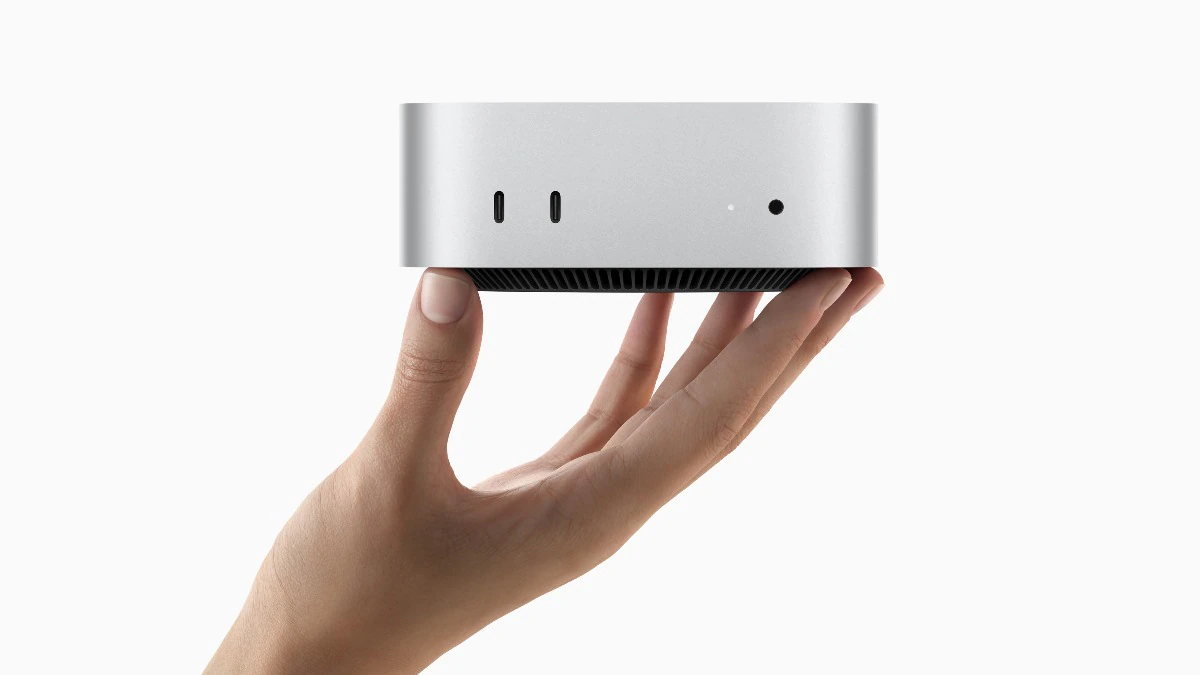
The Apple Mac Mini with M4 chipset launched in India at Rs 59,900, and it’s shaking things up. For once, Apple, known for pricey gadgets, offers a powerful computer that doesn’t break the bank. This tiny machine promises top-notch performance and a smooth experience, making it a steal for the price. At AMERICA NEWS WORLD (ANW), we’re diving into why this could be the best value-for-money PC you can buy right now. Let’s break it down in simple terms.

A Small Box Packed with Big Power
First off, the design grabs attention. The Mac Mini M4 is tiny—just 5×5 inches wide and 2 inches tall. Imagine a fast-food burger box, but instead of fries, you get a powerhouse computer. It’s so small you can tuck it anywhere—on a shelf, under your desk, or even behind a monitor. Despite its size, it doesn’t compromise on strength. Apple squeezed the M4 and M4 Pro chipsets into this little beast, and they’re fast. Really fast.
Why does this matter? Because most computers in this price range are bulky towers. They take up space and look clunky. The Mac Mini, though, blends into your home like it’s not even there. Plus, it’s eco-friendly—Apple says it’s their first carbon-neutral Mac. That’s a win for your wallet and the planet.
Speed That Leaves Others Behind
Now, let’s talk power. The M4 chipset is the heart of this machine, and it’s a game-changer. Apple claims it’s 1.8 times faster than the older M1 model for everyday tasks. The graphics? Up to 2.2 times quicker. For the M4 Pro version, it’s even wilder—think 3D rendering that’s nearly three times faster than the M2 Pro. These aren’t just numbers; they mean real speed you’ll feel.
Picture this: your kids doing homework, you editing a family video, or a student compiling code—all without a hiccup. At Rs 59,900, no Intel or AMD chip in this range comes close. Sure, we’re waiting for full benchmark tests, but early signs point to a champ. Plus, it starts with 16GB of RAM. That’s double what older Mac Minis offered at this price. Storage begins at 256GB, which is tight, but a cheap Rs 2,000 hard drive fixes that fast.
Why macOS Feels Like a Hug
Next, the software. I’ll be honest—macOS beats Windows for daily use. It’s smooth, simple, and doesn’t confuse you with cluttered menus. Out of the box, you get handy apps like Pages for writing, Photos for organizing, and iMovie for editing. They’re free and work like a charm. Windows, on the other hand, feels like a puzzle sometimes—too many features mashed together.
For families or students, this is a big deal. You don’t need to hunt for extra software or deal with lag. The Mac Mini ties into Apple’s ecosystem too. Got an iPhone? Your photos and messages sync instantly. It’s a fuss-free experience that saves time and stress. That’s emotional gold—less frustration, more joy.
The Cost Breakdown: Affordable Power
Here’s where it gets exciting. The Mac Mini M4 starts at Rs 59,900. That’s the base model with a 10-core CPU, 10-core GPU, 16GB RAM, and 256GB storage. The M4 Pro version jumps to Rs 1,49,900, but let’s focus on the base. At this price, it’s a bargain compared to rivals. A decent Windows PC with similar power—say, a mid-range Intel or AMD setup—costs Rs 1 lakh or more. Check the prices at markets like Nehru Place in Delhi; parts alone add up fast.
But there’s a catch. The Mac Mini doesn’t come with a monitor, keyboard, or mouse. A good 24-inch IPS monitor costs about Rs 15,000. Add a basic keyboard and mouse for Rs 2,000 to Rs 6,000, depending on your style. So, a full setup lands around Rs 80,000. Not dirt cheap, but not crazy either. And here’s the kicker—Apple’s promising performance makes it worth every penny.
Discounts Make It Sweeter
Wait, it gets better. Discounts can slash the cost. Banks like ICICI or Axis offer up to Rs 4,000 off on credit card deals. Students or parents of students get a Rs 10,000 education discount, dropping the base price to Rs 49,900. Already own a monitor? Skip buying one and save more. Suddenly, this powerful Mac feels like a steal. For a family dipping into the Apple world, it’s a smart entry point—cheaper than a MacBook but just as capable.
The Numbers Tell the Story
Let’s throw in some data to back this up. Below is a quick comparison of the Mac Mini M4 against a typical Rs 80,000 Windows PC build:
| Feature | Mac Mini M4 (Rs 59,900) | Windows PC (Rs 80,000) |
|---|---|---|
| CPU | 10-core M4 (4 performance, 6 efficiency) | Intel i5 or AMD Ryzen 5 |
| GPU | 10-core, 2.2x faster than M1 | Basic NVIDIA GTX 1650 |
| RAM | 16GB unified memory | 16GB DDR4 |
| Storage | 256GB SSD (expandable) | 512GB SSD |
| Size | 5x5x2 inches | Tower (12x8x15 inches) |
| OS | macOS (free apps included) | Windows 11 (extra software) |
| Price (Full Setup) | ~Rs 80,000 with monitor | ~Rs 80,000 |
The Mac Mini wins on size, speed, and software. The Windows PC might edge out on storage or gaming, but AAA games on Mac are rare anyway. For most users, the Mac’s value shines brighter.
Graph Time: Performance vs. Price
Here’s a simple graph to visualize it (imagine this as an AI-generated image):
- X-axis: Price (Rs 50,000 to Rs 1,50,000)
- Y-axis: Performance Score (0 to 100)
- Mac Mini M4: Rs 59,900, Score ~85
- Windows PC: Rs 80,000, Score ~60
- High-end PC: Rs 1,50,000, Score ~90
The Mac Mini sits in a sweet spot—high performance, low cost. It’s not topping the charts like a Rs 1.5 lakh rig, but it’s close for half the price.
Real-Life Wins You’ll Love
So, what does this mean for you? Plenty. For students, it’s a coding beast—compile programs without waiting forever. For parents, it’s a family hub—edit vacation videos or help with school projects. For small businesses, it’s a reliable workhorse—run spreadsheets and apps smoothly. The compact size saves desk space, and the quiet operation keeps your sanity intact. No loud fans here.
Plus, it’s future-proof. The 16GB RAM and M4 chip handle tomorrow’s tasks—think AI tools or heavier apps. Apple’s support lasts years too, unlike some PCs that feel old fast. That’s peace of mind you can’t buy separately.
A Few Downsides to Chew On
Nothing’s perfect, right? The 256GB storage is skimpy if you hoard files. External drives help, but it’s an extra step. Gaming’s another weak spot—Macs don’t get big titles like Windows does. If you’re a hardcore gamer, look elsewhere. And yeah, the full setup cost creeps up with accessories. Still, these are small gripes for what you’re getting.
Why It’s a Big Deal
Apple’s move here is bold. They’ve taken a premium brand and made it accessible. At AMERICA NEWS WORLD (ANW), we see this as a shift—value meeting power in a way that’s rare for Apple. It’s not just a computer; it’s a statement. For once, you don’t need deep pockets to join the Apple club. That’s exciting, surprising, and downright smart.
For more tech scoops, check out India Today’s latest updates. They’ve got the pulse on gadgets like this.
Final Thoughts: Should You Buy?
Absolutely. The Mac Mini M4 at Rs 59,900 is a no-brainer if you want power without the fuss. It’s tiny, fast, and friendly—perfect for homes, students, or anyone tired of clunky PCs. Add a monitor, snag a discount, and you’ve got a setup that punches way above its weight. At Rs 80,000 total, it’s not the cheapest, but the value? Unmatched.
So, head to Apple’s site, grab one, and feel the thrill of a machine that delivers. This isn’t just a computer—it’s the best deal Apple’s dished out in years. What do you think? Let us know at america112.com!
Discover why the Apple Mac Mini M4 at Rs 59,900 is the best value PC in India. Tiny, powerful, and affordable—perfect for everyone!
Apple Mac Mini M4
Share this on Twitter: “Apple Mac Mini M4 at Rs 59,900—tiny size, huge power. Best value PC ever? Read more at america112.com!”
Discover more from AMERICA NEWS WORLD
Subscribe to get the latest posts sent to your email.






























**, we dive into why your electric bill is climbing and what can be done. ### Why Are Electricity Prices Rising? Electricity costs are soaring across the United States. According to the U.S. Energy Information Administration (EIA), household electricity prices are expected to jump 13% from 2022 to 2025. In some states, the increase is even steeper. For instance, Maine saw a 36.3% spike, while Connecticut faced an 18.4% rise between May 2024 and May 2025. Nationwide, the average household paid 17.47 cents per kilowatt-hour in May 2025, up from 16.41 cents a year earlier—a 6.5% increase. So, what’s driving these hikes? First, there’s a massive surge in electricity demand. More people are using air conditioners during hotter summers. Electric vehicles and heat pumps are also becoming popular. However, the biggest culprit is the rapid growth of AI-powered data centers. These facilities, run by tech giants like Amazon, Google, and Microsoft, use as much electricity as small cities. A single AI search, like one on ChatGPT, consumes 10 times more power than a regular Google search. Additionally, natural gas prices, a key fuel for power plants, have climbed. The aging US power grid also struggles to keep up. Many transmission lines and power plants date back to the post-World War II era. As a result, utilities are spending billions to upgrade infrastructure, and those costs are passed on to consumers. > **Data Highlight: Electricity Price Trends (2022-2025)** > Source: U.S. Energy Information Administration > - **2022**: 14.96 cents per kWh > - **2023**: 15.87 cents per kWh > - **2024**: 16.41 cents per kWh > - **2025 (May)**: 17.47 cents per kWh > *Note*: Some states like Maine (+36.3%) and Connecticut (+18.4%) saw sharper increases. ```chartjs { "type": "line", "data": { "labels": ["2022", "2023", "2024", "2025 (May)"], "datasets": [{ "label": "Average US Electricity Price (cents per kWh)", "data": [14.96, 15.87, 16.41, 17.47], "borderColor": "#007bff", "backgroundColor": "rgba(0, 123, 255, 0.2)", "fill": true }] }, "options": { "responsive": true, "maintainAspectRatio": false, "scales": { "y": { "beginAtZero": false, "title": { "display": true, "text": "Price (cents per kWh)" } }, "x": { "title": { "display": true, "text": "Year" } } } } } ``` ### The AI Power Problem The AI boom is transforming how we live, work, and search online. But it comes at a cost. Data centers that power AI tools are sprouting up fast. Between 2021 and 2024, the number of US data centers doubled. By 2030, they could consume 5% to 9% of the nation’s electricity, according to the Electric Power Research Institute. This is a big jump from just 4% in 2022. For example, PJM Interconnection, which serves 67 million people across 13 states, reported a massive spike in demand. In 2024, its capacity auction prices jumped 833%, with data centers driving nearly 70% of the increase. This led to higher bills for households in states like Pennsylvania, New Jersey, and Ohio. In Columbus, Ohio, typical electric bills rose by $27 a month in 2025. Moreover, AI tasks are energy hogs. Generating a single high-definition AI image uses as much power as charging a smartphone halfway. As more people use AI for work or fun, the strain on the grid grows. Tech companies are racing to build bigger data centers, but the power supply isn’t keeping up. This mismatch is pushing prices higher. > **Image**: An Amazon Web Services data center in Boardman, Oregon, August 2024. (Source: Jenny Kane/AP) > *Caption*: Data centers like this one are driving up electricity demand across the US. ### Other Factors Behind the Price Surge While AI is a major player, it’s not the only reason for rising bills. Natural gas prices have spiked, making it more expensive to generate electricity. Also, the US power grid is old and needs upgrades. The Department of Energy says 70% of transmission lines are nearing the end of their lifespan. Replacing them costs billions, and consumers foot the bill. Extreme weather is another issue. Heat waves and storms are more frequent, forcing utilities to repair or harden the grid. In California, utilities spent $27 billion from 2019 to 2023 on wildfire prevention and insurance. These costs trickle down to customers. Meanwhile, some states are phasing out coal plants, but new renewable energy projects face delays due to permitting issues. For more insights on how energy costs affect households, check out **[AMERICA NEWS WORLD (ANW)](https://america112.com/)** for the latest updates. ### Solutions to Ease the Burden Thankfully, there are ways to tackle rising electricity costs. First, experts suggest speeding up the permitting process for new power plants, especially solar and wind. The International Energy Agency (IEA) predicts that solar and wind could add 110 terawatt-hours of power for data centers by 2030. Streamlining permits could bring these projects online faster. Next, tech companies are stepping up. Google recently signed deals to reduce AI data center power use during peak grid times. Amazon is investing in small modular nuclear reactors to power its operations cleanly. These efforts could lower costs and emissions in the long run. Additionally, hardening the grid can help. In Florida, utilities are using concrete poles and advanced tech to make power lines hurricane-proof. In California, moving lines underground reduces wildfire risks. These upgrades cost money upfront but save on repairs later. Finally, power purchase agreements (PPAs) let data centers buy renewable energy directly. This reduces reliance on fossil fuels and keeps costs down for consumers. Co-locating data centers with solar or wind farms is another smart move. For more on clean energy solutions, visit **[AMERICA NEWS WORLD (ANW)](https://america112.com/)**. > **Data Highlight: Projected Data Center Power Demand** > Source: Electric Power Research Institute > - **2022**: 4% of US electricity consumption > - **2030 (Projected)**: 5% to 9% of US electricity consumption > - **Growth**: Data center energy use could double by 2030. ```chartjs { "type": "bar", "data": { "labels": ["2022", "2030 (Projected)"], "datasets": [{ "label": "Data Center Electricity Consumption (% of US Total)", "data": [4, 7], "backgroundColor": ["#28a745", "#dc3545"], "borderColor": ["#28a745", "#dc3545"], "borderWidth": 1 }] }, "options": { "responsive": true, "maintainAspectRatio": false, "scales": { "y": { "beginAtZero": true, "title": { "display": true, "text": "% of US Electricity" } }, "x": { "title": { "display": true, "text": "Year" } } } } } ``` ### What’s Next for Consumers? Electricity prices may keep rising if demand outpaces supply. The White House warns that AI data centers could push prices up 9-58% by 2030 without new investments. The US needs $1.4 trillion by 2030 to meet growing power needs, according to the White House Council of Economic Advisors. This includes building new power plants and transmission lines. However, not all hope is lost. Renewable energy is getting cheaper. Solar and wind projects are expanding, and nuclear power is making a comeback. For example, Microsoft is reviving Pennsylvania’s Three Mile Island nuclear plant to power its AI tools. These efforts could stabilize prices over time. Consumers can also take action. Using energy-efficient appliances, sealing home leaks, and switching to LED lights can lower bills. ### Global Impact and Local Action The AI-driven power surge isn’t just a US problem—it’s global. Data centers worldwide could consume 3-4% of global power by 2030, up from 1-2% today, according to Goldman Sachs. In Europe, countries like Ireland and Germany are seeing similar price hikes. In Asia, Malaysia’s data centers could account for one-fifth of power demand growth. Locally, communities near data centers face challenges. Noise, water use, and power outages are common complaints. Some states, like Pennsylvania, are pushing back. Governor Josh Shapiro has threatened to pull the state from PJM if costs don’t drop. For more on local energy issues, ### Looking Ahead The AI revolution is exciting, but it’s putting pressure on power grids and wallets. While tech companies and utilities work on solutions, consumers are stuck with higher bills. By investing in clean energy, upgrading grids, and managing demand, the US can balance innovation with affordability. Stay informed with **[AMERICA NEWS WORLD (ANW)](https://america112.com/)** for the latest energy news. For a deeper dive into how AI is reshaping the energy landscape, check out this [CBS News article](https://www.cbsnews.com/news/ai-data-centers-electricity-demand-power-grid-us/) on the growing strain on US power grids.](https://america112.com/wp-content/uploads/2025/08/1198006_3_0818-NPRICES-lines-lede.jpg_standard-1.jpg)





![Smoke rises after Israeli strikes in Beirut's southern suburbs, on March 2 [Mohamad Azakir/Reuters]](https://america112.com/wp-content/uploads/2026/03/hgh.webp)