By_shalini oraon

Beyond the Breakfast Table: Decoding the Political Theater of Karnataka’s Power Tussle
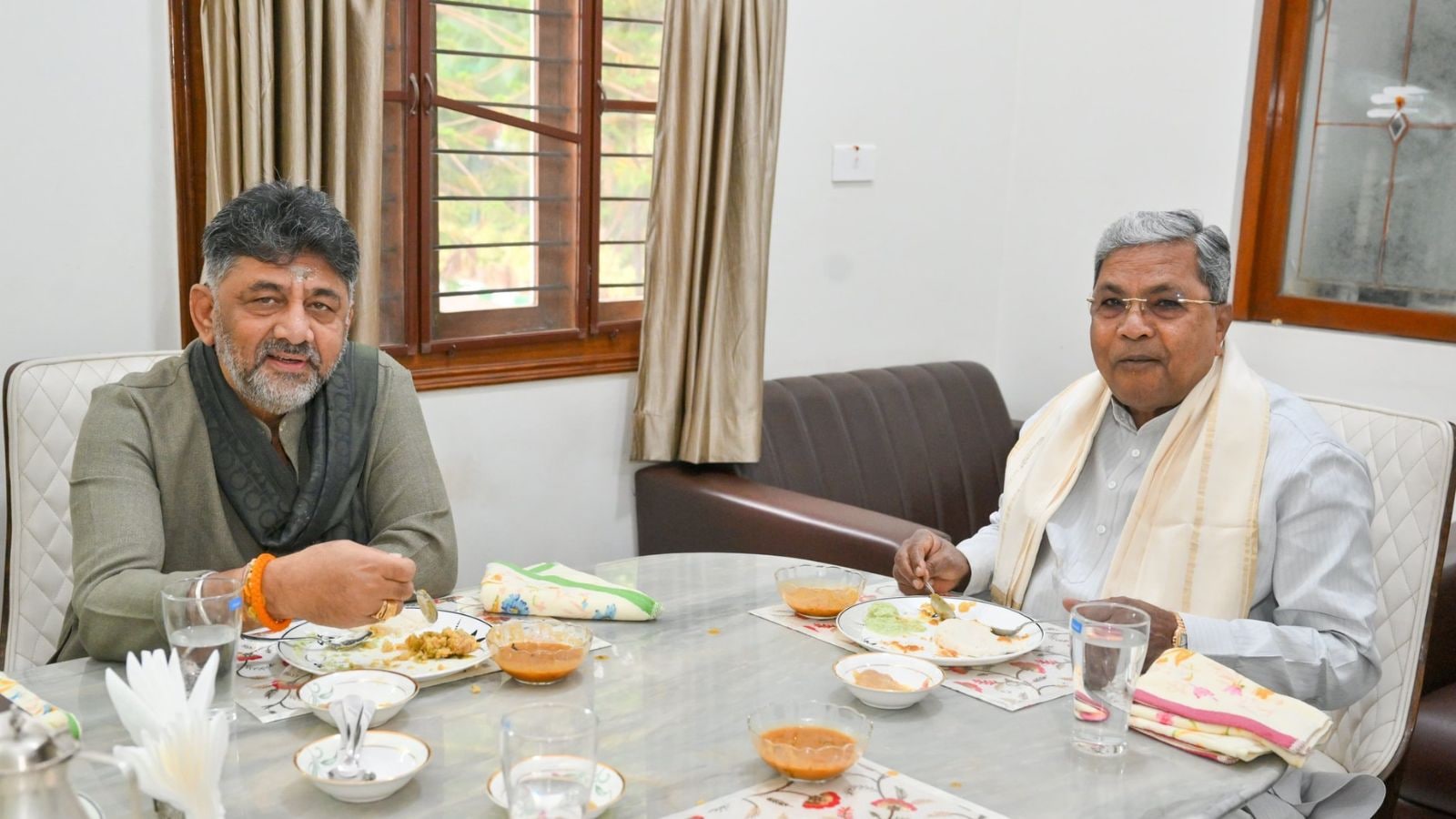
In the high-stakes political theater of Karnataka, a simple breakfast invitation can send ripples through the state’s corridors of power. The announcement that Chief Minister Siddaramaiah will visit Deputy Chief Minister D.K. Shivakumar’s home for “another breakfast meet” is not merely a social courtesy; it is a meticulously choreographed act in the ongoing, delicate ballet of leadership, ambition, and party discipline. This recurring motif of breaking bread together has become the preferred script for managing the most public and protracted power tussle in recent Indian state politics—a drama where the personal, the political, and the electoral are inextricably intertwined.
The Origins of the Duality: A Calculated Compromise
To understand the significance of today’s meeting, one must rewind to May 2023. The Congress party’s resounding victory in Karnataka presented a unique problem: an embarrassment of riches in leadership. On one side stood Siddaramaiah, the veteran former CM, a mass leader with a pan-Karnataka appeal, particularly strong among the OBC communities and the poor. On the other was D.K. Shivakumar, the state party president who engineered the victory, a Vokkaliga strongman from the Old Mysuru region, and the party’s organizational backbone.
The solution was an unprecedented 3:5 year power-sharing “formula”—Siddaramaiah would be CM first, with Shivakumar as his sole deputy, before a supposed handover. This created a diarchy, a system of dual power inherently fraught with tension. Every administrative decision, every portfolio allocation, and every public announcement is now viewed through the prism of this unresolved succession plan.
The Breakfasts: Rituals of Reassurance and Posturing
This is where the “breakfast meets” enter the narrative. They are not casual affairs but political rituals serving multiple audiences:
1. For the Party High Command (Delhi): They are demonstrations of enforced harmony. Each photograph of the two leaders smiling over idlis and coffee is a report card to Sonia Gandhi and Rahul Gandhi, signaling that the fragile compromise is holding and that state governance hasn’t derailed due to internal rivalry. It’s a performance of stability.
2. For Their Respective Factions: For Siddaramaiah’s loyalists, the CM visiting the deputy’s home can be projected as a magnanimous gesture from the senior leader. For Team Shivakumar, it is an acknowledgment of their boss’s indispensability—the CM must come to him. The location (whose residence) and the optics are parsed for symbolic meaning.
3. For the Public and Media: These meets act as pressure valves. In the weeks leading up to them, tensions often simmer through leaks—about displeasure over portfolio allocations, sidelining of ministers, or differences on policy. The breakfast then becomes a “reset” moment, a staged de-escalation meant to reassure citizens that the government is functional.
The Fault Lines Beneath the Table
However, no amount of kesari bhath can sweeten the fundamental contradictions. The tussle manifests in several ways:
· Administrative Parallelism: Bureaucrats often speak of “two power centers,” unsure where ultimate authority lies. Decisions can be stalled or revisited, creating a shadowy system of approvals.
· Factional Appointments: From board positions to party posts, every nomination is seen as a victory for one camp and a loss for the other, leading to constant jockeying.
· The Lingering “Guarantee”: Shivakumar’s camp consistently, if indirectly, reminds the party of the 3:5 year understanding. Siddaramaiah’s camp, enjoying the incumbency, remains strategically silent or dismissive, arguing that performance alone should dictate tenure.
· Social Engineering vs. Organizational Muscle: The tussle is also ideological. Siddaramaiah represents a welfare-focused, AHINDA (minorities, OBCs, Dalits) consolidation model. Shivakumar embodies traditional caste-based mobilization (Vokkaliga) coupled with relentless grassroots organization. The party’s future strategy in Karnataka hinges on which model is deemed more sustainable.
Why This Meeting Today? The Immediate Context
The timing of this particular breakfast is crucial. It follows a period of heightened activity:
1. The Lok Sabha Election Results: The Congress’s modest performance in Karnataka (winning 9 seats) has sparked fresh introspection. While not a disaster, it didn’t meet the sky-high expectations set by the 2023 sweep. Blame games are inevitable, and the breakfast is likely an attempt to present a united front before a post-mortem begins.
2. Rumblings of Cabinet Expansion/Reshuffle: There is persistent talk of rejigging the ministry to balance factional interests and improve governance. Such a sensitive exercise requires a show of top-level unity before any announcements.
3. Shivakumar’s Increasing Assertiveness: The Deputy CM has been increasingly visible, launching initiatives and holding review meetings that sometimes overlap with the CM’s domain. The breakfast could be an effort to synchronize their agendas and prevent public contradictions.
The Larger Implications: Governance at Stake
Beyond the political drama, this continuous tussle carries real costs for Karnataka.
· Policy Paralysis: Major, long-term decisions requiring bold political capital may be delayed as both leaders calibrate moves to avoid giving the other an advantage.
· Erosion of Institutional Clarity: The ambiguity of command filters down, potentially weakening the bureaucratic framework and leading to indecision.
· Public Cynicism: While initially a spectator sport, the perpetual power struggle risks alienating citizens who voted for a government focused on their “guarantees,” not internal guarantees of tenure.
Conclusion: An Unstable Equilibrium Awaiting a Trigger
The Siddaramaiah-Shivakumar breakfasts are thus the visible peaks of a vast submerged political iceberg. They represent an unstable equilibrium, a truce negotiated meal-by-meal. For the Congress, this duality is both a strength and a vulnerability. It harnesses the influence of two powerful leaders but at the price of constant internal management.
The ultimate resolution will not come from a breakfast table. It will be dictated by cold political calculus: the assessment of the party high command about who can lead them best in the next assembly elections, the shifting allegiances of MLAs, and the perceived public mood. Until then, these culinary summits will remain the primary tool for maintaining a fragile peace. Today’s meeting at Shivakumar’s home is another chapter in this saga—a ritual of reconciliation that acknowledges the rivalry even as it tries to temporarily suspend it. The people of Karnataka, meanwhile, watch and wait, hoping that beyond the political theater of shared meals, their government remains focused on the shared plate of development and governance it was elected to fill.
Discover more from AMERICA NEWS WORLD
Subscribe to get the latest posts sent to your email.