By Katie Hunt , Suraj Karowa/ ANW writers ,November 30, 2025

Multiple domestic cat skulls unearthed from the Xitucheng archaeological site in China.
Multiple domestic cat skulls unearthed from the Xitucheng archaeological site in China.
Multiple domestic cat skulls unearthed from the Xitucheng archaeological site in China.
In a discovery that’s sure to delight cat lovers and puzzle historians, scientists have used ancient DNA to upend the long-held tale of how felines went from wild prowlers to pampered pets.
For decades, experts believed domestic cats cozied up to humans around 9,500 years ago in the Fertile Crescent of the Levant—today’s Middle East and eastern Mediterranean—drawn by rodents feasting on early farmers’ grain stores.
But new genetic sleuthing reveals a more recent, far-flung backstory: modern house cats trace their roots to North Africa, with a surprising cameo by Asian leopard cats in ancient China.
The findings, detailed in two studies published Thursday, challenge the cozy Neolithic narrative and highlight how trade routes, empires, and even chicken coops shaped our feline companions.

Domestic cats are popular pets today.
“This completely undermines that narrative,” said Greger Larson, a professor of archaeology at the University of Oxford and coauthor on both papers.
“We interrogated bones thought to be 10,000 years old and found they don’t match the genomes of today’s dominant cat population.”
The first study, in the journal Science, analyzed 87 ancient and modern cat genomes from sites across Europe, the Middle East, and beyond.
It pinpoints the domestic cat—scientifically Felis catus—as descending from the African wildcat (Felis lybica lybica), not the Levantine wildcats once credited.
These North African ancestors formed the core gene pool for today’s pets, spreading to Europe around 2,000 years ago amid the Roman Empire’s expansion.

A leopard cat skull found in a Han dynasty tomb at the Zheng-Han ancient city site in China.
As legions marched and merchants traded, cats tagged along, curbing vermin in granaries and galleys.
“Before 200 B.C., what we find at European sites are European wildcats (Felis silvestris), not domestics,” Larson explained.
Skeletons from earlier digs, once misidentified as tame, now reveal wild traits. This shift paints domestication as a later, more opportunistic affair—less a Neolithic romance, more a Roman road trip.
Across Asia, the story gets even wilder. A companion study in Cell Genomics sequenced DNA from 22 feline bones unearthed in China over the past 5,000 years.
It uncovers that before Felis catus arrived around A.D. 730—likely via Silk Road caravans—humans shared settlements with a different wildcat: the leopard cat (Prionailurus bengalensis).
Native to East Asia, these spotted felines coexisted with people from at least 5,400 years ago until about A.D. 150, thriving in a “commensal” bond where both sides benefited.

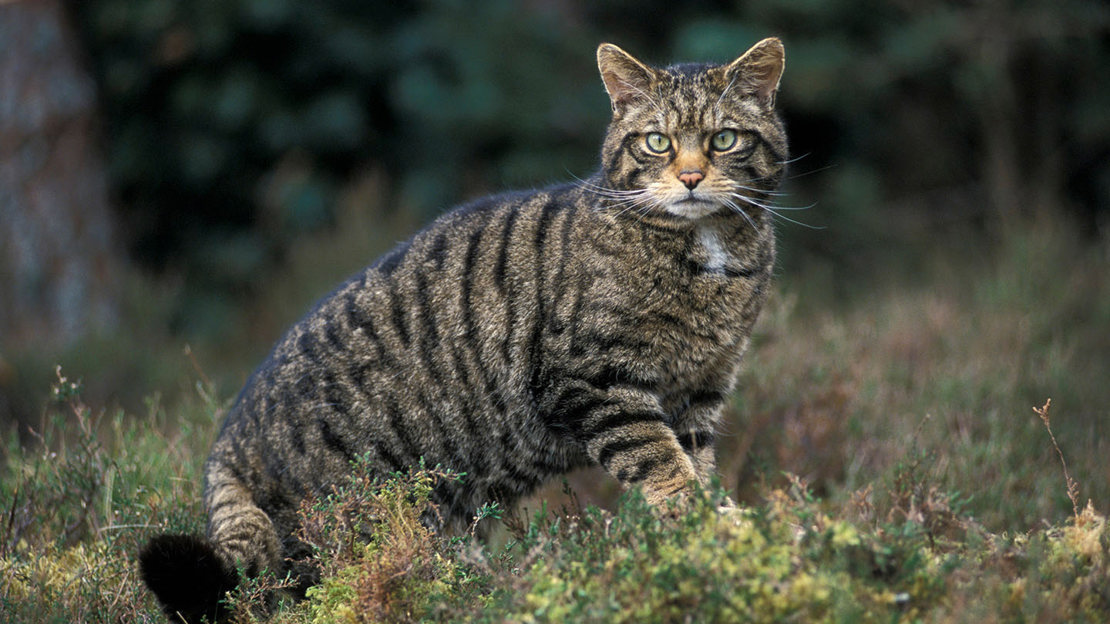
A wild leopard cat captured by a camera trap on the outskirts of Beijing.
Archaeologists had excavated leopard cat remains at seven Chinese sites, including the Xitucheng burial ground and a Han Dynasty tomb at Zheng-Han ancient city.
But only DNA confirmed their identity—and their non-domesticated status. “They never interbred with Felis species naturally,” said Shu-jin Luo, a senior author and researcher at Peking University’s School of Life Sciences.
Humans gained rodent control; cats got easy meals. Yet, unlike their African cousins, leopard cats stayed wild, evading full taming despite millennia of proximity.
Why the split? Folklore and farming practices offer clues. In Chinese lore, leopard cats earn the moniker “chicken-catching tiger” for their poultry raids—a habit that clashed with evolving agriculture.

A modern Bengal cat, pictured here, is a cross between a domestic cat (Felis catus) and a leopard cat (Prionailurus bengalensis).
“After the Han Dynasty, cage-based poultry farming escalated conflicts,” Luo noted. These cats’ tendency to “overkill” in tight spaces made them pests, not partners.
Their fade from human hubs aligned with a chaotic era: the Han’s fall in A.D. 220 ushered in colder, drier centuries until the Tang rose in A.D. 618, slashing grain yields and rodent populations.
Leopard cats didn’t vanish—they retreated to forests, persisting as elusive neighbors today, as captured in Beijing camera traps.
This dual domestication drama underscores how environments dictate animal-human ties.
“Changing agricultural communities reshaped relationships with wildcats,” said William Taylor, an archaeologist at the University of Colorado Museum of Natural History, who wasn’t involved.
He praised the DNA work for linking cats to ancient trade like the Silk Roads, traveled by horses, donkeys, and camels. “It’s cool to trace this ubiquitous critter back to those first global networks.”
North Africa’s role feels almost predestined, given cats’ starring turn in ancient Egyptian lore.
Tomb art shows them collared, jeweled, and lounging under thrones—family, not just hunters.
“Egypt was likely the finishing school,” wrote Jonathan Losos, a biologist at Washington University in St. Louis, in a Science commentary.
But was it ground zero for taming, or a cultural polish? Gaps persist: few samples from North Africa or southwest Asia leave the tale incomplete.
“Cats give up secrets grudgingly,” Losos quipped. “More ancient DNA is needed.”
These revelations arrive as cats reign supreme—over 600 million worldwide, fueling memes, allergies, and economies.
Modern twists include the Bengal breed, a 1980s hybrid of Felis catus and leopard cat, blending wild allure with domestic docility.
Yet, the studies remind us: domestication isn’t destiny. In China, leopard cats’ wild streak won out; in Egypt, it sparked reverence.
As climate shifts echo ancient disruptions, the research hints at broader lessons. Feral cats plague islands like New Zealand, prompting eradication drives.
Urban raccoons show domestication signs, per recent probes. And AI now tallies Africa’s rare golden cats.
Cats, it seems, remain sphinx-like—eternally adapting, grudgingly revealing.
For Larson, the thrill lies in upending myths. “We thought we knew the story. Now, it’s global, messy, and way more recent.”
Next? Filling those African gaps, perhaps decoding Silk Road cat cargo. Until then, give your tabby an extra scratch: they’re Roman road warriors at heart.
Discover more from AMERICA NEWS WORLD
Subscribe to get the latest posts sent to your email.