By Deepika Lama | America News World
It has been a stressful few days for thousands of travelers stuck in the Middle East. Rising tensions in the region suddenly disrupted air travel, leaving people stranded at airports across the UAE, Oman, and Saudi Arabia. Many of them had no idea when — or even if — they would get home. But now, some much-needed good news has arrived. Major airlines have launched sixty repatriation flights to bring these travelers back to safety, and countries around the world, including the United States, the United Kingdom, Canada, Germany, Spain, the Netherlands, Thailand, and India, are opening their doors to welcome them home.
How It All Started
The trouble began when regional tensions in the Middle East pushed several airlines to reroute or suspend flights without much warning. Airports in Dubai, Muscat, and Riyadh quickly filled up with confused and worried passengers. Families were separated. Business travelers missed important meetings. Tourists who came for a short holiday found themselves sleeping in airport chairs for days. The situation was difficult for everyone involved.

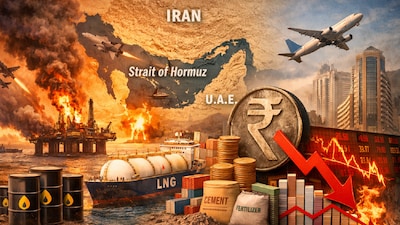
Image generated with Ai
It was not just a small problem. Thousands of people from dozens of countries were caught in the middle of something completely outside their control. As one traveler described it, “We just wanted to get home. Nobody knew what was happening or when flights would restart.”
Airlines Step Up
When it became clear that the crisis was not going to resolve itself quickly, four major airlines took action. Qatar Airways, Emirates, Etihad Airways, and Indian carrier IndiGo came together to organize a total of sixty repatriation flights. These flights were designed specifically to move stranded passengers out of the Gulf region and back toward their home countries.
Qatar Airways continued operating flights from Hamad International Airport in Doha. On the morning of March 8, 2026, several long-haul flights landed safely in Doha from London, Paris, Madrid, Rome, Frankfurt, and Bangkok, showing that the airport was still functioning and connected to the world.
Emirates kept its massive global network running from Dubai International Airport. The airline scheduled departures to New York, Dallas, Manchester, London, Paris, Frankfurt, Nairobi, Dhaka, Colombo, and Kolkata, among others. Even with rising pressure in the region, Emirates worked hard to keep its routes open.
Etihad Airways focused on keeping key routes between India and the Gulf region alive. Flights between Mumbai, Hyderabad, Abu Dhabi, and Muscat remained active, which was especially important for Indian workers, tourists, and pilgrims returning home.
IndiGo, India’s popular budget airline, also played a major role. The airline ran dozens of flights connecting Indian cities like Mumbai, Delhi, Hyderabad, Bengaluru, and Kozhikode with destinations across the Middle East and even Europe, including London, Manchester, and Amsterdam.
Countries Open Their Arms
Getting the flights in the air was only part of the challenge. Countries had to be ready to receive these passengers, many of whom arrived exhausted, shaken, and without complete documentation.
The United States, the United Kingdom, Canada, Spain, Germany, the Netherlands, Thailand, and India all confirmed they were prepared to accept thousands of returning travelers. Border and immigration officials were put on alert to process arrivals quickly and with understanding.
Meanwhile, countries like Sri Lanka, Turkey, UAE, Qatar, Bahrain, and Oman showed impressive generosity toward travelers who were still waiting. Many of these nations offered free hotel stays, meal programs, visa extensions, and emergency support to make sure that no visitor was left without shelter or food while waiting for their flight.
A Crisis That Revealed Something Important
While this situation has been hard on travelers, it has also shown something worth noting. When a real emergency hits, countries and airlines can move fast. Governments shared information. Airlines coordinated with each other. Hotels offered rooms. Immigration officers processed paperwork quickly. It was not perfect, but it was a real effort.
The Middle East remains one of the busiest and most important regions for global air travel. Dubai, Doha, and Abu Dhabi are three of the world’s top connecting hubs. When something goes wrong there, it affects travel on every continent.
What Comes Next
Aviation authorities are closely watching the situation. Airlines are adjusting flight paths day by day to ensure passenger safety. Experts say operations are slowly returning to normal, but travelers planning trips to or through the Middle East should check with their airlines before heading to the airport.
For now, the focus remains on getting every last stranded passenger home safely — and that is exactly what the world is working together to do.
*Deepika Lama writes for America News World, covering global travel, aviation, and international affairs.*
Discover more from AMERICA NEWS WORLD
Subscribe to get the latest posts sent to your email.






![Smoke rises after Israeli strikes in Beirut's southern suburbs, on March 2 [Mohamad Azakir/Reuters]](https://america112.com/wp-content/uploads/2026/03/hgh.webp)